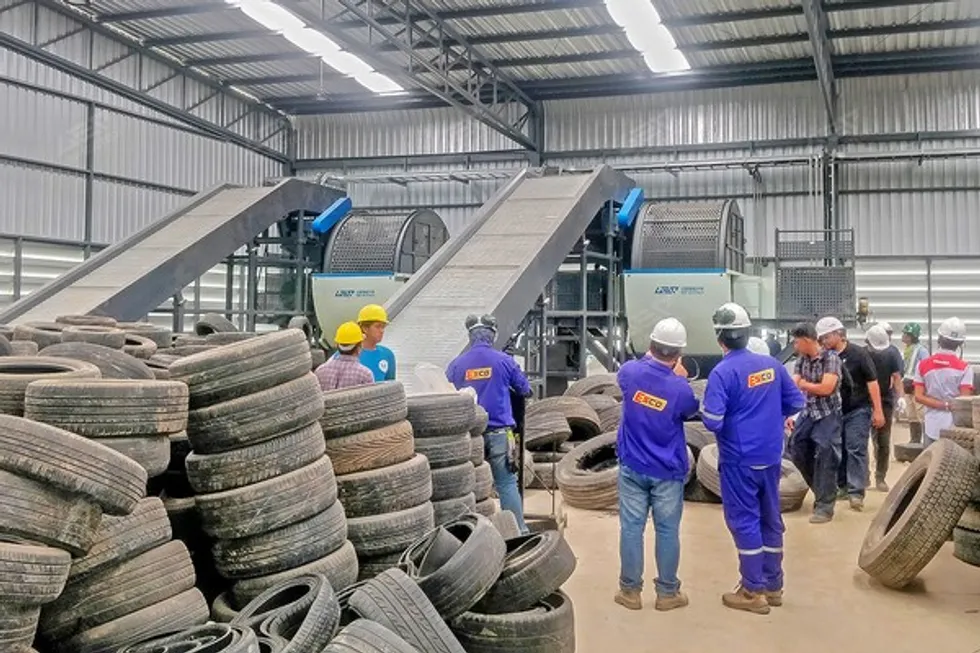
A tire recycling machine is an integrated industrial system designed to process end-of-life tires into reusable materials such as rubber, steel, and textile fiber. Through a series of mechanical size-reduction and separation steps, whole tires are transformed into products including rubber chips, crumb rubber, or fine rubber powder. These recycled outputs are widely used in manufacturing, construction, and energy recovery applications. Tire recycling systems can be configured as compact, small-capacity lines or as high-throughput industrial solutions, depending on project scale and end-product requirements.
At the core of a tire recycling system are machines such as tire cutters, shredders, granulators, and separation units. Each component plays a specific role in ensuring efficient material recovery, consistent particle size, and safe operation.
Main Types of Tire Recycling Machines and Their Functions
Tire Shredders
Tire shredders are typically the first major processing step. They reduce whole tires into large rubber chips that are easier to handle in downstream processes. Dual-shaft shredders are commonly used at this stage due to their strong torque, slow-speed operation, and ability to process passenger tires, truck tires, and even off-the-road tires.
Tire Granulators / Graters
After primary shredding, tire chips are further reduced in size using granulators or graters. These machines produce smaller rubber granules or crumb rubber. Single-shaft or rotor-based designs are often used to achieve controlled particle sizes and uniform output, which is critical for applications such as rubber flooring or asphalt modification.
Steel Wire Separators
Steel separation is a key step in tire recycling. Magnetic separators extract steel wires from the rubber stream, producing clean rubber material and recyclable steel. Efficient steel removal improves the quality of the final rubber product and reduces wear on downstream equipment.
Tire Cutters and Sidewall Removers
Tire cutters or sidewall removers are used at the beginning of the process to remove tire beads and sidewalls. This step reduces stress on shredders, improves processing efficiency, and allows the tread and sidewall materials to be handled separately if required.
Cracker Mills
For applications requiring very fine rubber powder, cracker mills are used. These machines grind rubber granules into micronized rubber powder, suitable for high-value applications such as rubber modification, coatings, or specialty molded products.
Typical Tire Recycling Process Flow
A standard tire recycling system follows a structured, multi-stage process to ensure efficient size reduction and material separation:
Cutting
The process begins with cutting operations, where tire sidewalls or beads are removed. This simplifies subsequent shredding and protects heavy-duty shredding equipment.
Primary Shredding
Whole or pre-cut tires are fed into a primary shredder, usually a dual-shaft shredder, which breaks them down into large rubber chips.
Granulating / Grinding
The shredded rubber chips are further processed through granulators or grinders to achieve smaller particle sizes, such as granules or crumb rubber.
Material Separation
Steel wires and textile fibers are separated from the rubber using magnetic separators and air separation systems. This step ensures high-purity rubber output.
Screening and Classification
The final stage involves screening the material to meet specific size requirements. Oversized particles are returned for reprocessing, while qualified material is collected as finished product.
Applications of Recycled Tire Materials
Recycled tire materials have a wide range of industrial and commercial applications:
Tire-Derived Fuel (TDF)
Large rubber chips or shreds are used as alternative fuel in cement kilns and power plants due to their high calorific value.
Crumb Rubber Products
Crumb rubber is commonly used in modified asphalt, sports surfaces, playground flooring, rubber mats, and molded rubber goods.
Rubber Powder Applications
Fine rubber powder is used in advanced applications such as rubber compounding, sealants, coatings, and vibration-damping materials.
Alternative Fuels (RDF)
Processed tire materials can also be combined with other waste streams to produce refuse-derived fuel for industrial energy use.
Key Considerations When Choosing a Tire Recycling Machine
When selecting a tire recycling solution, buyers should evaluate several critical factors to ensure long-term performance and return on investment:
Processing Capacity
Determine how many tires or tons per hour the system must handle to meet production goals.
Tire Types
Consider whether the system will process passenger tires, truck tires, or large off-the-road tires, as each requires different equipment specifications.
Final Output Requirements
Define whether the target product is rubber shreds, granules, or fine powder, as this impacts machine configuration and process design.
Safety and Reliability
Look for systems equipped with safety guards, overload protection, sensors, and emergency stop functions to ensure safe and stable operation.
Conclusion
Tire recycling machines play a vital role in converting waste tires into valuable, reusable materials. By combining shredding, granulating, separation, and screening technologies, these systems support sustainable waste management while creating economic value. Whether for fuel production, rubber manufacturing, or advanced material applications, a well-designed tire recycling system provides an efficient and environmentally responsible solution for handling end-of-life tires.