For decades, the relationship between a growing technology company and its legal counsel has followed a predictable, often painful, script. The founder, brimming with vision and velocity, views the attorney as a necessary gatekeeper, a source of friction, cost, and cautionary legalese. Traditional legal counsel, constrained by billable-hour economics and firm overhead, often operates at a distance—reacting to transactions and disputes rather than proactively enabling strategy. This is more than an inconvenience; it is a structural flaw that suppresses innovation and weighs down the very enterprises driving economic growth.

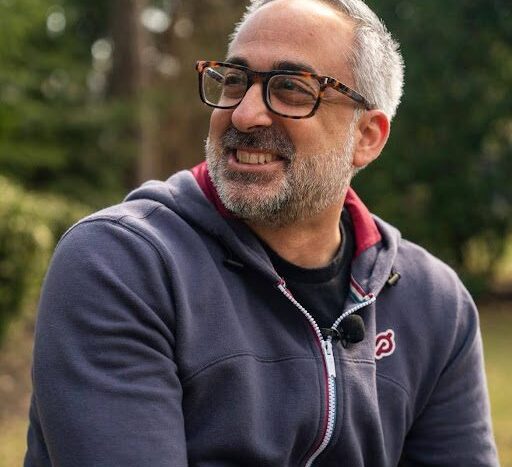
Marc Snyderman, a former C-Suite executive and seasoned General Counsel, has lived this dysfunction from both sides of the table. And he’s decided to break the model entirely. His venture is more than a law practice; it’s a pointed critique of an antiquated system and a blueprint for a new paradigm of partnership. Snyderman isn’t just offering legal services; he’s offering integrated leadership, and in doing so, he’s revealing a profound truth: for the modern SMB, especially in tech, the greatest legal risk isn’t a bad contract it’s a lawyer who doesn’t understand your business.
The traditional law firm, as Snyderman astutely points out, is built for a different century. Its cornerstone, the billable hour, is inherently misaligned with a client’s success. It penalizes efficiency and transforms the attorney from a “trusted advisor at the table” to a transactional “backstop.” For a scaling tech company navigating relentless change, this reactive posture is a luxury it cannot afford. A missed strategic nuance during a funding round, a poorly structured key hire agreement, or a compliance blind spot in a new market can be existential threats. These aren’t merely legal issues; they are business inflection points.
Snyderman’s model flips the script through a radical yet elegant concept: the subscription-based Outside General Counsel. By moving to a predictable monthly fee, he immediately aligns his incentives with his clients’. His success is tethered to their growth, stability, and avoidance of catastrophic missteps. This isn’t a cost-cutting gimmick; it’s a fundamental rewiring of the attorney-client relationship. It allows him to do what he promises: “learn what you do and why you do it and then integrate into your team.”
This integration is possible only because of Snyderman’s atypical pedigree. He is a hybrid, a “former C-Suite executive” who speaks the language of EBITDA and runway, and a “corporate attorney who gets deals done, not undone.” This dual citizenship in the realms of operations and law is his most potent disruptive tool. When he assesses risk, he doesn’t just see a liability to be annotated; he sees an operational vulnerability to be solved through “infrastructure development, implementation of information technology and/or insurance programs.” His approach to risk is holistic and constructive, focused on building resilient systems rather than merely drafting defensive clauses.
His specialization in “shepherding growth and change management” for technology-based companies is particularly salient. Tech companies don’t just experience change; they are vectors of it. Their legal guidance must be equally agile, forward-looking, and comfortable with ambiguity. A lawyer who has only ever practiced law is often ill-equipped for this environment. A lawyer who has sat in the C-Suite, managed P&Ls, and executed a vision, however, understands that speed and precision must coexist. He prides himself on being a business lawyer, and the emphasis is critical: business first, lawyer second.

Furthermore, Snyderman’s active role as a venture studio founder (https://npoint.ventures/, investor, and board member in disruptive concepts completes the circle. He doesn’t just advise from a theoretical playbook; he invests from a practical one. This keeps him on the bleeding edge of market shifts and founder psychology. He knows what a term sheet looks like from the investor’s seat and the founder’s, from the boardroom and the legal department. This panoramic perspective is invaluable for the clients he serves.
The implications of Snyderman’s model extend far beyond legal services. It is a case study in the unbundling and re-bundling of professional expertise. The future belongs to the integrated advisor, the professional who refuses to be siloed by traditional title and instead bundles strategic insight, operational experience, and technical skill into a single, accountable partnership. For technology founders, the message is clear: your legal counsel should be a force multiplier for your vision, not an auditor of it. He practices what he preaches through his venture studio, leveraging his legal and business operational background into each venture. For example Ukreate, (www.ukreate.com) is building necessary infrastructure for the creator economy and the travel and tourism industry to protect both sides of the transaction and deliver true value.
In a business landscape obsessed with disruption, Marc Snyderman has identified one of the most resistant, yet critical, institutions to reinvent: the legal partnership itself. By rejecting the billable hour, embracing operational integration, and leveraging his unique executive experience, he is proving that the most strategic legal advice doesn’t just protect a company from failing, it actively propels it toward success. In the end, his greatest disruption may be this: transforming the lawyer from a cost center into a core member of the growth team.
Learn More None