As we reach the middle of 2026, the Technology industry faces a profound paradox. The demand for high-performance computing to power Artificial Intelligence and global 6G networks has never been higher, yet the raw materials required to build these systems—lithium, cobalt, and rare earth elements (REEs)—are becoming increasingly difficult to extract ethically and sustainably. For the modern Business, “Hardware Resilience” has shifted from a procurement issue to a strategic survival imperative. We are witnessing the birth of the “Silicon Lifecycle,” a model where the value of a chip is measured not just by its processing power, but by its “Recoverability.”
The Rise of “Urban Mining”
In 2026, the most valuable “mines” in the world are not in the ground; they are in our cities. “Urban Mining”—the process of reclaiming raw materials from discarded electronics—has become a multi-billion-dollar industry. Professional organizations are now partnering with specialized “Recovery Labs” that use Artificial Intelligence to sort and disassemble e-waste with molecular precision.
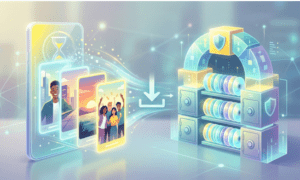
Traditional recycling methods often destroyed the very materials they sought to save. Today, “Hydrometallurgical Recovery” allows us to dissolve old circuit boards and reclaim 99% of the gold, copper, and neodymium without the toxic emissions associated with smelting. For a Business, this creates a “Closed-Loop Supply Chain.” Instead of buying new raw materials at fluctuating market prices, they are “Mining” their own historical product lines to build the next generation of hardware.
Design for Disassembly (DfD)
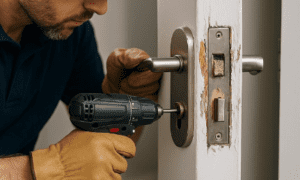
The shift to a circular economy has forced a radical change in hardware engineering. In 2026, the “Unrepairable” devices of the early 2020s are being phased out by “Design for Disassembly” (DfD) standards.
Professional hardware design now includes:
-
Modular Architecture: Components like batteries, screens, and AI accelerators are “Snap-In” modules that can be replaced without tools.
-
Eco-Solder: New, biodegradable binding agents allow for the easy removal of individual chips during the recycling process.
-
Material Tagging: Every component is embedded with a “Digital Product Passport” (DPP) that identifies its chemical composition, allowing recycling robots to process them with 100% accuracy.
The “Hardware-as-a-Service” (HaaS) Revolution
The logical conclusion of the circular economy is the end of “Hardware Ownership.” In 2026, many businesses are moving to a Hardware-as-a-Service (HaaS) model. Instead of buying a fleet of 5,000 laptops or a rack of AI servers, the company “Leases the Capability.”
The manufacturer retains ownership of the physical device. This aligns the incentives of the manufacturer with the planet: the manufacturer is now incentivized to build devices that last as long as possible and are as easy as possible to refurbish. When a server reaches the end of its useful life, the manufacturer swaps it for a new one and “Harvests” the old one for its next production cycle. This model provides the Business with “Capital Elasticity” while drastically reducing its “Scope 3 Carbon Emissions.”
Conclusion: The New Foundation of Tech
In 2026, “Innovation” is no longer just about “Faster and Smaller.” It is about “Smarter and Greener.” The companies that master the “Silicon Lifecycle” will be the ones that survive the resource scarcities of the coming decade. By turning “Waste into Wealth,” the technology sector is proving that progress does not have to come at the expense of the planet.