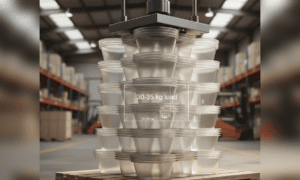
As we approach the mid-point of 2026, the global Business landscape has reached a turning point in logistics. We have moved from “Digital Supply Chains” to Autonomous Supply Chains—systems that do not just track data, but actively interpret and act upon it. In this new era, the supply chain has become a “Self-Healing Network,” powered by Artificial Intelligence that orchestrates the end-to-end flow of sustainable materials with minimal human intervention. For professional organizations, this represents a shift from reactive crisis management to proactive, algorithmic resilience.
1. The Rise of Predictive Orchestration
In 2026, the traditional siloed planning model—where procurement, manufacturing, and logistics operated independently—has been replaced by Predictive Orchestration. Artificial Intelligence now acts as a “Central Control Tower,” integrating external signals to preempt disruptions.
-
Sensing the “Invisible” Storm: AI models now ingest millions of data points—from satellite imagery of port congestion to social media sentiment and shifting trade tariffs. This allows businesses to sense a disruption weeks before it impacts the bottom line.
-
Autonomous Rerouting: If the system predicts a delay at a primary shipping hub, it doesn’t just send an alert. In 2026, agentic AI has the authority to autonomously renegotiate freight rates and reroute shipments to alternative ports or secondary suppliers in real-time.
-
Supply Chain Digital Twins: Organizations are using virtual replicas to simulate thousands of “What-If” scenarios. These twins use real-time IoT data to mirror the entire physical network, allowing managers to test the impact of a potential strike or extreme weather event before it occurs.
2. Material Intelligence: The Circular Nervous System
The most significant Business shift in 2026 is the integration of “Material Intelligence.” As sustainability moves from a reporting requirement to an economic necessity, AI is being used to manage the “Closed-Loop” of resources.
-
Digital Product Passports (DPP): Every component now carries a digital identity. AI utilizes this data to track the origin, chemical composition, and repair history of materials, ensuring that 95% of high-value parts can be recovered and reused at the end of a product’s life.
-
Inverse Material Design: In R&D, Artificial Intelligence is accelerating the discovery of sustainable alternatives. By specifying desired properties—such as “biodegradable” or “high thermal stability”—generative models propose optimal molecular structures for new packaging and components in days rather than years.
-
Automated Waste Sortation: Computer vision in 2026 recycling facilities achieves over 99% accuracy in separating complex materials. This technical breakthrough has transformed “Waste” into a high-purity, strategic material reserve for the enterprise.
3. Digital Marketing: Transparency as a Competitive Moat
In 2026, Digital Marketing has pivoted to “Radical Traceability.” Consumers no longer accept vague sustainability claims; they demand verifiable data anchored in the supply chain.
-
Real-Time Carbon Dashboards: Marketers are integrating “Live Emissions Tracking” into the customer interface. A consumer can see the real-time carbon footprint of their specific order, which is calculated by AI based on the exact route and transport method used.
-
Ethical Sourcing Badges: Brands use AI-verified blockchain logs to prove the ethical origin of their materials. This “Provenance Marketing” provides a tamper-proof guarantee against greenwashing, turning compliance into a premium brand differentiator.
-
The “Circular Story” Narrative: Instead of marketing a “New” product, brands are marketing the “System.” Digital campaigns now focus on the “Second Life” potential of an item, highlighting the brand’s autonomous return and refurbishing infrastructure as a core value proposition.
4. Management: From Tactical Execution to Strategic Oversight
For the 2026 manager, the “Autonomous” era doesn’t mean the end of human work; it means the elevation of it. Management has moved from “Firefighting” to “System Architecture.”
-
Exception Management: In 2026, AI manages 90% of routine material movements. Humans have shifted their focus to “Exception Management”—handling the complex 10% of cases where ethical judgment, strategic negotiation, or creative problem-solving is required.
-
Sovereign Data Governance: Management is now responsible for the “Data Clean Rooms” where AI engines operate. Leaders must ensure the integrity and cybersecurity of the supply chain data, protecting the organization from “Algorithmic Sabotage.”
-
Human-Agent Collaboration: HR is redesigning roles around “Cognitive Orchestration.” Warehouse teams work alongside autonomous robots, while planners oversee fleets of AI agents as “System Orchestrators,” ensuring the automated network remains aligned with long-term Business objectives.
Summary: The 2026 Supply Chain Evolution
| Capability | Legacy Model (2024) | Autonomous Model (2026) |
| Response Time | Reactive (Days/Weeks) | Predictive (Milliseconds) |
| Visibility | Fragmented / Siloed | End-to-End Digital Twin |
| Sustainability | Reporting / Offsets | Circular / Waste-by-Design |
| Human Role | Tactical Execution | Strategic Oversight |
Conclusion: The Resilient Enterprise
The emergence of the Autonomous Supply Chain in 2026 marks the end of “Guesswork” in global logistics. For any professional organization, the ability to pair Artificial Intelligence with a radical commitment to circularity is the only path to long-term resilience.
By building a “Self-Healing Network” that respects both the laws of physics and the demands of sustainability, your Business can thrive in an increasingly volatile world. The goal for 2026 is simple: move from managing a chain to orchestrating an intelligent, regenerative ecosystem that turns global challenges into a lasting competitive advantage.