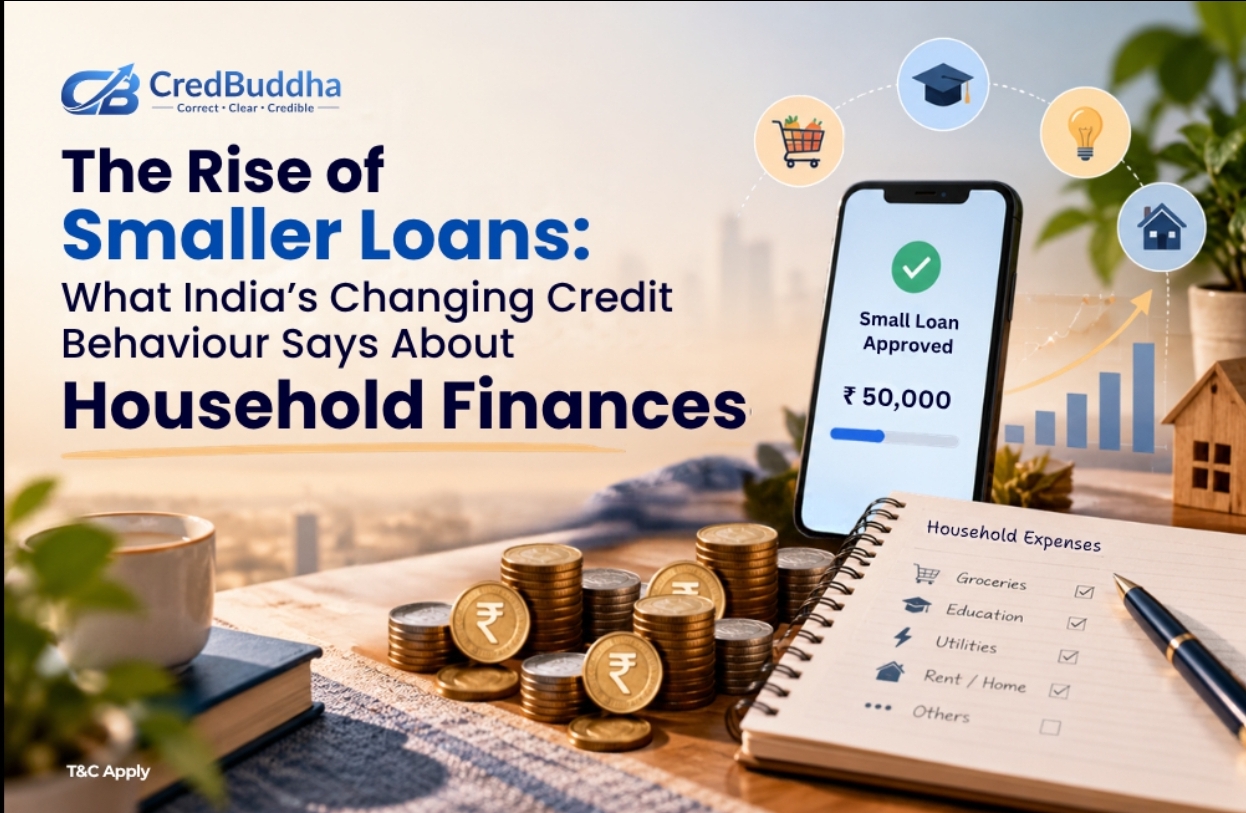
The Rise of Smaller Loans: What India’s Changing Credit Behavior Says About Household Finances

In India, personal loans are becoming more popular. Most people use small personal loans to manage daily expenses or short-term emergencies.
According to RBI data reported by Mint, personal loan growth has slowed down to 12.9% by the end of March 2026. Even so, personal loans made up 30.7% of all bank loans. Overall, these data show that small personal loans are playing an increasingly important role in borrowing in India. This is largely because digital loans are becoming easier to access over time. This also makes responsible repayment more important.
India’s credit market is reaching more consumers
India’s formal credit system now serves more first-time borrowers and consumers beyond the largest cities. According to TransUnion CIBIL, the share of credit-eligible Indians who had accessed retail credit at least once increased from 35% in March 2017 to 74% in March 2026. This change has been driven by greater knowledge, expanded lender reach, and the rise of digital lending in India.
People in metro and rural areas can now easily check their personal loan eligibility and apply online from their phones. Meanwhile, banks and NBFCs don’t fully automate approvals; they still review users’ data to approve loans and assess repayment capacity.
This wider access can help borrowers build a documented credit record. Before choosing small personal loans in India, however, they should compare lender conditions, documentation, rates, and the total EMI burden.
Why are small personal loans in India more relevant?
Borrowers use small personal loans for medical treatment, education, household purchases, weddings, travel, temporary cash-flow gaps, and small business needs. They can visit CredBuddha’s Personal Loan page to check eligibility and compare offers from banks and NBFCs.
This demand should not be viewed only as a sign of financial pressure. Affordability remains the main consideration, as the EMI must fit alongside essential expenses and existing repayments. Each borrower’s income, credit history, and repayment capacity matter more than the amount or intended use alone.
Affordability remains the main deciding factor. Although a lower loan amount can be manageable, the personal loan EMI must fit with rent, food, insurance, education costs, and existing repayments. A responsible lending decision depends on the loan’s impact on the full household budget.
Household borrowing in India also includes younger consumers, women, first-time borrowers, and people in semi-urban and rural areas. Each applicant’s income, existing EMIs, and repayment capacity matter more than broad demographic categories.
How is digital lending changing access to credit?
Digital lending in India has made it easier to find and apply for credit. Borrowers can check personal loan eligibility, upload documents, complete verification, and explore small loans online through one process. This has increased access to small personal loans in India, including for people outside major cities.
Digital platforms allow borrowers to compare personal loan interest rates, fees, tenures, and estimated EMIs. CredBuddha is one such digital comparison platform, not a lender. It helps borrowers check eligibility, review offers from banks and NBFCs, and estimate repayment costs before applying.
Why do smaller loans require responsible borrowing?
Small personal loans in India require the same precautions as larger credit commitments. Before accepting an offer, borrowers should check their income, existing EMIs, credit score, interest rate, processing fee, tenure, and other charges. A low loan amount does not automatically make the repayment affordable.
A few small loans can put more pressure on the monthly budget than one EMI suggests. Using fresh credit to repay an existing loan can also increase debt and interest costs, leaving less money for essential spending or emergencies.
Responsible borrowing starts with the lender’s Key Fact Statement. Applicants should check the annual percentage rate, total repayment, processing and penalty charges, grievance contact, and applicable cooling-off period. A longer tenure can reduce the personal loan EMI, but it usually increases the total interest paid.
What smaller loans mean for household finances
Small personal loans in India can help with urgent needs or planned expenses, but constant borrowing can burden household budgets and essential expenses.
Before applying, borrowers should check interest, fees, EMI, and total repayment in the Key Fact Statement. CredBuddha is a comparison platform, not a lender, and helps you compare loan offers.
FAQs
- What are small personal loans?
Small personal loans are lower-value loans used for personal or household expenses. They do not require the borrower to provide an asset as security.
- Why are small personal loans becoming popular in India?
Online applications, simple document checks, and faster processing have made smaller loans easier to find and apply for.
- Does taking a personal loan affect your credit score?
Yes. Applying for a loan and making or missing repayments can affect your credit score. Paying every EMI on time can support good credit health.
- What should borrowers check before taking a small personal loan?
Borrowers should check the lender, interest rate, EMI, tenure, fees, total repayment, and Key Fact Statement before accepting an offer.
- How can borrowers compare personal loan offers?
Compare offers by total cost, interest rate, fees, EMI, tenure, and loan terms. CredBuddha can help borrowers compare bank and NBFC offers.
- What factors affect personal loan eligibility?
Lenders usually check income, job or business stability, credit score, existing EMIs, repayment history, age, and the amount requested.