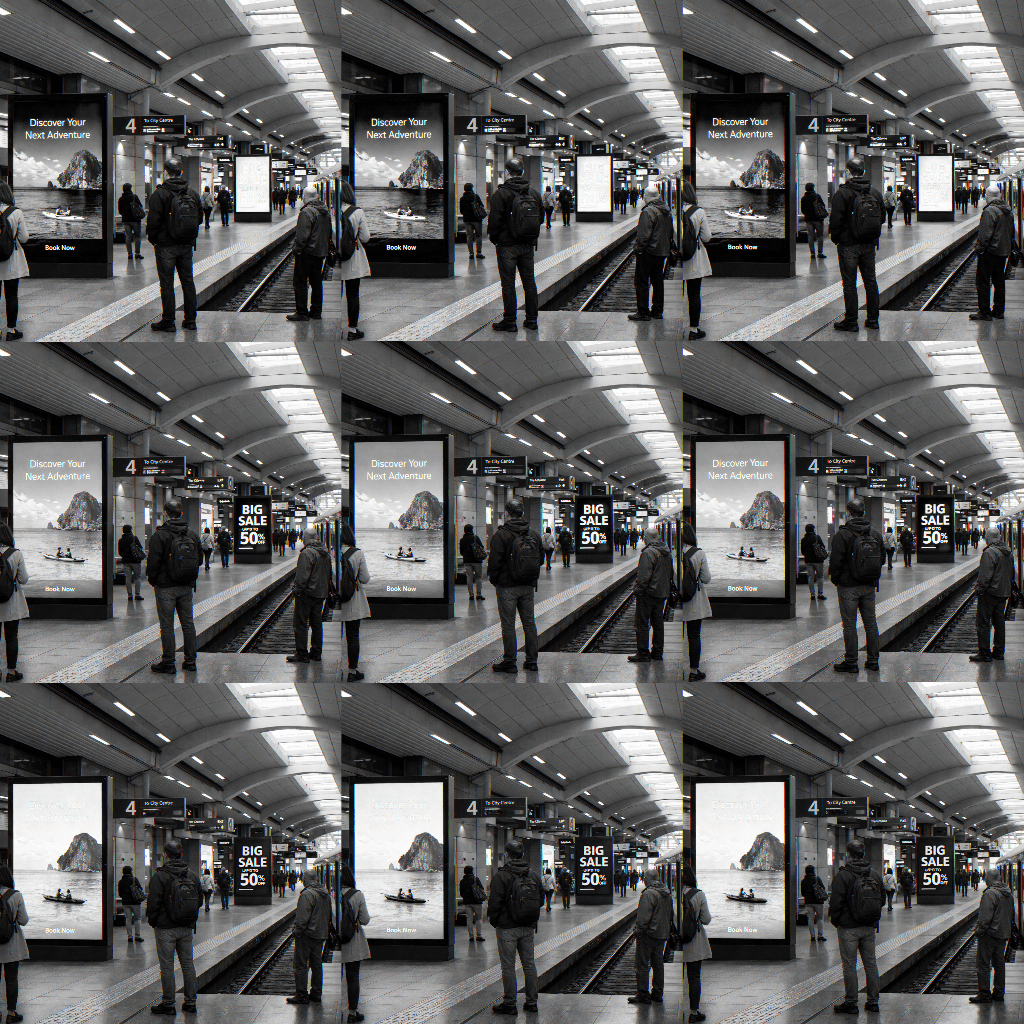
Digital marketing has ceased to be on screens held in our hands or that which rests on our desks. With consumers spending more time out of their houses commuting, shopping, traveling, and attending events, brands are shifting to alternative innovative formats that can reach their audiences in the physical world. Digital out-of-home advertising, also referred to as DOOH, is one of the quickest growing channels that has driven this change.
Unlike traditional billboards or static signage, DOOH advertising combines the broad reach of out-of-home placements with the flexibility and intelligence of digital technology. The evolution enables marketers to provide timely, relevant messages in the real world, as well as enjoy the benefit of better targeting and measurement than ever before.
What Is DOOH Advertising?
DOOH advertising refers to digital ads displayed in public spaces such as shopping malls, airports, transit stations, roadside screens, gyms, office buildings, and restaurants. Such placements involve the digital screens instead of the printed ones, which allows updating the content in real time and scheduling it dynamically.
Owing to the fact that DOOH is positioned in high-trafficking areas, it will automatically draw attention in situations where consumers are not bombarded by internet advertisements. This renders it an effective complement to mobile, social, and connected TV campaigns.
Why DOOH Advertising Is Gaining Momentum
Increased Audience Reach in the Physical World
Online advertising performance is being affected by ad blockers, privacy limitations, and computer fatigue, so marketers are finding the channels that cut through the noise. DOOH targets individuals in their daily routine, and in most cases, when their defenses are a bit more open to visual advertising.
DOOH screens position brand messages in front of interested audiences, and commuters waiting to get a train or shoppers browsing the stores have their messages displayed on them.
Real-Time Flexibility and Relevance
The possibility to be adjusted in real time is one of the greatest benefits of DOOH. Its campaigns may vary depending on the time of day, location, weather, or live events. As an example, a restaurant brand can advertise breakfast in the morning and dinner specials in the evening- all on the same screen.
This flexibility enables marketers to provide contextually appropriate messages, which are not intrusive but feel timely.
How DOOH Fits Into Omnichannel Marketing Strategies
Seamless Integration With Digital Campaigns
The current DOOH systems enable advertisers to plan, purchase, and operate campaigns in a programmable manner (like online advertising). It becomes simpler to align DOOH to wider digital plans, so that it can be used to deliver consistent messages across the channels.
DOOH ads can also be aligned with mobile/social campaigns to strengthen awareness and action, including making app downloads or visiting a store.
Data-Driven Targeting and Measurement
Though DOOH is not dependent on personal data like online advertising, it is still a well-advanced analytics. Audience, foot traffic, and location intelligence are used to assist marketers in the selection of the best placements and to gauge the effectiveness of the campaign.
Such a privacy approach is particularly attractive in an era of increased regulation of data, which is why DOOH is privacy-friendly.
Key Benefits of DOOH Advertising for Brands
Strong Visual Impact
The use of large screens with high definition is an attraction in itself, so DOOH is best used in brand storytelling and awareness. Eye-catching graphics, motion graphics, and shorter video loops are effective in helping brands to be visible in crowded settings.
Brand Safety and Trust
DOOH placements are highly selective; that is, they do not display ads in dubious places on the Internet, but in real-life places of reputable establishments. The degree of control improves brand safety and develops trust in the audience.
Scalable for Businesses of All Sizes
Although in the past DOOH was the preserve of big companies, programmatic purchasing and adaptable budgets have now afforded it the small and medium-sized companies as well. Advertisers are able to experiment locally or expand nationally without having to commit in the long run.
Ready Your Brand to Win with DOOH.
To get the most out of DOOH advertising, brands should focus on clear messaging, strong visuals, and strategic placement. The short bold creative works well, particularly when accompanied with context-sensitive scheduling. Combining DOOH and digital analytics tools may also be useful to understand the performance of the campaign in general.
Conclusion
DOOH advertising is no longer just an extension of traditional out-of-home media–it is a dynamic, data-driven channel that plays a critical role in modern marketing strategies. DOOH allows brands to find meaning in ways that are memorable by merging the physical and digital world with intelligence. With the ever-changing consumer behavior, companies that adopt DOOH will be in a good position to remain visible, relevant, and competitive.