In the fast-paced digital age, encountering a technical glitch—be it a “Blue Screen of Death” on Windows, a cryptic error code in Roblox, or a sudden iPhone freeze—is a common frustration.
However, the way users seek solutions has fundamentally changed. The era of scrolling through lengthy, 2,000-word anecdotal blog posts to find a simple fix is fading. Instead, a new trend is emerging: the “Answer-First” methodology.
The Problem with Traditional Troubleshooting Guides
For years, search engine optimization (SEO) incentivized content creators to bury the lead. You’ve likely experienced it: searching for “how to reset my router” and landing on a page that starts with the history of the internet. This “fluff” content frustrates users who are often in a state of panic or urgency.
According to recent user experience (UX) studies, the average attention span of a user looking for a technical fix is less than 8 seconds. If they don’t see the solution immediately, they bounce.
What is ‘Answer-First’ Troubleshooting?
The “Answer-First” approach flips the traditional content model. It places the direct solution, the code snippet, or the step-by-step fix at the very top of the page. Context, explanations, and additional tips follow after the immediate need has been met.
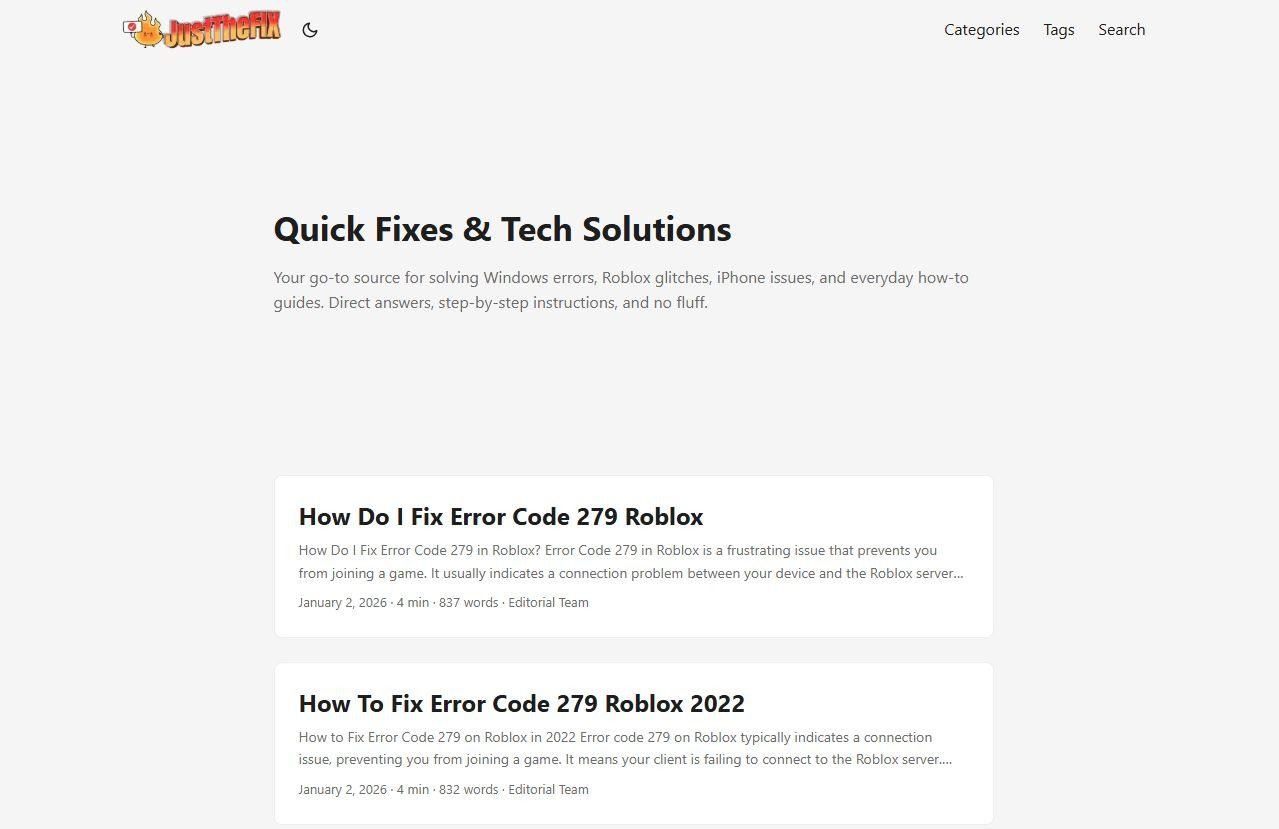
This user-centric philosophy is the driving force behind modern knowledge hubs like JustTheFix. Platforms like these are gaining traction because they respect the user’s time. Instead of wading through paragraphs of text, users get instant clarity—whether they are trying to debug a game, fix a household appliance, or interpret a dream.
Why Speed Matters in Tech Support
- Reduced Anxiety: Technical errors often cause anxiety. A direct answer provides immediate relief.
- Productivity: For professionals, a software error is a roadblock. Quick fixes mean less downtime.
- Trust: Users are more likely to return to a source that solved their problem in 30 seconds rather than 10 minutes.
The Future of Online Guides
As search engines like Google evolve with AI and semantic search, they increasingly favor content that provides value quickly. The success of streamlined platforms suggests that the future belongs to precision.
Whether you are a gamer facing a connection error or a homeowner dealing with a stain, the demand is clear: “Don’t tell me a story, just give me the fix.”
By prioritizing direct answers, the internet is slowly becoming a more helpful, efficient, and user-friendly place.