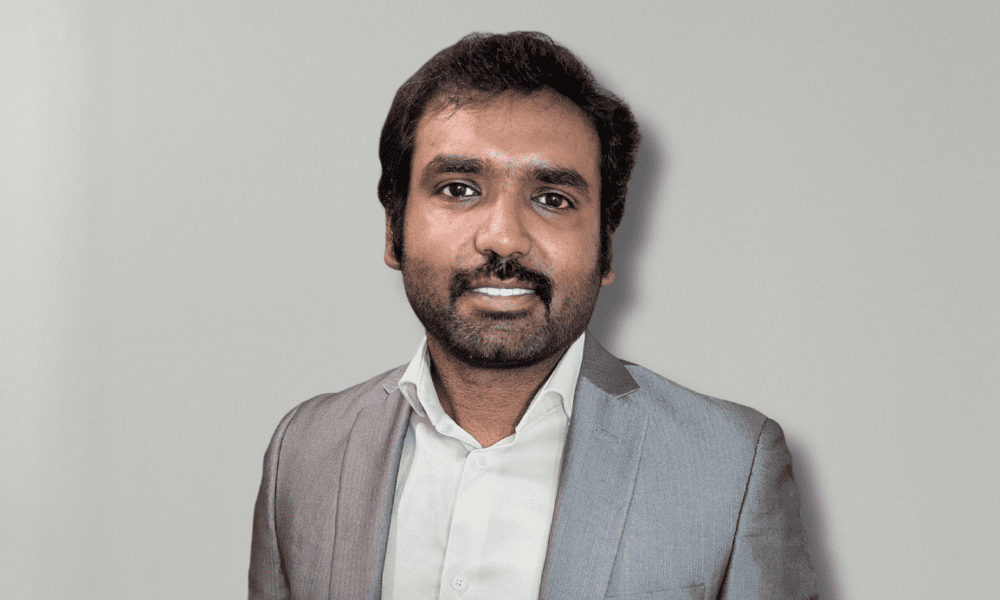
We are publishing a column by Dmytro Sorysh, Domain Product Officer at RedCore, in which he speaks openly and clearly about what really happens when AI enters a company. Not panic and not layoffs, but the disappearance of monotonous tasks and the growth of meaningful, valuable work. Using RedCore as an example, Sorysh shows that artificial intelligence is not about replacing people — it’s about making their work smarter.
We often hear concerns that AI will “replace people”. It sounds scary, but reality is much simpler: technology does not fire people, it liberates them. Not from jobs, but from routine tasks. From actions that no one likes, but that consume time. Companies that understand this don’t just implement “smart” tools, they change the very structure of work, leaving people with what really drives the business.
When we launched our own AI voice assistant at RedCore, expectations were typical: some of the team were worried that they would now be “replaced”. But the result was the exact opposite. The assistant removed the routine — endless repetitive calls, monotonous scripts, identical clarifications — and the team finally gained hours of conscious, useful work: data analysis, hypothesis testing, strategic planning. The very things that bring real value to the company.
This is not a local story — it is a global trend. According to Gartner estimates, global spending on AI will reach $1.5 trillion in 2025. And importantly, the main growth comes not from “trendy applications” but from infrastructure. GPU servers, specialized chips, hardware for large models — all of this creates a foundation that allows companies to rebuild processes rather than play with fancy AI.
Generative AI is another hot spot. In 2025, its market will grow to $644 billion. And spending on AI software infrastructure will nearly double — from ~$57 billion to ~$126 billion in one year. People do not invest in things that replace humans. They invest in things that make humans more efficient.
And the numbers confirm this. FullView records an average ROI on AI investments of $3.70 for every dollar invested. Productivity gains range from 26% to 55%. At the same time, the main myth is crumbling: McKinsey shows that up to 30% of tasks can be automated, but only about 5% of roles can be completely replaced. This means not displacement, but redistribution — when employees move from mechanics to thinking.
But it is important to see the other side as well. Gartner warns that up to 40% of agent AI projects may be shut down by 2027. The reasons are typical: significant costs, poor management, and lack of real business return. Many companies like to “implement AI for the sake of AI,” focusing on technical metrics and forgetting about human, economic, and safety parameters. Typical mistakes include launching models without validating business hypotheses, measuring quality using metrics such as accuracy or ROC-AUC instead of real impact on key indicators (P&L, NPS, conversion), and ignoring UX and the role of humans in the decision-making cycle. As a result, AI becomes a plaything rather than a system.
The correct frame is different. For example, we do not build technologies that replace people. At RedCore, we build technologies that remove everything unnecessary from work and give people the opportunity to do what they are needed for in business: think, make decisions, and form strategies. Machines cover the process — people create progress.
This decade, the winners will not be those who try to copy the market. But those who learn to build symbiosis: AI as the executer, humans as the architects. When technology does not compete with humans, but empowers them. When automation is not reduction, but growth. When boredom ceases to be part of the profession.
It is not technology that changes the market — it is people who know how to use it.