
The Real Reason AI Gets Things Wrong: It Cannot See Today’s World

Here’s a fact most people don’t know about their favorite AI model: it stops learning the day it’s built. Training ends, and its knowledge freezes right there; nothing after that point changes what it actually knows. But the world keeps moving. So when someone asks about today’s prices, today’s news, or the shop that opened last month, the model can’t rely on memory. It has to be given that information as context; pulled fresh from the live internet, in the moment, every time.
This is where a quiet problem presents itself, something Bixberry is looking to resolve before it rears its ugly head.
What if AI Starts Answering Based on Old Data?
While AI has the ability to pull off actual wonders, we have all run into its limitations: it starts praising a restaurant that has been closed for over a year or gives the price of a car fix that was relevant two years ago and not anymore. Some may interpret this as the model itself being unreliable.
However, in reality, it could be something simpler: the model is still viewing an old picture of the internet because it could not check today’s latest situation. If you ask for the best gelato place in Naples, Italy, a smart AI can deliver relevant results. However, the next day, there could be a different result because of strong competition, and as a result, yesterday’s answer holds little relevance. Staying accurate doesn’t require a one-time fix. The model needs to draw on a continuous stream of information straight from the live web.
The Bixberry team acknowledged this potential shortcoming but concluded that the solution is not tied to a better model. It was to give the AI the ability to view the web from the same vantage point as a real person.
Local Questions Need Local Eyes to Answer
The gap between the right and wrong answers is especially visible in local questions. Ask the price of a donut in New York City or what is open at a particular hour, and the answer can get challenging for the AI, not because it doesn’t know how to get it but because the picture it is getting is thinner and older.
When AI scans the web, websites often respond differently according to the origin of the request. A data center operating thousands of miles away can get a more generic, less recent reply, while a request from the immediate vicinity receives a better, today’s version. Bixberry’s idea is to let AI reach the web through real local connections, so the model can see the world from the inside rather than viewing it from afar.
A New World for Everyday Users
Users who wish to become a part of the Bixberry revolution can download the native app on their phone, tablet, or laptop. From then onwards, the device continues to function normally with the Bixberry program running quietly in the background, only drawing idle internet from time to time to help AI retrieve current information. The operation doesn’t interfere with everyday use.
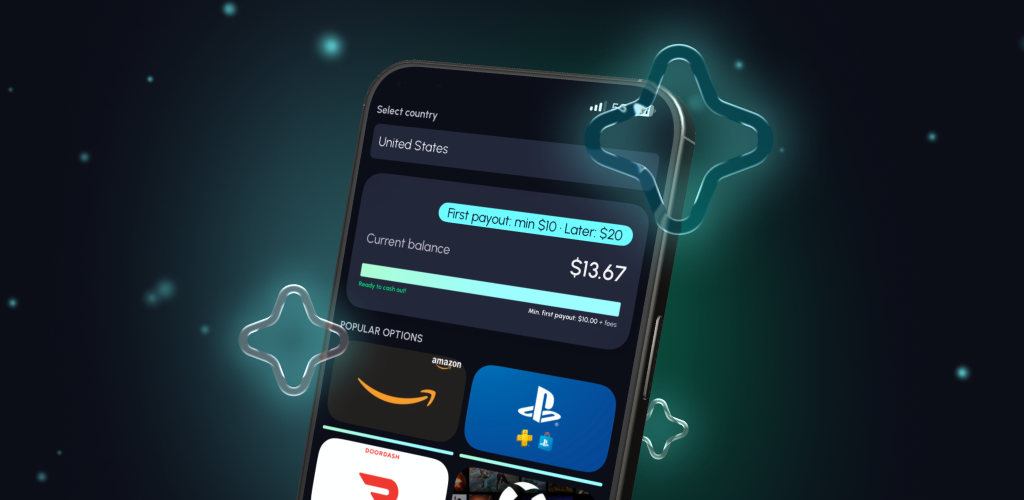
As a reward for taking part in the Bixberry network, users earn rewards, with more than 5,000 gift card options to choose from, including Amazon, Steam, Spotify, PlayStation, and Visa. Rewards arrive directly in a user’s inbox. The catalogue is tailored to a user’s country, so the brands on offer are ones they actually shop with.
The company envisages this new role for internet users. Rather than just being viewed as a consumer, they become contributors to the growing AI infrastructure. They are rewarded for these efforts. The task itself takes no technical setup and no ongoing effort; install once, and the rest runs in the background.
Prioritizing Consent
Many people have grown wary of apps that ask for broad permissions while delivering very little in return; agreements accepted with one click, rarely read in full, that leave users unsure what they actually signed up for or how to undo it.
Bixberry wants to operate from the other end of the spectrum: an app whose entire purpose is exactly this exchange; you install it for that reason, you can watch it work, and you can switch it off in one tap
“AI already sees the world through people’s connections; that’s just how it works now, whether anyone tells you or not. Most companies don’t tell you. Your connection is used for one thing: AI requests. You see it working, you see what you’ve been rewarded, and one switch stops it all,” said the Bixberry team.
The principle extends to who is allowed to access the network itself. Every AI agent partner is a proper, vetted company that must sign strict partnership terms before any traffic flows in or out of the network. The traffic carried by the network, it says, is one kind: AI reading the public web the same way a real person would, browsing pages, prices, and listings. Abusive traffic doesn’t touch the network at all.
Built with a Regulatory Mindset
The Bixberry approach lines up with its long-term goal of a well-regulated model. Consented, transparent flow of data has become vital across major sectors, and Bixberry was built from the ground up with that in mind. The company says the platform was built around consent and transparency from the outset, and designed to meet GDPR and CCPA requirements.
The requirement for AI to get the latest, clear picture is not going away. As the world changes every second, the demand for fresh retrieval is a permanent feature that users rely on daily. Now, with Bixberry, users can become part of this revolution by allowing AI to use idle internet from devices already present in their pockets. They do it with choice and get rewarded appropriately for these efforts.
As the company puts it: real people’s connections are part of how AI stays current.







Comment