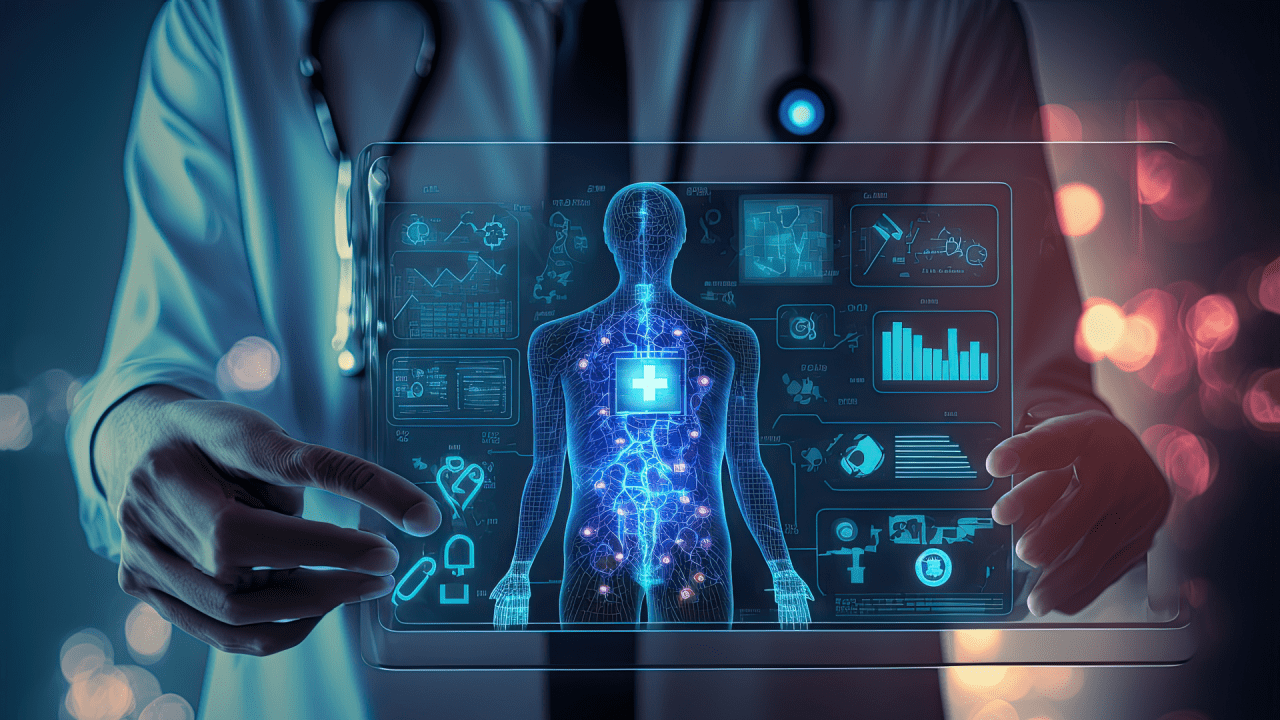
The healthcare industry has entered its most significant era of transformation since the introduction of modern antibiotics. In 2026, the sector is being fundamentally reshaped by a “Precision Care Paradigm”—a model where Technology and Artificial Intelligence allow for medical interventions that are uniquely tailored to the individual. This shift has turned the Business of healthcare from a reactive, “one-size-fits-all” system into a proactive, data-driven engine of wellness. As the point of care shifts from the hospital to the home, Digital Marketing has evolved to become a critical trust-building mechanism, connecting patients with hyper-personalized health solutions while maintaining the highest professional standards of privacy and empathy.
The Technological Foundation of 2026 Healthcare
Modern healthcare infrastructure in 2026 is built on “Interconnected Intelligence.” The silos between different medical departments have been dissolved by a unified digital fabric.
-
Digital Twins of the Patient: One of the most groundbreaking technological developments is the use of “Digital Twins.” By combining clinical data, genetic information, and real-time lifestyle metrics from wearables, doctors can create a virtual replica of a patient. This allows a Business to “rehearse” a complex surgery or test a new drug’s effects on the digital twin before the physical patient is ever touched.
-
Ambient Clinical Intelligence: The “Digital Scribe” has matured into Ambient Intelligence. During a patient visit, AI sensors and microphones capture the conversation and automatically update the Electronic Health Record (EHR) in real-time. This eliminates thousands of hours of manual charting, allowing medical professionals to focus entirely on the human aspect of care.
-
The Rise of “Hospital-at-Home”: Advanced Technology now allows for the creation of “Virtual Wards.” Remote monitoring devices, linked via 5G, provide hospital-level oversight in the comfort of the patient’s home. This not only improves patient recovery rates but also significantly reduces the operational overhead for healthcare businesses.
Artificial Intelligence: The New Diagnostic Powerhouse
In 2026, Artificial Intelligence has moved beyond simple automation; it has become an “Expert Second Opinion” that is available 24/7.
1. Multi-Modal Diagnostic Engines
AI can now synthesize data from multiple sources—X-rays, blood work, patient history, and even the tone of a patient’s voice—to identify diseases in their earliest stages. In oncology, for instance, AI-driven imaging can detect tumors that are up to 50% smaller than those detectable by human eyes alone, drastically improving survival rates.
2. AI-Driven Drug Discovery
The Business of pharmaceuticals has been revolutionized by Generative AI. By simulating billions of molecular interactions, AI has shortened the timeline for drug discovery from ten years to less than two. This allows for the rapid development of “Orphan Drugs” for rare diseases that were previously too expensive to research, aligning profit with deep social impact.
3. Agentic Patient Triage
AI “Health Agents” now handle the initial stages of the patient journey. These agents can assess symptoms, provide immediate first-aid advice, and determine the urgency of care. This ensures that emergency rooms are reserved for those in critical need while providing immediate support to those with minor ailments.
The Evolution of Digital Marketing in Healthcare
In an era where patients are increasingly comfortable using AI to evaluate their symptoms, Digital Marketing for healthcare providers must prioritize “Authority and Authenticity.”
-
Symptom-Based Discovery (SEO 2.0): Patients no longer search for “best hospital.” They describe their lives: “I have brain fog, fatigue, and joint pain; what should I do?” Healthcare marketers must optimize for these conversational queries, ensuring their clinicians are surfaced as the most trusted voices for specific “Symptom-to-Solution” pathways.
-
Trust-Centric Branding: In 2026, “Human Expertise” is the most valuable brand currency. Effective Digital Marketing highlights real clinicians explaining complex conditions through short-form video. These “Doctor-Led” campaigns outperform traditional brand ads because they provide the empathy and lived experience that AI cannot replicate.
-
Hyper-Personalized Wellness Journeys: Using predictive analytics, a healthcare Business can send “Nudges” to patients—reminders to refill a prescription, schedule a screening based on their genetic risk, or follow a personalized nutrition plan. This turns marketing into a proactive health tool rather than just a promotional one.
Business Transformation: The Data-Driven Provider
The financial and operational side of healthcare is undergoing its own AI-led revolution.
-
Predictive Operational Analytics: Hospitals use AI to forecast bed occupancy, staffing requirements, and even potential outbreaks weeks in advance. This allows for “Dynamic Resource Allocation,” ensuring the business remains fiscally responsible while delivering top-tier care.
-
Automated Claims and Revenue Cycle Management: AI systems now process insurance claims with over 99% accuracy, flagging discrepancies in real-time and reducing the friction between providers and payers. This “Frictionless Finance” is essential for sustaining the complex economics of modern medicine.
-
The ESG Mandate in Healthcare: Professional healthcare organizations are using AI to track and reduce their carbon footprint. From optimizing the logistics of medical supplies to reducing the energy consumption of MRI machines, sustainability has become a core KPI for the industry.
Professional Standards: Ethics and the “Human-in-the-Loop”
The integration of AI into such a sensitive field as medicine requires rigorous professional ethics.
-
Explainable AI (XAI): A doctor must be able to explain why an AI recommended a specific treatment. “Black Box” algorithms are no longer acceptable in professional settings.
-
Data Sovereignty: Patients in 2026 demand “Data Sovereignty”—the ability to own and control their health data. Leading healthcare businesses are adopting decentralized storage models that give patients the “Keys” to their own medical history.
-
Maintaining the Healer’s Touch: While AI handles the data, the human professional handles the “Caring.” The consensus in 2026 is that AI is a tool, like a stethoscope or a scalpel, but it can never replace the moral judgment and hand-holding of a human physician.
Looking Forward: The Era of Bio-Digital Convergence
As we look toward the late 2020s, the boundary between biology and Technology will continue to blur. We are seeing the first steps toward “Brain-Computer Interfaces” (BCI) and “Nanomedicine,” where AI-guided microscopic robots can repair tissue at the cellular level. This will create entirely new categories of Business and require a new language for Digital Marketing that focuses on the enhancement and extension of human life.
Conclusion
The convergence of Technology, Business, Digital Marketing, and Artificial Intelligence has created a healthcare system that is more intelligent, more accessible, and more human. By moving from reactive treatment to predictive prevention, we are not just curing diseases; we are empowering people to live healthier, longer lives. For the modern healthcare professional, the goal is to harness these powerful tools to ensure that the future of medicine is defined not by the machines we use, but by the lives we save.