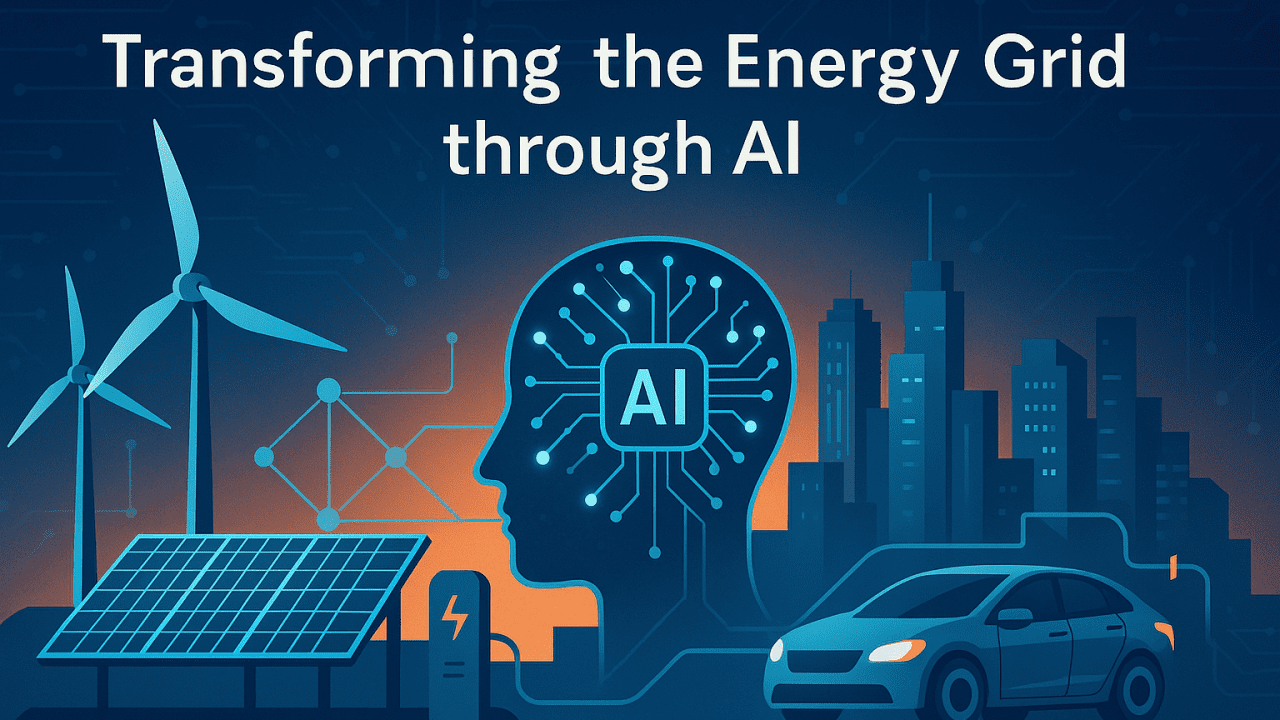
In 2026, the global energy landscape is facing a profound paradox: the very technology driving economic growth—Artificial Intelligence—is also the world’s most voracious consumer of power. A single AI data center can now require as much electricity as a mid-sized city. This “Power Crunch” has transformed the energy sector from a traditional utility business into a high-stakes arena of Technology and innovation. To survive, the industry has embraced the “Smart Grid”—a decentralized, AI-driven network that treats electricity not just as a commodity, but as a digital asset. For a modern energy Business, the objective is no longer just generation; it is the intelligent orchestration of supply and demand. Meanwhile, Digital Marketing has taken on the role of “Energy Literacy,” translating complex grid data into transparent, trust-based narratives for an eco-conscious public.
The Technological Architecture of the Smart Grid
The 2026 grid is a feat of “Software-Defined Infrastructure.” It has evolved from a one-way flow of power to a multi-directional exchange of energy and information.
-
Edge Computing and IoT Sensors: Millions of smart meters and sensors across the network act as the grid’s “nervous system.” By processing data at the “Edge,” utilities can respond to local surges or outages in milliseconds, preventing the cascading failures that characterized the aging grids of the early 2020s.
-
Virtual Power Plants (VPPs): Technology now allows thousands of decentralized energy resources—like home solar panels, electric vehicle (EV) batteries, and industrial storage—to be aggregated into a single “Virtual Power Plant.” These VPPs can provide a surge of power to the grid during peak times, acting as a flexible, carbon-free alternative to traditional coal or gas plants.
-
Green Hydrogen and Long-Duration Storage: As renewable energy becomes the primary source of power, AI is being used to manage the “Intermittency Problem.” In 2026, AI-driven systems optimize the conversion of excess wind and solar power into green hydrogen or thermal storage, ensuring that the lights stay on even when the sun isn’t shining.
Artificial Intelligence: The Brain of the Energy Nexus
In 2026, Artificial Intelligence is the “Grand Conductor” of the energy system, managing a complexity that far exceeds human capacity.
1. Agentic Load Management
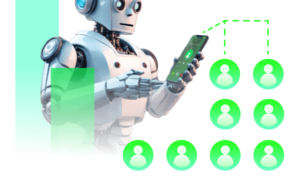
The rise of “Agentic AI” has transformed demand-response programs. Instead of asking consumers to manually turn off appliances, AI “Energy Agents” autonomously manage the power consumption of smart buildings and factories. These agents “watch” the electricity market in real-time, shifting non-essential tasks—like EV charging or industrial cooling—to times when renewable power is abundant and prices are lowest.
2. Predictive Fault Detection and “Self-Healing”
AI algorithms now scan the grid for “Digital Fingerprints” of impending failure. By detecting minute harmonic distortions or voltage imbalances, the system can identify a transformer at risk of blowing weeks before it happens. In some regions, “Self-Healing” grids can autonomously re-route power around a fault, minimizing the impact on the Business community and residents.
3. Real-Time Electricity Trading
The electricity market in 2026 is a high-frequency trading environment. Artificial Intelligence processes vast amounts of data—from weather forecasts to geopolitical events—to execute trades in milliseconds. This ensures that the most cost-effective and greenest energy is always prioritized, maximizing the ROI for energy producers and lowering costs for consumers.
Digital Marketing: From Utility to “Energy Partner”
As the relationship between the consumer and the grid changes, Digital Marketing for energy companies has shifted from “Bill Collection” to “Value Creation.”
-
Energy Transparency as a Brand Asset: In 2026, consumers demand to know where their power comes from. Successful marketers use “Real-Time Proof” dashboards, allowing customers to see exactly what percentage of their current usage is powered by wind, solar, or nuclear. This “Radical Transparency” is the ultimate antidote to greenwashing.
-
Hyper-Personalized Efficiency Nudges: Using Artificial Intelligence, energy providers now send “Savings Blueprints” to their customers. Rather than generic tips, these are data-backed recommendations: “By shifting your dishwasher to 2:00 PM today, you would have saved $4.00 and avoided 2kg of CO2.”
-
Search Everywhere Optimization (SEO 2.0): Energy firms are no longer just bidding on keywords. They are creating authoritative content that answers the AI-driven queries of the future: “What is the best VPP for a 3-bedroom home in California?” or “How does an AI data center affect my local energy prices?”
Business Transformation: The Energy Provider as a Tech Company
The most successful energy firms in 2026 have reinvented themselves as “Energy Intelligence Platforms.”
-
The “All-of-the-Above” Strategy: Leading businesses are diversifying their portfolios, integrating Small Modular Reactors (SMRs), battery storage, and solar farms into a single AI-managed system. This diversification is essential for maintaining “Grid Resilience” in the face of rising AI-driven demand.
-
Outcome-Based Revenue Models: We are seeing a move away from “Volume-Based Pricing” (selling more kWh) toward “Outcome-Based Pricing” (providing a guarantee of 99.999% uptime and a specific carbon target). This aligns the Business goal of the utility with the sustainability goals of the customer.
-
The ESG Reporting Revolution: Technology now automates the “Manual Nightmare” of ESG reporting. Smart meters and AI auditors provide revenue-grade precision on carbon emissions, making companies instantly “Audit-Ready” for global regulators.
Challenges: The “Complexity Gap” and Cyber Resilience
The move to a digital grid brings significant professional challenges.
-
Cybersecurity as National Security: As the grid becomes more reliant on Artificial Intelligence, it also becomes a larger target for cyberattacks. Cyber-resilience is now a core part of the “Business of Energy,” requiring quantum-resistant encryption and AI-driven “Threat Hunting.”
-
The Talent Transition: The industry is facing a massive “Skills Gap.” Traditional linemen and engineers are being upskilled to work alongside AI, using VR and AR to visualize the “Invisible Flows” of the smart grid.
Looking Forward: The “Net-Positive” AI Economy
As we look toward the end of the decade, the goal is “Net-Positive AI.” This is the point where the carbon-saving benefits of AI—through optimized logistics, smart cities, and precision agriculture—far outweigh the energy cost of running the AI itself. In this future, energy is not a constraint on growth, but the catalyst for a truly sustainable digital age.
Conclusion
The convergence of Technology, Business, Digital Marketing, and Artificial Intelligence has turned the energy sector into the engine room of the “Green Transformation.” In 2026, the strongest energy brands are those that treat every electron as a piece of data. By building a grid that is as smart as it is powerful, we are ensuring that the digital revolution of the 21st century is built on a foundation of clean, resilient, and intelligent energy.