Key Takeaways
- Community sports need strong planning, safe facilities, affordable access, and clear communication.
- Needs assessments help leaders identify real barriers to participation.
- Coaches and volunteers need proper training, support, and recognition.
- Partnerships can expand resources, facilities, and opportunities for athletes.
- Measuring participation, retention, safety, and satisfaction helps programs improve each season.
Community sports can give children and adults a place to be active, build friendships, develop confidence, and practice leadership. But a successful program requires more than committed coaches and a field or gym. It depends on sound planning, affordable access, trained adults, safe facilities, clear communication, and a willingness to improve after every season. These responsibilities also explain why program leadership is a specialized skill set. sports administration masters online programs from Southeastern Oklahoma State University offer an online Master of Science in Sports Administration, General concentration, focused on the management and operational side of sports. As a university serving students preparing for careers in athletics, recreation, facilities, marketing, and related sport organizations, Southeastern Oklahoma State University offers an option for professionals who want to build stronger programs in the communities and organizations they serve.
Why Community Sports Need Better Systems
Participation is growing, but access is not equally available to every family. Costs, transportation, facility availability, schedules, and the quality of the experience can all determine whether an athlete gets to play and returns next season. Strong systems help leaders make participation more reliable, welcoming, and sustainable rather than relying entirely on a few overextended volunteers. A good program creates consistency. Families should know the registration costs, where to find schedules, who to contact with concerns, and what standards coaches and volunteers must follow. Athletes should know they will be treated with respect, taught age-appropriate skills, and supported when problems arise.
Start With a Clear Community Needs Assessment
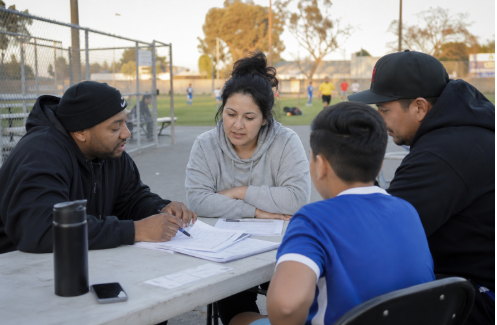
Before adding teams, sports, camps, or tournaments, leaders should learn what the community actually needs. A needs assessment does not have to be complicated. It should combine participation data with direct feedback from athletes, families, schools, coaches, and local partners.
- Review registration, attendance, waitlist, and dropout patterns from recent seasons.
- Ask families about fees, equipment, transportation, scheduling, communication, and program quality.
- Talk with schools, parks departments, health organizations, and youth-serving nonprofits.
- Compare access across neighborhoods, age groups, genders, income levels, and disability status where appropriate.
- Turn the findings into three or four measurable priorities, such as increasing scholarship use or reducing waitlists.
This approach prevents leaders from investing in a program feature that appears impressive but fails to address the biggest barrier facing local families.
Make Participation More Affordable
Families often face expenses beyond the registration fee, including uniforms, equipment, travel, meals, and time away from work. Programs can reduce those pressures through sliding-scale fees, confidential scholarships, payment plans, equipment exchanges, and low-cost recreational options that do not require extensive travel. Transparency matters just as much as assistance. Publish the full expected cost before registration opens, explain what fees cover, and identify scholarship deadlines early. Local businesses, foundations, civic groups, and individual donors can support access through scholarships or equipment without directing day-to-day program decisions.
Build a Safer and More Welcoming Program
Every season should begin with a review of the program’s safety and conduct practices. Background checks, role-specific training, appropriate supervision, and clear expectations for adult behavior are foundational protections. Organizations also need practical rules for transportation, locker rooms, electronic communication, weather decisions, and emergency response. Give athletes and families a simple way to report bullying, harassment, discrimination, or unsafe conduct. Reports should go to a designated person or team, be handled consistently, and never be dismissed because the concern involves a popular coach or successful team. Instruction should also match the athletes’ ages and development, rather than pushing early specialization as the only path to success.
Strengthen the Coach and Volunteer Pipeline
Coaches and volunteers shape the daily experience more than almost anyone else. Clear role descriptions help people understand expectations before they agree to serve. Short, repeatable training can cover positive communication, inclusion, injury prevention, conflict resolution, practice planning, and responding when a child needs additional support. Pairing new volunteers with experienced mentors can make the first season less intimidating. Programs should also recognize the people who make participation possible through public thanks, development opportunities, awards, or small practical benefits. The goal is not simply to recruit volunteers, but to help capable adults return.
Improve Facilities Without Waiting for a Major Renovation
Facility improvements do not always require a large capital project. Better lighting, drinking water, shade, seating, directional signs, and regular maintenance can make a field or gym safer and more usable. Reviewing schedules may also reveal preventable conflicts that keep teams from getting fair access to prime practice times. Accessibility should be part of every facility decision. Consider entrances, paths of travel, restrooms, seating, playing surfaces, and adaptive equipment. Track facility use by time, sport, age group, and neighborhood so future investments respond to real demand rather than assumptions.
Use Partnerships to Expand Opportunity
Partnerships can help local programs do more without trying to solve every challenge alone. Schools may provide gyms, fields, transportation, or student volunteers. Parks departments can offer facilities and registration systems. Health providers can assist with wellness education, while colleges may connect programs with interns for operations, events, marketing, or data collection. Recent collaboration across youth sports has emphasized coaching quality, injury prevention, facility access, and participation gaps. The partnerships introduced at the 2026 Project Play Summit demonstrate how national and local organizations can combine resources while maintaining a focus on the athlete experience.
Plan Events and Communication Around Families
Registration, parking, check-in, schedules, concessions, and weather updates should be easy to understand. Use a single central location for schedules, then reinforce key deadlines via email, text messages, and social media. Plain language is more useful than insider terminology, and translated information can make participation possible for more families. At events, train staff and volunteers to answer questions patiently and consistently. When feasible, provide accessible seating, quiet spaces, clear directions, youth activities, and opportunities for local organizations to participate. Gather feedback after camps, tournaments, and league seasons while the experience is still fresh.
Track Results Beyond Wins and Losses
A community program should measure whether people can access it, enjoy it, and safely continue in it. Set a baseline before the season, then track registration, attendance, retention, scholarship use, volunteer retention, facility use, injury reports, and conduct concerns. Short surveys for athletes, families, coaches, and volunteers can reveal issues that numbers alone miss. Share a brief end-of-season report with the community and identify one or two visible improvements for the next cycle. Investment can help communities close access gaps. In 2026, the grants awarded to park and recreation agencies by the National Recreation and Park Association supported efforts to expand welcoming youth sports opportunities.
Common Questions Program Leaders Ask
How can a small town improve its sports programs?
Start with a family survey, a basic facility audit, one access goal, and one dependable partner. Small, visible changes can build trust and create a stronger case for future grants or larger investments.
What makes a youth sports program inclusive?
Inclusion combines affordable fees, accessible facilities, welcoming policies, trained adults, flexible options, and a credible response to misconduct or discrimination.
What should be measured each season?
Measure participation, retention, scholarship use, satisfaction, injuries, volunteer retention, facility use, and whether the program reflects the community it intends to serve.
A Practical 90-Day Action Plan
- Days 1 through 30: Gather participation data, survey families, review policies, and inspect facilities.
- Days 31 through 60: Select priority improvements, identify partners, train staff, and prepare a communication plan.
- Days 61 through 90: Launch one access project, test the new process, collect feedback, and report what changed.
Conclusion
Strong community sports programs are built through steady, practical work rather than one-time events or expensive initiatives alone. When leaders listen first, lower barriers to participation, protect participants, support coaches, improve facilities, and measure progress over time, more athletes have a real opportunity to join, develop, and stay involved. Small improvements, such as safer equipment, better communication, accessible scheduling, and stronger local partnerships, can create lasting benefits for players, families, and volunteers. By focusing on consistent progress and responding to community needs, sports organizations can build programs that are more welcoming, sustainable, and rewarding for everyone involved.