
The Overlooked Variable in Data Center Water Efficiency: Cooling Tower Cycles of Concentration

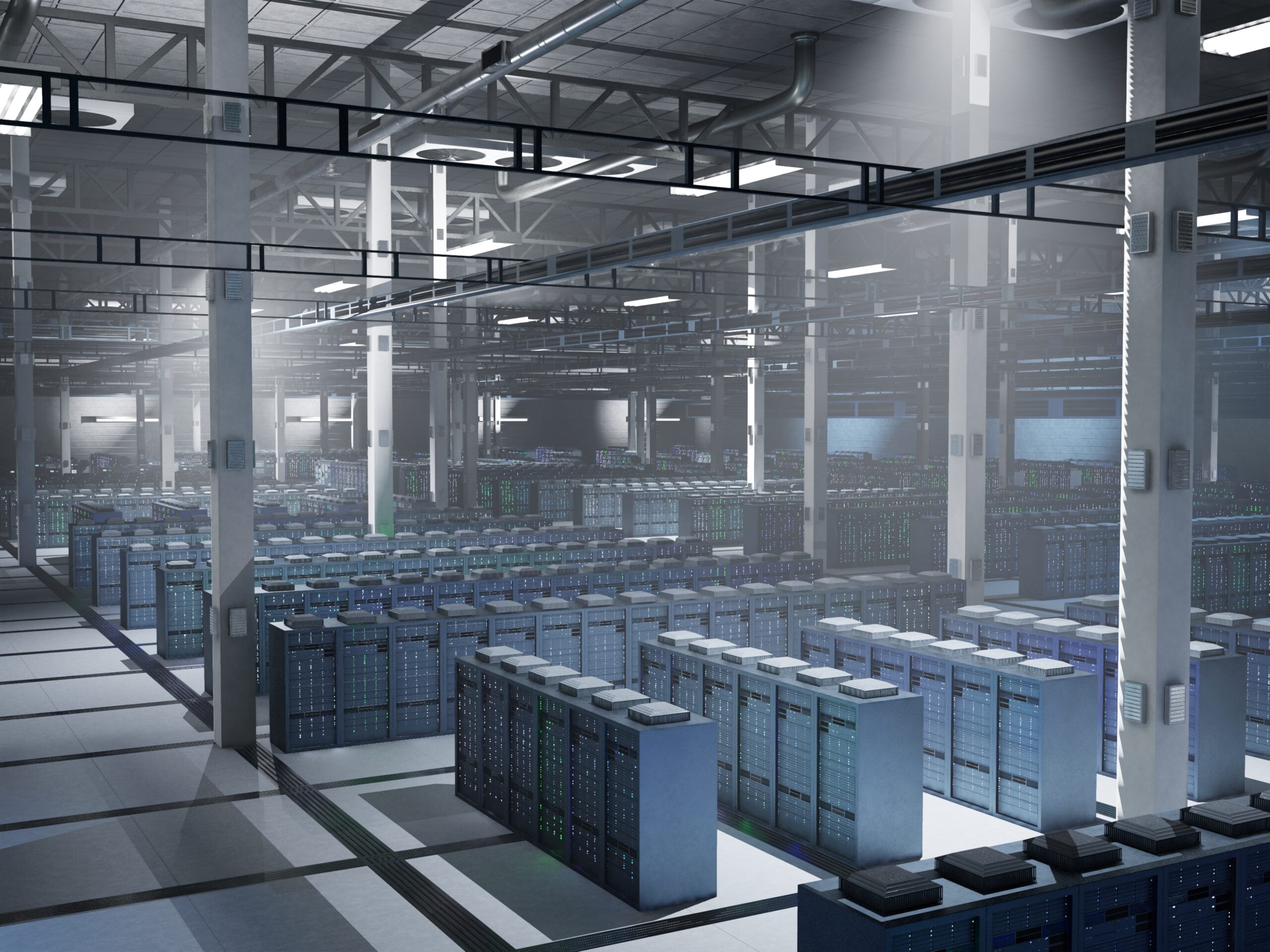
Water has moved from a footnote in data center design to a siting constraint. As rack densities climb past 50 kW and AI training workloads push thermal loads higher, operators face permitting scrutiny, community opposition and regional water stress in precisely the markets where compute demand is growing fastest.
The scale is now well documented. Hyperscale facilities running AI workloads have been estimated to consume between 1.14 and 1.70 million litres of water per day, comparable to the domestic demand of roughly 1,100 to 1,500 households. Water Usage Effectiveness, or WUE, has emerged as the standard benchmark, with efficient facilities cited around 1.8 litres per kilowatt-hour.
Most of the industry conversation about reducing that figure concerns cooling architecture — evaporative versus closed-loop, direct-to-chip, immersion. Those decisions matter and they are capital-intensive. For the large installed base already running evaporative cooling, however, a substantial share of water consumption is governed by an operating parameter that receives far less attention: cycles of concentration.
Where the water actually goes
Evaporative cooling remains widespread because it is energy-efficient. Warm water absorbs heat from the servers and is cooled in a tower by evaporating a portion of it, which removes heat at a fraction of the electrical load a mechanical chiller would require. The trade-off is direct: the energy saving is purchased with evaporated water.
That evaporation is fixed by the heat load. It cannot be reduced without changing the cooling architecture. But evaporation is not the only water leaving the system.
As pure water evaporates, the dissolved minerals it carried remain behind, concentrating in the circulating water. Left unchecked, that concentration produces scale on heat transfer surfaces, degrading thermal performance and eventually damaging equipment. Operators therefore deliberately discharge a portion of the concentrated water — blowdown — and replace it with fresh makeup water.
Total makeup water is the sum of evaporation and blowdown. Evaporation is thermodynamically determined. Blowdown is a treatment decision.
The metric that determines blowdown volume
Cycles of concentration expresses how many times more concentrated the circulating water is than the makeup water. A facility running at four cycles maintains circulating water at four times the dissolved solids of its incoming supply, and correspondingly discharges less of it.
The relationship between cycles and water consumption is not linear, and the gains are front-loaded. According to figures published by the U.S. Department of Energy, many cooling towers operate at only two to four cycles, and increasing cycles from three to six reduces makeup water consumption by approximately 20 percent and blowdown by around 50 percent.
For a facility drawing over a million litres a day, a 20 percent reduction in makeup is a material change in both water bill and community water impact, achieved without touching the cooling architecture. The corresponding halving of discharge volume also reduces sewer charges and, at sites operating under discharge permits, relieves a regulatory constraint that can otherwise limit expansion.
The gains do diminish. Moving from two cycles to five captures most of the available saving; pushing from ten to twelve yields very little additional water while sharply increasing scaling risk. The operating question is not how high cycles can be driven, but where the ceiling actually sits for a given site.
What sets the ceiling
That ceiling is set almost entirely by the chemistry of the makeup water, and it is site-specific.
Every cooling system has maximum tolerable concentrations of calcium, magnesium, alkalinity, silica, chloride and sulfate before scaling, fouling or corrosion becomes a risk. Because cycles multiply whatever is present in the makeup supply, a facility drawing hard, high-alkalinity municipal water reaches those limits at a low cycle count. A facility drawing softened or partially demineralised water reaches them much later.
Silica is frequently the binding constraint and the least forgiving. In normal pH and temperature ranges, cycles are commonly set so that dissolved silica does not exceed roughly 100 mg/L as SiO2, and where the source water already carries high silica, achievable cycles are severely restricted. Silica scale is also considerably harder to remove than carbonate scale once formed.
Calcium carbonate is the more common limit and the more tractable one. Its solubility falls as temperature rises, which is why scale appears first at the hottest points in the system — precisely the heat exchange surfaces whose performance the facility depends on.
The practical consequence is that two data centres with identical cooling equipment and identical IT loads can post materially different WUE figures purely because of what comes out of the municipal main.
Treating makeup water as an efficiency measure
This reframes makeup water treatment. It is generally budgeted as an equipment protection cost. In water-constrained sites it functions as an efficiency lever, because raising the scaling ceiling raises the achievable cycle count, which reduces makeup volume.
Softening is the most direct route where hardness is the binding constraint. Removing calcium and magnesium before the water enters the tower raises the concentration at which carbonate scale forms, permitting operation at higher cycles that would otherwise be unsafe. Suppliers in this segment publish the equipment arrangements they design against — Hiju’s overview of single- and multi-tank softener arrangements distinguishes designs that can regenerate without interrupting supply, which is the relevant consideration for continuously operating facilities.
Filtration addresses a different mechanism. A cooling tower functions as an air scrubber, drawing airborne dust, pollen and biological material into the circulating water. Side-stream filtration removes that suspended load, which reduces fouling, improves biocide effectiveness and protects the heat transfer surfaces that scale control is intended to preserve.
Where source water quality is poor enough that softening alone will not lift the ceiling usefully, partial reverse osmosis treatment of the makeup stream is used to reduce dissolved solids directly. That carries an energy cost, which has to be weighed against the water saved — a calculation that resolves differently in a water-stressed region than in a water-abundant one.
Reclaimed water changes the inputs
A parallel development is the shift toward non-potable supply. Reclaimed municipal wastewater, distributed through dedicated purple-pipe networks, is increasingly used for cooling makeup, removing pressure from community drinking water supplies. Equinix has reported reaching 25 percent non-potable water use across its facilities in 2023, and has been using reclaimed water in Silicon Valley since 2010.
Reclaimed water alters the treatment problem rather than removing it. It typically carries higher organic and nutrient loading than potable supply, which raises biological fouling risk and increases the importance of filtration and biocide programmes, while its mineral profile may allow higher or lower cycles depending on the source. The treatment train is different, not absent.
What this means for facility planning
For operators reporting WUE alongside PUE, three points follow.
Current cycles should be measured rather than assumed, since many facilities run well below their achievable ceiling simply because nobody has recalculated it against a current water analysis.
The ceiling should be established from a full makeup water analysis covering hardness, alkalinity, silica, chloride and sulfate, together with system metallurgy — not from a generic target figure carried over from another site.
Where the ceiling is low, the choice is between accepting the resulting makeup volume and investing in pretreatment to raise it. In regions where water access is becoming a condition of permitting rather than merely a line item, that investment increasingly competes favourably against the alternative of not being able to build at all.







Comment