As the world entered 2020, the global shift to digital-first operations accelerated at a pace no enterprise had anticipated. Remote work swept across continents. E-commerce surged past historic thresholds. Banks, health-care providers, logistics companies, and government systems were forced to scale overnight. In this unprecedented transformation, one layer of technology emerged as the most consequential and the most vulnerable: enterprise databases.
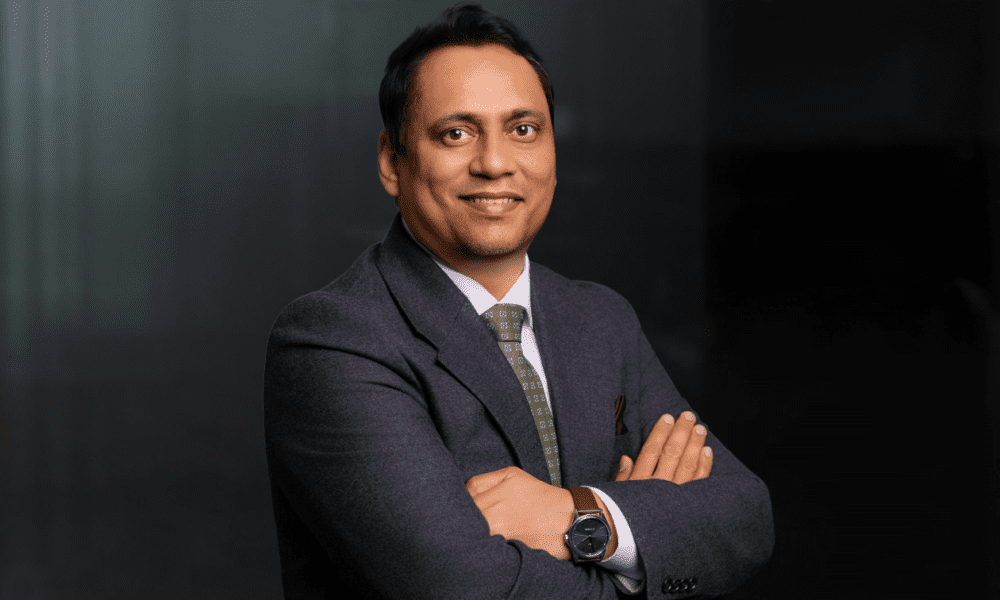
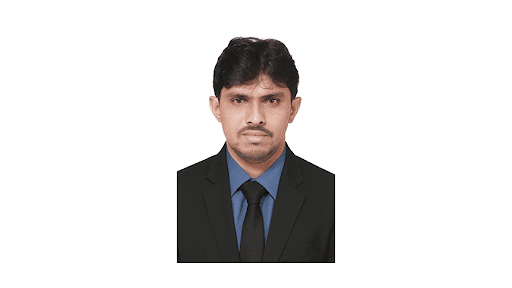
Amid this upheaval, Madhava Rao Thota, an Infra Technology Specialist with deep expertise spanning Oracle, SQL Server, MySQL, PostgreSQL, Cassandra, MongoDB, Aurora, and distributed NoSQL clusters, quietly became one of the most influential voices redefining reliability engineering for modern cloud data platforms.
His three major works published between 2018 and 2020 offered something rare in a fast-moving industry: a structured roadmap for how enterprises could build resilient, intelligent, and self-optimizing data ecosystems capable of withstanding the volatility of real-time digital operations.
His publications include:
- Strategic Modernization of Cloud Databases with Enhanced Resilience and Security Controls (2018)
- Advancing Mission-Critical Data Platforms Through Predictive Observability and Autonomous Diagnostics (2019)
- AI-Augmented Database Administration: From Reactive Operations to Predictive, Self-Optimizing Data Ecosystems (June 2020)
Together, these works position Madhava as a leading architect of the next generation of intelligent database operations.
THE 2020 INFLECTION POINT: WHY DATABASES BECAME THE REAL BATTLEFIELD
While most business leaders spent 2020 publicly discussing remote work infrastructure and cloud scaling strategies, engineers behind the scenes knew the truth: the real pressure fell on databases.
Application servers can autoscale. Containers can be orchestrated. But storage engines, transactional pipelines, and distributed state systems cannot simply “scale by default.”
A single misaligned index, a drifting replication node, or an unobserved contention pattern could bring an entire digital service down.
This is what made Madhav’s research indispensable. Long before 2020’s crisis, he warned that enterprises relying on traditional, manual, ticket-driven database operations were on a collision course with outages, instability, and escalating operational risk.
By 2020, millions of users moving online validated his prediction.
2018: A BLUEPRINT FOR RESILIENT, MODERN, CLOUD DATABASES
In Strategic Modernization of Cloud Databases, Madhava tackled one of the decade’s most persistent challenges: outdated database architectures lifted into the cloud without structural redesign.
He argued that enterprises were mistakenly assuming that “running in the cloud” meant “running resiliently.”
His research revealed the opposite.
Legacy systems carried:
- configuration drift
- manual failover routines
- single-region dependencies
- inconsistent governance models
- fragmented security controls
These weaknesses became magnified in distributed cloud ecosystems.
Madhav’s 2018 reference architecture outlined a modernized model anchored in:
- multi-zone replication
- identity-based security controls
- network segmentation
- governed configuration baselines
- automation-driven provisioning
- platform-level observability
He demonstrated that resilience is engineered not inherited from the cloud provider.
His framework quickly became a touchstone for CIOs and cloud migration leads rethinking how to achieve true continuity in high-volume environments.
2019: THE RISE OF PREDICTIVE OBSERVABILITY
If 2018 was about structural modernization, 2019 was about visibility.
In Advancing Mission-Critical Data Platforms Through Predictive Observability and Autonomous Diagnostics, Madhava addressed a long-standing blind spot: traditional monitoring tools were failing to prevent outages.
His research made a decisive claim:
Most database failures do not happen suddenly. They evolve slowly and silently.
CPU may look healthy, but lock chains may be forming.
IOPS may remain within threshold, but buffer pool churn may be accelerating.
Replication may appear stable, but commit latency may be drifting millisecond by millisecond.
Madhava identified the problem clearly:
Monitoring tools were designed to detect symptoms, not causes.
His predictive observability architecture changed that. It proposed:
- telemetry-rich pipelines
- cross-stack correlation of metrics
- machine-learning-based degradation forecasting
- autonomous diagnostic reasoning
- actionable, context-rich early alerts
He integrated ML models Random Forest, SVM, Gradient Boosting, LSTM networks to classify instability patterns, predict resource saturation, and surface early-warning signals.
This research was ahead of its time. In 2020, when enterprises saw sudden surges in usage, such predictive insight proved invaluable.
2020: DATABASES BECOME INTELLIGENT, ADAPTIVE, AND SELF-OPTIMIZING
By June 2020, Madhav’s landmark work AI-Augmented Database Administration offered a vision of the future: databases that could heal, tune, and optimize themselves.
Drawing from foundational systems like Bigtable, OtterTune, and DeepLog, he showed how AI could automate decades-old DBA challenges:
- Workload forecasting
Forecasting load surges before they hit Aurora or MySQL and PostgreSQL clusters.
- Autonomous tuning
ML-assisted adjustment of buffer pools, query caches, and concurrency settings.
- Predictive anomaly detection
Sequence-modeling of logs to detect risk patterns hours before thresholds breached.
- Intelligent failover orchestration
Failover decisions driven by ML-based health scoring, not manual judgment.
- Rebalancing and self-healing
Automated shard reassignment, replica balancing, and plan stabilization.
This vision resonated globally as enterprises confronted 2020’s scaling demands. Suddenly, the old model of DBAs manually tuning systems every week or every night during crises became untenable.
Madhav’s insight was clear and timely:
AI is no longer a convenience. It is a necessity for database survival in the digital era.
THE ENGINEER BEHIND THE THEORY: A PRACTITIONER WITH REAL-WORLD BATTLE SCARS
Unlike many academics, Madhav’s research was forged from lived operational experience.
Working across:
- MySQL
- PostgreSQL
- Oracle RAC
- SQL Server
- Aurora MySQL and PostgreSQL
- MongoDB
- Cassandra
- Redis
- Large-scale corporate migration programs
He dealt firsthand with:
- replication lag that appeared without warning
- storage saturation during seasonal traffic
- noisy neighbor effects in cloud VMs
- deadlocks erupting under peak hours
- failover loops in under-configured HA setups
- index fragmentation destroying analytics workloads
This deep, hands-on background allowed him to produce research that was not abstract, but operationally grounded.
As Dr. Karen Ellington, an independent data-systems researcher, described:
“Madhav’s work stands out because he writes like someone who has lived inside the outage war room. His frameworks solve real problems not hypothetical ones.”
CASE STUDIES: WHERE MADHAV’S PRINCIPLES SHOW THEIR POWER
- Predictive Capacity Planning at a Retail Enterprise
From his 2020 AI-augmented DBA research, a major retailer struggled every holiday season as MySQL and Aurora clusters buckled under sudden traffic. Madhav’s forecasting model based on industry research and ML-driven telemetry interpretation reduced incidents by 37 percent by predicting load patterns two weeks ahead.
- Intelligent Tuning in Financial Services
A financial analytics provider deployed a tuning system modeled after OtterTune’s architecture. The result:
20 to 45 percent faster queries
60 percent fewer manual interventions
Nearly zero performance regressions during peak reporting windows
This echoed Madhav’s 2020 argument that AI does not replace DBAs it amplifies them.
- DeepLog-Driven Detection in Global Distributed Clusters
Using a DeepLog-style workflow, a global logistics corporation detected replica lag instability four hours before a node collapse in its MongoDB cluster. This early signal prevented a full-blown incident.
Such case studies validated Madhav’s central belief:
The future of data operations depends on intelligent anticipatory systems not human reaction time.
WHY 2020 BECAME MADHAV’S BREAKTHROUGH YEAR
By October 2020, enterprises were no longer asking whether AI-assisted data platforms were helpful they were asking how quickly they could adopt them.
Madhav’s work provided the missing link:
a practical, deeply technical, architecturally sound roadmap for evolving database operations to meet modern demands.
Where many engineers focused narrowly on performance tuning or cloud deployments, Madhava connected:
- modernization
- resilience engineering
- observability
- machine learning
- autonomous diagnostics
- high availability
- governance and security
- cloud-native scaling models
This holistic view is what set his work apart and what made it so influential in 2020.
THE INDUSTRY REACTS: EXPERTS WEIGH IN
Dr. Samuel Price, Distributed Systems Professor:
“His layering of predictive analytics onto observability pipelines is one of the clearest explanations of next-generation reliability engineering I have seen.”
Adriana Flores, Principal Cloud Architect:
“Madhava articulates what engineers feel every day that manual DBA work cannot keep up with the world we now operate in.”
Michael Brenner, CTO, Retail Tech Group:
“His frameworks allowed us to stabilize clusters that had been unstable for years.”
A NEW ERA OF DATABASE OPERATIONS AND ONE OF ITS LEADERS
In a year marked by global upheaval and digital acceleration, Madhava Rao Thota emerged as a thought leader whose work could not have been timelier.
He did not merely propose new ideas.
He offered maps architectural, operational, and analytical for how enterprises can survive and thrive in a world where:
- workloads fluctuate unpredictably
- data volumes grow exponentially
- cloud infrastructure is ever-changing
- outages become increasingly costly
By October 2020, industry leaders were recognizing the pivotal truth his research illuminated:
Databases must become intelligent systems capable of predicting, adapting, and optimizing themselves.
And thanks to Madhav’s contributions, the path to that future is clearer than ever.