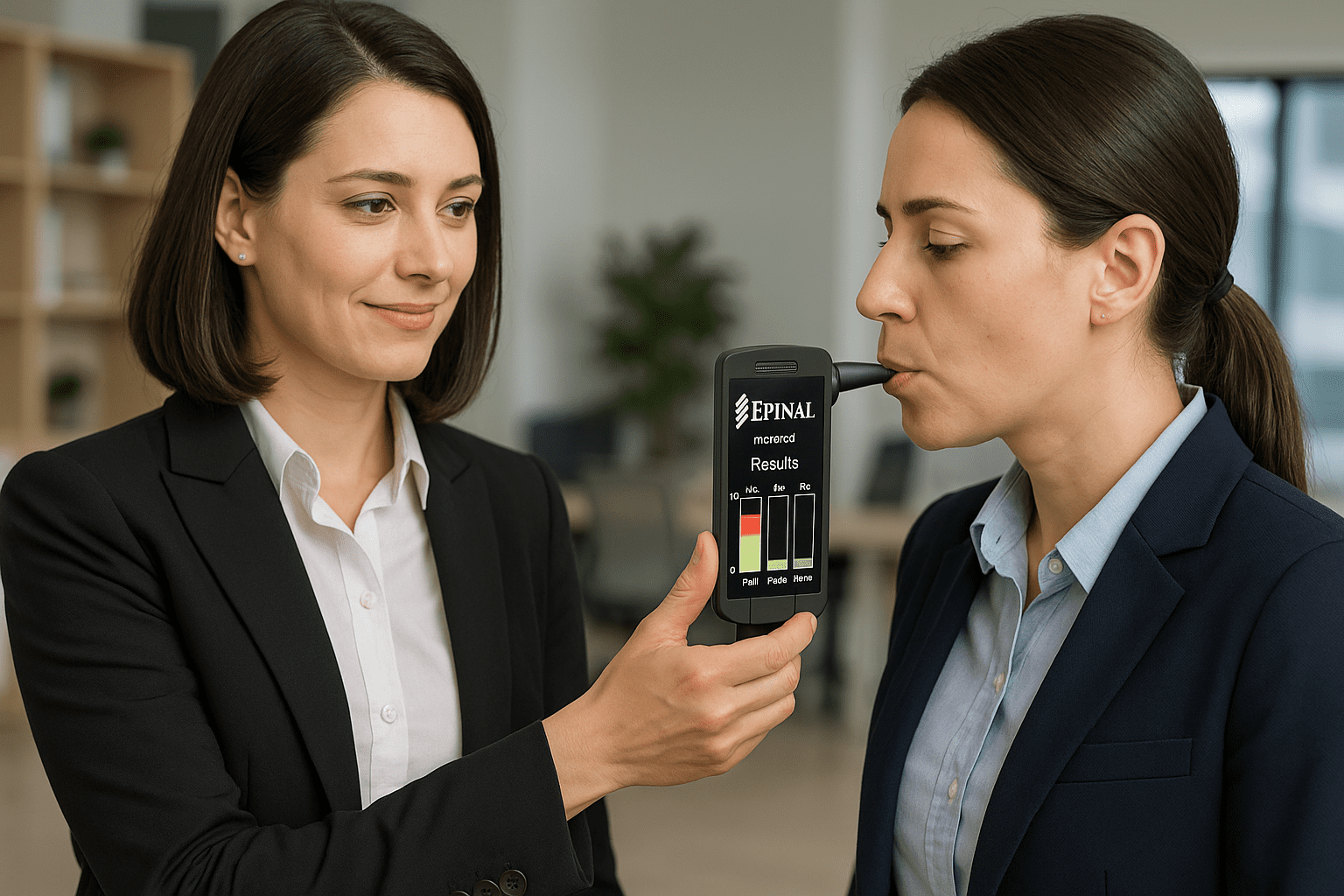
Businesses in high-turnover or safety-critical industries are facing a growing operational challenge. Impairment is harder to detect, substances are more varied, and traditional testing methods do not match the speed at which organizations must make decisions. These pressures carry financial consequences that touch everything from insurance costs to productivity. As a result, companies are paying close attention to new technologies that can offer faster clarity. Epinal’s Narcolyzer platform sits at the center of that conversation as a breath-based system designed to screen for multiple narcotics in seconds.
The Financial Burden of Delayed Clarity
Workplace drug testing has long relied on off-site laboratories. While accurate, this approach introduces delays that can disrupt staffing, slow onboarding, and decrease productivity. In industries such as transportation, construction, logistics, and manufacturing, even short interruptions can create ripple effects. A worker who must be pulled from duty while awaiting results may leave a team short-handed, and a new hire delayed by scheduling conflicts can force leaders to do without or lease the candidate to another company/competitor.
Insurance providers are also adjusting their expectations. Companies operating in environments with heavy equipment, vehicles, or hazardous materials face growing scrutiny around safety protocols. When employers cannot produce timely information about potential impairment, claims can become more complex and costly. Post-incident investigations often require days of waiting for toxicology reports, while operations remain stalled.
Narcolyzer is being developed to provide companies with a more immediate screening option. The device analyzes breath using a removable, single-use sensor cartridge that interacts with biochemical signatures associated with substances such as opiates, cocaine, THC, benzodiazepines, MDMA, methamphetamine and more. This design reflects Epinal’s approach to reducing delays without sacrificing the clarity needed for early decision-making.
Operational Efficiency and Risk Reduction
Hiring processes are particularly sensitive to slow testing timelines. Companies in construction, warehousing, hospitality, and other high-turnover sectors often need to move candidates through screening quickly. Delays can cause applicants to abandon the process or accept competing offers. A portable breath-based system has the potential to streamline onboarding by allowing managers to conduct evaluations on-site and on schedule. Should a candidate flag for having a controlled substance, the employer can choose to send them for further testing at that time. If the candidate does not have any drugs in their system, the employer can move immediately to next steps. Narcolyzer tests what is being actively metabolized in the body at the time of the test. The concept of a person stating they used a substance a week ago does not apply to Narcolyzer. If it shows positive in their system at the time of the test, their body is actively processing it from recent use.
The same dynamic applies to post-incident assessments. When a workplace accident occurs, uncertainty around impairment can complicate reporting requirements and delay the return to normal operations. If supervisors can gather fast, reasonable indications of whether narcotics may be involved, they can make informed decisions more efficiently. While lab-based confirmation remains essential for regulatory and legal purposes, early clarity reduces operational downtime.
Epinal integrates artificial intelligence into Narcolyzer to help interpret biochemical signals with consistency. This supports a workflow that minimizes subjectivity and enhances early-stage evaluation. In environments where every delay has a cost, the possibility of on-site screening becomes an economic advantage rather than a convenience.
Preparing for Shifts in Compliance
Regulators and industry bodies are updating standards to reflect the growing complexity of modern drug use. Recent legislative actions around THC based products and some other drugs have certainly created a paradigm shift in how employers are addressing intoxication and impairment in the workplace. Transportation and logistics companies must manage Department of Transportation-related expectations, while energy and industrial sectors face their own safety mandates. Organizations are increasingly exploring tools that fit into these frameworks without slowing operations.
Epinal is preparing field evaluations in multiple states within the US by working with Departments of Health and Human Services along with various Attorney Generals offices. These efforts focus on environments where rapid information can influence outcomes, including hospital systems, treatment programs, and emergency services. As the results come in from the field trials, the machine learning will grow the models of the drugs tested to a point of creating a type of digital fingerprint. As multiple drugs are used, the amounts in each breath sample will vary through the combination of drugs and the intensity in which they present will be unique. This fingerprint can help show when people are using a specific Cocaine as example, should it have an opiate or other drug mixed in it, both drugs can show with Narcolyzer and the machine learning will pick up on the intensity of both drugs. This becomes the fingerprint of that drug(s) consumed by that person. As more people in the local geographic space show the same concentrations, patterns will emerge unlike any other testing system using more antiquated methods.
For executives and risk managers, the broader appeal lies in aligning safety with efficiency. Tools that provide early information help organizations reduce exposure, maintain compliance, and manage the financial impact of impairment-related incidents. Narcolyzer represents a shift toward real-time assessment, one that matches the pace of the modern workforce.
Epinal is conducting an active raise on WeFunder.