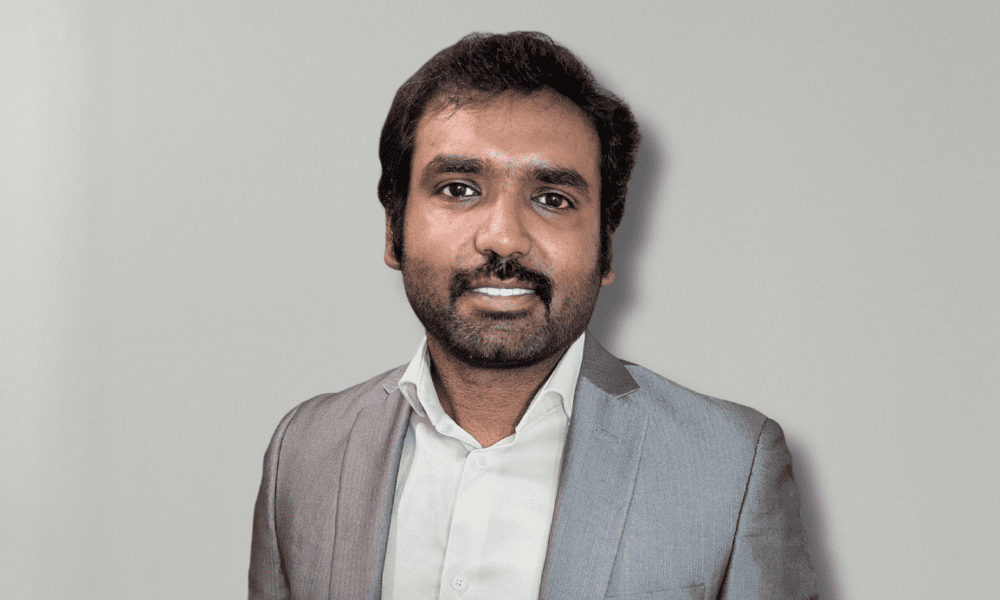
Caption: Sri Nitchith Akula is a software engineer specializing in deep learning and computer vision, focused on building production-grade AI systems for autonomy and edge devices.
Visual data powers everything from autonomous vehicles to the camera in your pocket. As deep learning has matured, computer vision has shifted from basic recognition to something more practical and consequential: systems that can interpret motion, anticipate outcomes, and support real-world decisions under strict constraints. In many ways, vision has become one of the most important interfaces between machines and the physical world.
For Sri Nitchith Akula, a software engineer with 7 years of experience in deep learning and computer vision and a Hackathon Raptors, this shift is more than a technology trend. It reflects a fundamental change in how machines understand their surroundings. Across roles spanning autonomous driving at Zoox and on-device imaging at Samsung, Sri Nitchith has worked on deploying vision systems that must perform reliably at scale, often within tight latency and compute budgets.
“Machine perception is no longer just about detecting objects,” he explains. “The real challenge is building systems that can adapt to changing environments, understand context, and behave predictably when it matters most.”
As a judge for the Globee® Awards for Impact, Sri Nitchith often reviews new research and early-stage startups working at the edge of artificial intelligence. With experience spanning both research and real-world deployment, he brings a grounded perspective on what it takes for vision systems to move from promising ideas to practical impact.
From Pixels to Perception
Early computer vision systems treated images as static inputs. They could identify simple patterns, but they struggled with uncertainty, motion, and interaction. Modern deep learning models have changed that baseline. Today’s perception systems can reason over sequences, infer intent, and estimate what might happen next, rather than only describing what is present in a single frame.
“Modern perception systems don’t just recognize what’s in an image,” Sri Nitchith says. “They estimate what’s happening over time, what’s likely to happen next, and how the system should respond.”
At Zoox, Sri Nitchith contributed to prediction systems used in autonomous driving. These models take in signals from sensors such as cameras, radar, and LiDAR, then generate forecasts of how surrounding vehicles and pedestrians may move. Those forecasts help enable safe planning decisions, especially in complex urban environments where interactions are dynamic and edge cases are common.
“In autonomy, accuracy is non-negotiable,” he notes. “The difference between understanding what is happening now and anticipating what could happen next directly affects the quality and safety of decisions.”
These forecasting models rely on large-scale sequence and interaction learning, trained on diverse driving scenarios. The goal is not only low error, but stable and kinematically feasible predictions that a motion planning system can actually use. Sri Nitchith emphasizes that real-world deployment requires rigorous evaluation and consistent performance, not just strong results in offline experiments.
Engineering Intelligence for Everyday Vision
While autonomous driving brings one of the hardest reliability bars in AI, Sri Nitchith’s earlier work at Samsung focused on a different challenge: bringing high-quality vision models to everyday consumer devices.
At Samsung R&D, Sri Nitchith helped design and productionize deep-learning-based imaging pipelines that improved visual quality under real-time constraints. This work involved building and optimizing models for tasks such as image enhancement and super-resolution, while carefully balancing model quality with compute, memory, and power limitations.
Those trade-offs also informed his broader thinking on system reliability. In his paper Engineering Secure Software: Information Security Strategies for Modern Development Teams, Sri Nitchith examines how robustness emerges not from isolated optimizations, but from embedding discipline, collaboration, and guardrails directly into development workflows—principles that closely mirror the constraints of deploying vision models on consumer hardware.
“The core problem was efficiency,” Sri Nitchith recalls. “How do you deliver meaningful visual improvement on-device, without sacrificing performance or battery life?”
Solving that problem required more than training strong models. It required systems-level optimization, careful handling of latency, and robust behavior across diverse content. The result was AI-based enhancements that could run efficiently on consumer hardware at scale.
Sri Nitchith notes that many of the engineering principles behind edge vision translate directly into robotics and autonomy. The constraints shift from thermal and battery performance to safety and predictability, but the mindset remains the same: models must be efficient, reliable, and deployable in the environments they serve.
The Convergence of Vision and Decision
Sri Nitchith sees the next frontier of AI as the deeper integration of perception and decision-making. Vision models are increasingly being paired with planning, world modeling, and language understanding to build systems that can interpret context and act more intelligently.
“The most capable systems will integrate perception with reasoning,” Sri Nitchith says. “It’s not enough to detect an obstacle. The system needs to understand what it means in context and how to respond safely.”
This trend is already visible across self-driving systems, robotics, industrial automation, and multimodal foundation models. As these systems improve, the boundary between sensing and decision-making becomes less rigid. Vision stops being just an input and becomes part of the reasoning loop.
However, Sri Nitchith emphasizes that capability must be matched by responsibility. The higher the stakes, the more important it becomes to build safeguards into how perception-driven decisions are made.
“When AI systems influence safety-critical behavior, you need transparency and fail-safe design,” he explains. “We should be able to understand why a model behaved the way it did, especially when it affects people.”
He points to bias mitigation, interpretability, and robust evaluation as essential priorities for the next phase of AI vision deployment.
Shaping the Future of Machine Perception
Beyond his core engineering work, Sri Nitchith continues to advocate for stronger collaboration between research and industry. He supports open benchmarks, shared evaluation standards, and responsible deployment practices that make AI vision systems more interpretable and resilient.
“The future of machine perception will depend on trust,” Sri Nitchith concludes. “From autonomy to visual media, progress is not just about better models. It’s about building systems that people can rely on.”
Sri Nitchith’s work, spanning consumer imaging, autonomous systems, and his role as a member of the editorial board for computer sciences and innovative science journals at SARC, reflects how far deep learning has progressed, from basic pattern recognition to more robust perceptual understanding. As AI becomes increasingly embedded in the physical world, the most meaningful advances will be those that pair strong technical performance with reliability, transparency, and human-centered design.