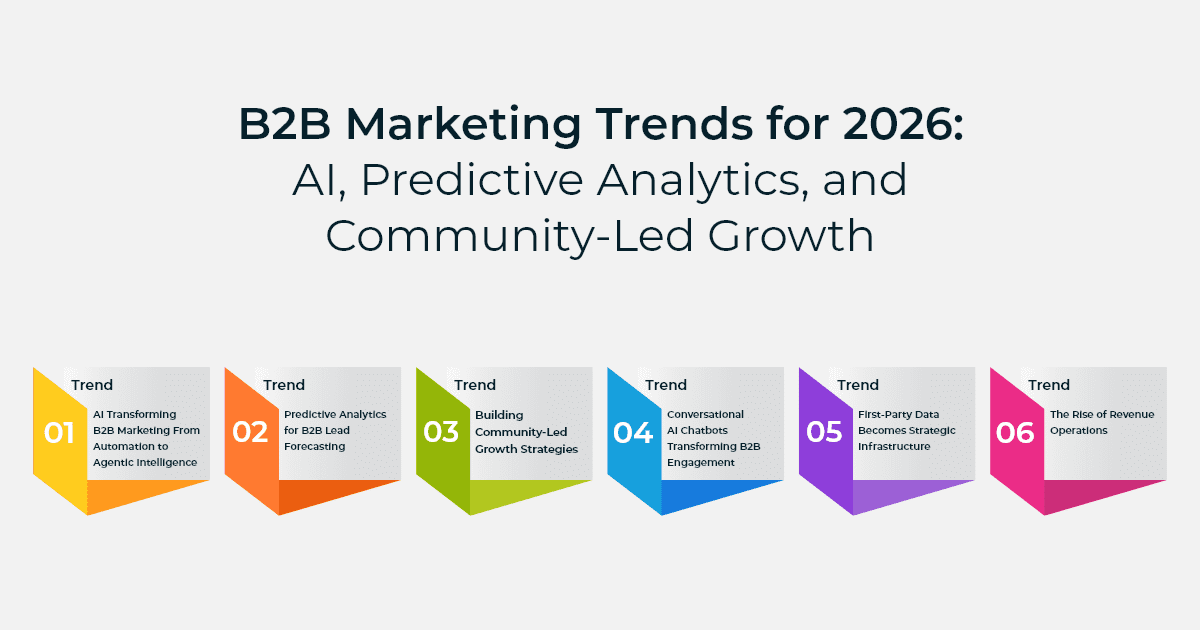
The landscape of B2B (Business-to-Business) interactions has historically been characterized by long sales cycles, complex decision-making units, and a reliance on high-touch relationship management. However, as we progress through 2026, the traditional blueprint for B2B success is being fundamentally rewritten. The catalyst for this change is the sophisticated integration of Technology and Artificial Intelligence, which has ushered in a new era of efficiency and precision. For the modern Business, staying relevant now requires a radical shift in Digital Marketing—moving away from broad-spectrum outreach toward a model defined by predictive intelligence and personalized value delivery.
The Technological Infrastructure of 2026 B2B Operations
In the B2B sector, Technology is no longer just a facilitator of communication; it is the architect of the customer journey. Central to this infrastructure is the “Unified Data Layer.” Professional organizations are moving away from fragmented CRM (Customer Relationship Management) systems toward integrated platforms where every touchpoint—from the first ad click to the final contract signature—is recorded and analyzed in a single ecosystem.
This technological maturity allows businesses to achieve what was once impossible: true “Omnichannel Orchestration.” In a B2B context, this means that a procurement officer’s experience on a website is seamlessly mirrored in the insights provided to a sales representative. If a lead engages with a technical whitepaper via a Digital Marketing campaign, the sales team is immediately alerted with AI-generated talking points that address the specific pain points identified in that whitepaper.
Artificial Intelligence: The Engine of Predictive B2B Strategy
While B2C companies use Artificial Intelligence to predict what a consumer might buy next, B2B organizations are using it to predict when an entire enterprise is ready to pivot.
1. Advanced Intent Monitoring
By 2026, the most successful B2B marketers are no longer waiting for leads to fill out forms. Instead, they utilize AI-driven intent monitoring. These systems scan “the dark social” and third-party data ecosystems to identify business signals—such as new funding rounds, executive shifts, or technological adoption patterns—that indicate a company is in-market for a solution. This allows for “Precision Targeting,” where marketing spend is allocated only toward accounts with a high statistical probability of conversion.
2. Agent-to-Agent (A2A) Commerce
A burgeoning trend in the current Business environment is the rise of agentic systems that handle initial procurement stages. We are entering an era where a buyer’s AI agent might “negotiate” with a seller’s AI agent to filter through specifications, pricing tiers, and compliance requirements before a human ever enters the conversation. This shift requires B2B brands to optimize their digital presence not just for human readers, but for AI scrapers and synthesis engines—a discipline now known as Generative Engine Optimization (GEO).
Redefining Digital Marketing for the B2B Professional
Digital Marketing in the B2B space has evolved from “shouting at the masses” to “conversing with the few.” The focus has shifted from volume to velocity and value.
-
Hyper-Personalized Content Hubs: Rather than static websites, businesses are deploying AI-powered content hubs. When a visitor arrives, the system identifies their industry, company size, and job role, dynamically reassembling the homepage to show relevant case studies, ROI calculators, and product features.
-
The Death of the “Lead Dump”: The traditional friction between marketing and sales is being resolved by AI-enhanced lead scoring. Instead of marketing “dumping” thousands of low-quality leads onto sales, Artificial Intelligence filters these based on deep behavioral data. Only “High-Intent” prospects are passed through, accompanied by a comprehensive “Context Brief” that explains the lead’s journey and predicted needs.
-
Video and Interactive Media: With video projected to account for over 80% of internet traffic, B2B marketers are using AI to create personalized video messages at scale. A single master recording by a CEO can be dynamically altered to address hundreds of different prospects by name, mentioning their specific company challenges with perfect visual and auditory fidelity.
The Business Impact of Intelligent Automation
The integration of Technology and AI has a direct and measurable impact on the bottom line. Efficiency gains are no longer marginal; they are transformative.
Operational Efficiency
By automating routine tasks such as contract review, meeting scheduling, and initial lead qualification, B2B firms are seeing a significant reduction in “Sales Friction.” This allows the human workforce to focus on the “high-stakes” aspects of the Business—negotiating complex deals, building long-term partnerships, and driving product innovation.
Enhanced ROI and Attribution
One of the greatest challenges in B2B Digital Marketing has always been attribution. With long sales cycles involving multiple stakeholders, it was difficult to know which marketing effort actually moved the needle. Today, AI-driven attribution models can weigh the influence of every touchpoint across a six-month cycle, providing a clear picture of where budget is being utilized most effectively.
Navigating the Ethics of AI in B2B Relationships
As Artificial Intelligence takes a more prominent role, professional ethics become a cornerstone of brand identity. B2B buyers in 2026 are increasingly wary of “AI Slop”—low-quality, machine-generated content that lacks depth.
Professionalism now dictates a “Human-in-the-Loop” (HITL) approach. While AI generates the data and the initial drafts, human subject matter experts provide the nuance, the unique point of view, and the “Social Proof” that machines cannot replicate. Trust is the most valuable currency in B2B, and maintaining it requires transparency about how AI is used and how customer data is protected.
The Future of B2B Growth
Looking ahead, the synergy between Technology and Business strategy will only deepen. We are moving toward “Autonomous Demand Generation,” where AI systems not only identify and nurture leads but also suggest new market entries and product pivots based on real-time global economic data.
-
Glocalized Strategies: AI allows large B2B firms to “Glocalize”—maintaining a global brand standard while using AI to instantly adapt marketing materials to local languages, cultural nuances, and regional business regulations.
-
Predictive Retention: Beyond acquisition, AI is being used to monitor “Account Health.” By analyzing usage patterns and support tickets, businesses can predict which clients are at risk of churning and intervene with personalized “Success Plans” before the contract is up for renewal.
Conclusion
The transformation of the B2B sector through Technology, Business innovation, Digital Marketing, and Artificial Intelligence is a journey toward higher intelligence and deeper relevance. The winners in this new landscape are those who view these tools not as a way to replace human connection, but as a way to amplify it. By removing the “noise” of manual operations and generic outreach, professionals can focus on what truly matters: solving complex problems and building resilient, value-driven partnerships.