When we were kids, a scraped knee meant a quick wash, a stinging splash of disinfectant, and the age-old advice: “Let it breathe.” It was common knowledge that a scab was a sign of healing and that exposing a wound to the air was the fastest way to recovery.
But medical science has come a long way since the playground days. As our understanding of cellular regeneration and biology has deepened, we’ve learned that much of what we thought was “common sense” in first aid is actually counterproductive.
Effective wound and injury care isn’t just about preventing infection; it’s about creating the optimal environment for the body to repair itself. Surprisingly, that environment looks very different from the dry, scabby surfaces we are used to seeing. It’s time to debunk the myths of open-air healing and look at why moisture, coverage, and temperature control are the real heroes of recovery.
The Biology of a Healing Wound
To understand why old-school methods fail, we first have to understand what happens when skin breaks. The moment an injury occurs, the body initiates a complex four-stage process: hemostasis (clotting), inflammation, proliferation (rebuilding), and maturation (strengthening).
During the proliferation phase, cells called keratinocytes migrate across the wound bed to close the gap. Think of them as construction workers paving a road. If the road is dry, rocky, and obstructed by a hard scab, the workers move slowly. They have to burrow underneath the scab to find moisture, which takes time and energy.
However, if the road is kept moist and smooth, these cells can glide across the surface much faster. This is the core principle of moist wound healing. By maintaining a hydrated environment, we aren’t just making the wound feel better; we are literally speeding up the cellular traffic required to close it.
Why “Letting It Breathe” Slows You Down
The advice to let a wound “air out” is persistent, likely because a dry wound looks less “messy” than a moist one. But dry healing comes with significant downsides that compromise effective wound and injury care.
Scabs are Barriers, Not Bandages
A scab is essentially a biological crust made of dried blood and platelets. While it does protect the wound from immediate external dirt, it acts as a physical barrier to healing cells. The body has to work harder to break down the scab before it can finish repairing the skin underneath. This not only prolongs healing time but also increases the likelihood of scarring.
The Temperature Problem
Cells function best at body temperature (37°C or 98.6°F). When you expose a wound to the open air, the surface temperature drops. This cooling effect causes blood vessels to constrict (vasoconstriction), reducing the supply of oxygen and nutrients to the injured area. By covering a wound, you insulate it, keeping the temperature stable and keeping the metabolic processes firing at optimal speed.
Increased Risk of Infection
Open air is not sterile. It is filled with dust, pollen, and bacteria. Leaving a wound exposed invites these contaminants to settle on the vulnerable tissue. A proper dressing acts as a shield, mimicking the function of the skin while the real skin repairs itself.
The Modern Approach: Moist Wound Healing
In the late 20th century, Dr. George Winter published pivotal research demonstrating that wounds covered with a semi-occlusive dressing healed twice as fast as those left exposed to the air. This shifted the medical paradigm toward moist wound therapy.
This doesn’t mean the wound should be wet or soggy—that can lead to maceration, where the healthy skin around the wound turns white and breaks down (think of your fingers after a long bath). The goal is a balanced, humid environment.
Hydrocolloids and Hydrogels
Modern first aid has evolved beyond simple gauze pads. Hydrocolloid bandages and hydrogels are designed specifically to facilitate this moist environment. They absorb excess fluid (exudate) from the wound while preventing it from drying out. They also form a protective gel over the injury, which prevents the dressing from sticking to the new, fragile tissue when it’s time to change the bandage.
Reducing Pain and Scarring
One of the most overlooked aspects of effective wound and injury care is pain management. Exposed nerve endings in a dry wound are sensitive to air currents and dehydration, leading to that throbbing, stinging sensation. A moist environment covers these nerve endings, significantly reducing pain.
Furthermore, because the cells can migrate smoothly without having to fight through a hard scab, the collagen fibers (the structural proteins of the skin) align more neatly. This results in less scarring and a better cosmetic outcome once the injury has fully healed.
When to Seek Professional Help
While understanding the mechanics of moist healing is essential for minor cuts, scrapes, and burns, some situations require more than a good bandage. Understanding the limits of at-home care is a critical part of overall safety.
You should consult a healthcare professional if:
- The bleeding won’t stop: If direct pressure for 10–15 minutes doesn’t halt the flow.
- Debris is embedded: If you can’t clean the dirt or glass out with gentle washing.
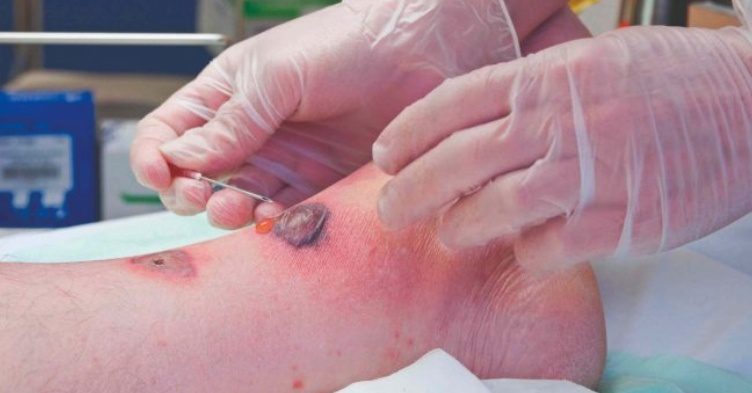
- Signs of infection appear: Redness spreading from the wound, increased warmth, swelling, yellow or green pus, or fever.
- Animal bites: These carry a high risk of infection and may require antibiotics or a tetanus shot.
- The wound is deep: If the cut is gaping, has jagged edges, or reveals fat or muscle, stitches may be necessary.
Rethinking Your First Aid Kit
Effective wound and injury care starts with recognizing when your medicine cabinet needs an upgrade. If it is stocked only with rubbing alcohol and standard fabric strips, you may be limiting your body’s ability to heal properly, since the right tools are essential for creating an optimal environment that protects wounds, reduces infection risk, and supports faster recovery.
Consider adding non-stick sterile pads, antibiotic ointment (to keep the wound moist and fight bacteria), and breathable, waterproof dressings to your kit. Ditch the hydrogen peroxide and rubbing alcohol for cleaning fresh wounds; these harsh chemicals actually damage healthy cells and delay healing. Mild soap and warm water are usually sufficient and much gentler on the tissue.
The next time you or a loved one takes a tumble, resist the urge to “let it breathe.” Cover it up, keep it moist, and let biology do its work without the roadblocks of scabs and dry air. Your skin will thank you for it.