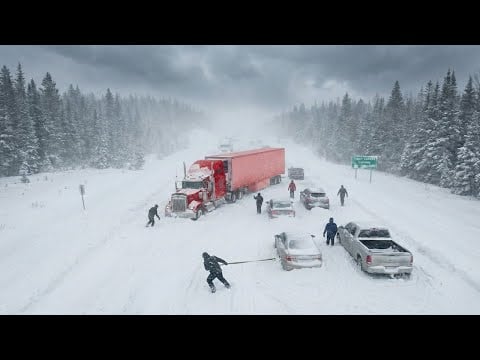
Canadian winters don’t mess around, and neither do some of the roads that come with them. Ice-slicked mountain passes, sudden whiteouts, stretches so remote that a breakdown means a genuinely long wait for help. Knowing which routes deserve extra caution can make the difference between a stressful drive and a dangerous one.
Key Takeaways
- Mountain highways combine steep grades with unpredictable weather
- Remote northern routes carry serious risk simply due to isolation
- Black ice is often invisible until you’re already on it
- Reduced visibility from whiteouts causes some of the most severe collisions
- Preparation matters more than confidence on these specific stretches
Mountain Highways Test Every Driver
Routes through the Rockies and other mountainous stretches combine steep grades, sharp curves, and weather that can shift dramatically within a single drive. A clear sky at the base of a pass can turn into a full whiteout by the summit, catching even experienced drivers off guard.
Isolation Turns a Small Problem Into a Big One
Remote northern highways carry a different kind of risk. It’s not just the road conditions, it’s how far you’d be from help if something went wrong. A minor mechanical issue that would be a quick fix in the city becomes a genuinely serious situation hours from the nearest town.
Black Ice Doesn’t Announce Itself
Some of the most dangerous stretches aren’t the ones that look obviously icy. Black ice forms as a thin, nearly invisible layer that blends right into the pavement, and it tends to show up precisely where drivers least expect it, bridges, overpasses, shaded curves that stay cold longer than the surrounding road.
Whiteouts Remove Visibility Entirely
Sudden snow squalls can drop visibility to nearly zero within seconds, turning a normal highway into a genuinely disorienting situation. These conditions are responsible for some of the most severe multi-vehicle collisions each winter, precisely because they happen so fast that drivers have little time to react.
Preparation Beats Confidence Every Time
Proper winter tires, a stocked emergency kit, and a realistic sense of when conditions call for slowing down or simply not driving at all matter more on these routes than any amount of driving experience. Confidence without preparation is exactly how experienced drivers end up in serious trouble on roads they’ve driven a hundred times before.
If the Worst Happens
Winter conditions contribute to a significant share of serious collisions across Canada each year, and if you’ve been involved in one, working with a car accident lawyer in Toronto helps you understand your options and protect your rights during what’s already a genuinely difficult time.
Respect the Road, Not Just the Destination
These routes aren’t off-limits, they just demand real respect. Know which stretches carry the highest risk, prepare accordingly, and you’ll arrive at wherever you’re headed instead of becoming another statistic on a road that didn’t forgive a moment of overconfidence.