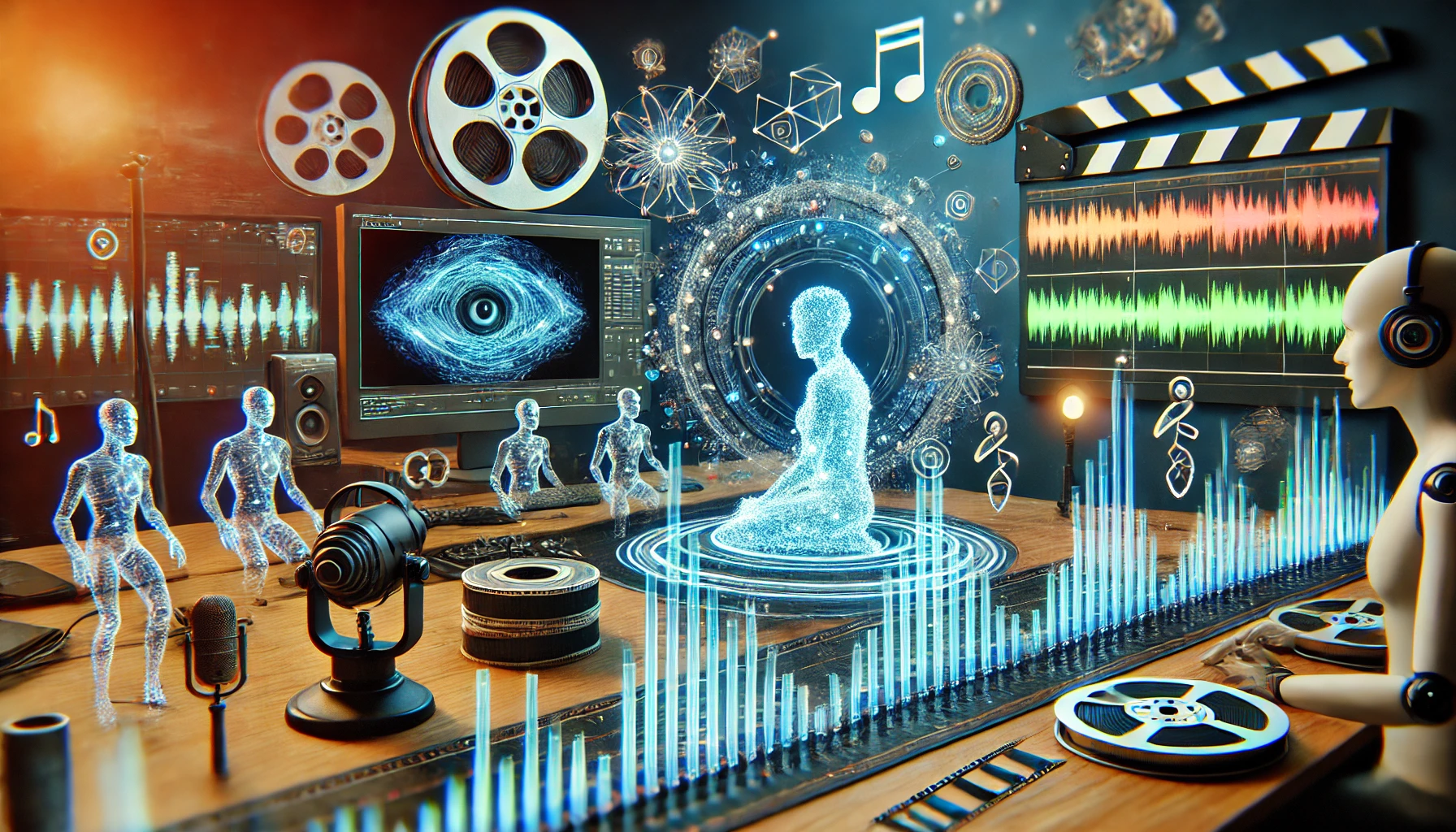
In 2026, we have reached the era of “Zero-Marginal-Cost Creativity.” The creative sector is no longer defined by the scarcity of high-end production tools, but by the abundance of Generative AI that can turn a single prompt into a cinema-grade sequence. This year, the industry faces a profound transition: while UNESCO reports that AI could drive a 24% income loss for traditional music and audiovisual creators by 2028, a new class of “Creative Architects” is emerging. For a modern Business, the value has shifted from “Owning the Content” to “Owning the Context.” Meanwhile, Digital Marketing has entered the age of Hyper-Personalized Narratives, where an ad is no longer a static video, but a real-time, generative story tailored to the viewer’s immediate emotional state.
The Technological Architecture: The “Director’s Prompt” & Character DNA
By 2026, the technology has moved from “Generating Clips” to “Building Worlds.”
-
Character Consistency Infrastructure: The “Glitchy” AI video of 2024 is long gone. Modern tools like Runway Gen-4 and OpenAI Sora 2 now feature “Character DNA”—a digital signature that ensures a protagonist looks, moves, and speaks identically across 1,000 different generated scenes.
-
Directable Cinematography: AI video generation now understands the “Language of the Lens.” Creators use cinematic controls—Dolly, Crane, Handheld, and Zoom—integrated directly into the AI interface. In 2026, you don’t just “ask” for a scene; you “block” it like a traditional director.
-
Spatial Audio & AI Soundscapes: Audio has followed the generative curve. Platforms like Suno and Udio provide professional-grade tracks with full vocal synthesis, while Soundverse creates adaptive, real-time 3D soundscapes for VR environments (Article 47) that react to a user’s movement.
Artificial Intelligence: The Creative Partner vs. The Automated Artist
In 2026, Artificial Intelligence acts as both the “Production Crew” and the “Assistant Designer.”
1. The “Lights-Out” Edit Suite
AI has automated the “Tedium of the Craft.” 2026 editors use AI to handle object removal, color grading, and scene stabilization instantly. AI “Reasoning Engines” can now scan raw footage and suggest “Rough Cuts” based on the emotional tone and narrative beats of a script, reducing post-production time by 70%.
2. Agentic Co-Writing
Screenwriters in 2026 use Agentic AI as a “Writers’ Room.” The AI doesn’t just write lines; it acts as a “Consistency Guardian,” checking that a character’s dialogue in Chapter 10 aligns with their backstory established in Chapter 1.
3. The Generative “Infinite Game”
In the gaming sector, 2026 has seen the birth of the “Never-Ending Narrative.” AI agents now generate new quests, dialogue, and environments on the fly based on player choices, making “Scripted Levels” a thing of the past.
Digital Marketing: The Age of “Human-Centric Authenticity”
Digital Marketing in 2026 is a paradox: it uses the most advanced AI to sell the most “Human” feeling.
-
C2A (Content Credentials & Authority): As AI-generated deepfakes proliferate, the C2PA standard has become the “Blue Checkmark” of 2026. Marketers are obsessed with “Provenance”—showing the metadata that proves a human directed the creative vision, ensuring “Brand Safety” in an ocean of synthetic media.
-
Personalized Generative Ads: Traditional 30-second spots are dying. Brands now use Generative Engines to create “Real-Time Variants.” If you are a hiking enthusiast in Seattle, the outdoor brand’s ad will feature a generated hiker on a trail you recognize, wearing the gear in your favorite color, delivered at the exact moment the weather app predicts rain.
-
GEO for Creators: Content creators are optimizing their work for Generative Search. They ensure their “Signature Style” is indexed correctly by AI models, hoping that when a user asks for a “cyberpunk-noir aesthetic,” the AI cites their portfolio as the stylistic foundation.
Business Transformation: The “Flat” Creative Agency
The internal Business model of creativity is being hallowed out and rebuilt for “Agile Curation.”
-
The Decline of “Below-the-Line” Roles: Routine tasks like camera operation and basic lighting are increasingly handled by Automated Rigs and Drones (Article 38). This has led to a “Skills Crisis” where entry-level roles are vanishing, forcing the industry to redefine the “Creative Career Ladder.”
-
Intellectual Property (IP) as the New Currency: In 2026, you don’t sell “hours”; you sell “Rights.” Agencies are pivoting to become “IP Vaults,” licensing their proprietary characters, worlds, and “Style LoRAs” (Fine-tuned models) to fans and other creators for a micro-royalty.
-
Rights-Aware Workflows: Adobe and other giants have integrated “Copyright-Safe” training data. The 2026 business standard is to only use models trained on Licensed Catalogs, ensuring that the “Output” is legally defensible and remunerates the original artists.
Challenges: The “Cringe” Threshold and the Talent Gap
The 2026 creative world faces a “Meaning Crisis.”
-
The “Synthetic Content” Overload: As the internet is flooded with “perfect” but “soulless” AI content, 2026 has seen a surge in the “New Sincerity” Movement. Audiences are beginning to pay a premium for “Lo-Fi, Human-Made” art—the “Vinyl Record” effect of the digital age.
-
The Legislative Battle: Major 2026 lawsuits (like Getty v. Stability AI) are reaching final verdicts. The professional challenge is navigating a world where “Fair Use” is being redefined, and creators are demanding a “CLEAR Framework” (Consent, Licensing, Ethical training, Accountability, and Remuneration).
Looking Forward: Toward “Democratized Genius”
As we look toward 2030, the “Creative Sector” is moving toward a world where the only barrier to making a masterpiece is the quality of your idea. We are approaching a future where a teenager in their bedroom can produce a film that rivals a 20th-century Hollywood blockbuster in technical fidelity.
Conclusion
The convergence of Technology, Business, Digital Marketing, and Artificial Intelligence has turned the “Creative Process” into a “Collaborative Dance” between human intuition and machine speed. In 2026, the winners are not those who can master the tools, but those who can master the vision. By embracing the “Intelligent Creative” era, we are ensuring that while AI can replicate the style, only the human heart can provide the substance.