Introduction
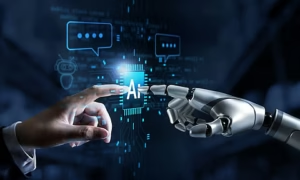
As we navigate through 2026, the landscape of the global Business sector has undergone a fundamental shift. The era of viewing Technology as a peripheral support function is long gone. Integration of Artificial IntelligenceFor any modern Business, the synergy between advanced computational power and market strategy is no longer a luxury—it is the baseline for survival. This article examines the deep integration of AI across various corporate dimensions and how it has redefined the standards of Digital Marketing and operational excellence.
The Foundation: Technology as a Strategic Asset
The current decade has seen Technology evolve from a tool for automation into a catalyst for total business transformation. In the professional sphere, “digital transformation” is no longer a buzzword but a continuous state of being. Companies are now deploying sophisticated tech stacks that allow for seamless data flow between departments, ensuring that leadership has a 360-degree view of their organization at all times.
This technological foundation is what allows Artificial Intelligence to thrive. Without robust data architecture and high-speed connectivity, AI models would lack the “fuel” they need to provide actionable insights. Therefore, the first step for any successful Business in 2026 is ensuring that their underlying hardware and software infrastructure is capable of supporting high-level cognitive computing.
Artificial Intelligence: Beyond the Chatbot
While early iterations of AI in the corporate world were often limited to simple customer service bots, the AI of 2026 is far more “agentic.” Modern Artificial Intelligence systems are now capable of autonomous decision-making within set parameters. These AI agents can manage supply chains, optimize energy consumption in smart offices, and even assist in complex legal and financial auditing.
In a professional Business context, the value of AI lies in its ability to process “big data” at speeds human analysts cannot match. By identifying patterns in consumer behavior or market fluctuations, AI allows companies to move from reactive strategies to proactive ones. Instead of responding to a shift in the market after it happens, businesses are now using predictive analytics to anticipate these shifts weeks or months in advance.
The Revolution in Digital Marketing
Perhaps no sector has been as radically altered by Technology as Digital Marketing. In 2026, the focus has shifted from “broad-reach” advertising to “hyper-personalization.”
-
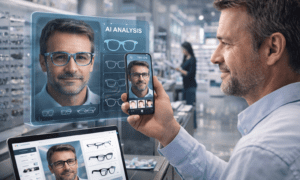
Generative Engine Optimization (GEO): As consumers move away from traditional search bars and toward AI-powered conversational interfaces, Digital Marketing professionals have had to adapt. The goal is no longer just to rank for a keyword, but to be the “authoritative source” that an AI assistant cites when answering a user’s query.
-
Predictive Customer Journeys: AI now allows marketers to map out a customer’s needs before the customer even expresses them. By analyzing past interactions and real-time data, Digital Marketing platforms can serve content that solves a specific pain point at the exact moment the user encounters it.
-
Content at Scale: The demand for high-quality, professional content is higher than ever. Artificial Intelligence assists creative teams by drafting initial reports, generating data visualizations, and tailoring messaging for different demographic segments, ensuring that a Business remains relevant across all digital touchpoints.
Ethics and Professionalism in the AI Era
As we lean more heavily on Technology, the importance of professional ethics and data governance has taken center stage. A reputable Business must ensure that its use of Artificial Intelligence is transparent and secure. This involves:
-
Data Sovereignty: Ensuring that customer data is handled with the utmost privacy and in compliance with international regulations.
-
Algorithmic Fairness: Regularly auditing AI systems to ensure they are providing unbiased results that reflect the company’s professional values.
-
Human-AI Collaboration: Maintaining a “human-in-the-loop” approach. While AI handles the data processing, human leadership provides the moral compass and creative vision.
Scaling Business Growth with Integrated Tech
For a Business to scale in 2026, it must adopt an “AI-first” mindset. This doesn’t mean replacing human workers; rather, it means augmenting human capability with the best available Technology. For instance, in Digital Marketing, AI might handle the A/B testing of thousands of ad variations, while the human marketing director focuses on the overarching brand narrative and emotional connection with the audience.
This division of labor allows for unprecedented levels of productivity. Small teams can now accomplish what used to require entire departments, effectively leveling the playing field between nimble startups and massive conglomerates.
The Role of Business Leadership
Leadership in the age of Artificial Intelligence requires a new set of skills. Executives must be “digitally fluent,” meaning they understand the capabilities and limitations of the Technology they deploy. They must foster a culture of continuous learning, as the pace of change in fields like Digital Marketing and AI shows no signs of slowing down.
Professionalism in 2026 is defined by a leader’s ability to balance technical efficiency with human empathy. While the AI can provide the “what” and the “how,” the leadership must always provide the “why.”
Conclusion
The convergence of Technology, Business, Digital Marketing, and Artificial Intelligence has created a new era of professional potential. By embracing these tools responsibly and strategically, organizations can unlock new levels of insight and engagement. As we look toward the rest of 2026, the businesses that will thrive are those that view AI not as a threat, but as the ultimate partner in their quest for excellence.