In the professional landscape of 2026, the concept of “Sustainability” has moved from the periphery of corporate reports to the heart of Business strategy. No longer viewed as a cost center or a compliance burden, environmental stewardship is now a primary driver of innovation and competitive advantage. This shift is being accelerated by the powerful combination of Technology and Artificial Intelligence, which provide the tools necessary to measure, manage, and mitigate environmental impacts at scale. Furthermore, as consumers become increasingly eco-conscious, Digital Marketing has evolved to prioritize transparency and authentic purpose, ensuring that a brand’s green initiatives are communicated effectively and ethically to a global audience.
The Rise of “Green AI” and Sustainable Infrastructure
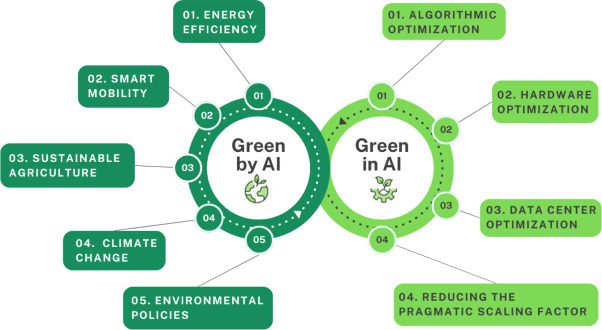
While the benefits of Artificial Intelligence are vast, 2026 has brought a professional reckoning regarding its own environmental footprint. The high energy and water demands of data centers have led to the rise of “Green AI”—a movement focused on making the lifecycle of intelligence sustainable.
-
Efficiency-First Model Training: Leading technology firms are now utilizing smaller, more efficient models that provide 95% of the performance of massive “frontier” models at a fraction of the energy cost.
-
Renewable-Powered Compute: The infrastructure of modern Business is migrating toward “Net-Zero Data Centers.” These facilities are not only powered by 100% renewable energy but also use AI-driven cooling systems that reduce water consumption by up to 30% compared to 2024 standards.
-
Circular Hardware Lifecycles: Technology companies are implementing AI to manage the “reverse logistics” of hardware, ensuring that rare minerals and components are recycled and reused, thereby reducing the electronic waste generated by the rapid pace of innovation.
AI as a Catalyst for Operational Sustainability
Within the internal operations of a Business, Artificial Intelligence is serving as the primary engine for resource optimization. By analyzing complex datasets, AI identifies inefficiencies that are invisible to human observers, turning sustainability into a measurable operational metric.
1. Predictive Energy Management
In manufacturing and commercial real estate, AI-driven platforms monitor energy consumption in real-time. By predicting peak demand and adjusting HVAC and lighting systems autonomously, businesses are achieving energy savings of 15-20% annually. These systems use “Digital Twins”—virtual replicas of physical assets—to simulate energy-saving scenarios before they are implemented.
2. Supply Chain Transparency and ESG
Environmental, Social, and Governance (ESG) criteria are now foundational to professional investment. Technology like blockchain, combined with AI, allows businesses to track the “Carbon Pedigree” of every component in their supply chain. If a supplier fails to meet sustainability standards, the AI can automatically suggest alternative vendors who align with the company’s ethical goals, ensuring that “Scope 3” emissions (indirect emissions in the value chain) are strictly managed.
3. Waste Reduction and Circularity
In sectors ranging from retail to agriculture, AI is being used to predict demand with surgical precision. By reducing overproduction, businesses minimize physical waste. In the food industry, for example, AI-powered inventory systems can predict spoilage and dynamically adjust pricing or donate surplus to local charities, aligning profit with social responsibility.
The Evolution of Sustainable Digital Marketing
As the internal operations of a Business become “greener,” the way these values are communicated via Digital Marketing has also changed. In 2026, “Greenwashing” is no longer just a reputation risk—it is a legal liability.
-
The Transparency Mandate: Modern marketing utilizes AI to provide “Fact-Checked Narratives.” When a brand claims a product is sustainable, the marketing materials often include dynamic QR codes or links to AI-verified data dashboards that show the product’s actual environmental impact in real-time.
-
Targeting Eco-Conscious Micro-Segments: Through sophisticated Artificial Intelligence, marketers can identify and engage with “High-Intent Sustainable Consumers.” These are individuals whose digital behavior shows a consistent preference for ethical brands. Marketing to this group requires a shift from “promotional” content to “educational” content that proves the brand’s commitment to the planet.
-
Sustainable Ad-Tech: Even the delivery of digital ads has become a sustainability concern. Professional agencies are now optimizing “Ad-Path Carbon,” choosing to run campaigns on networks and servers that have the lowest carbon intensity per impression.
Business Resilience through Climate Intelligence
Beyond reducing impact, Artificial Intelligence is helping businesses adapt to a changing climate. “Climate Intelligence” platforms use AI to model the impact of extreme weather events on a global scale.
For a multinational Business, this means being able to predict how a drought in one part of the world might affect raw material prices in another. By integrating these insights into the core Technology stack, leaders can make proactive decisions to diversify their supply chains and protect their operations from environmental volatility. This level of foresight is a hallmark of professional leadership in the mid-2020s.
Challenges: Navigating the “Rebound Effect”
A professional approach to sustainability requires acknowledging the “Rebound Effect”—the phenomenon where efficiency gains lead to increased total consumption. As Technology makes production cheaper and more efficient, businesses must ensure that the saved resources are not simply used to drive more consumption in a way that negates the environmental benefits.
The solution in 2026 is “Decoupled Growth,” where a company’s revenue growth is no longer tied strictly to increased resource use. This is achieved through service-based business models—shifting from “selling a product” to “providing a service”—a transition that is made possible by the data-tracking capabilities of Artificial Intelligence.
The Future: Regenerative Business Models
As we look toward the next decade, the goal is moving from “Sustainability” (doing no harm) to “Regeneration” (actively improving the environment). We are seeing the first wave of businesses that use Technology to capture more carbon than they emit or to restore local biodiversity through AI-managed reforestation and water treatment projects.
In this future, the synergy between Technology, Business, Digital Marketing, and Artificial Intelligence serves a higher purpose. It creates an economy where profit is a byproduct of positive impact, and where the most successful organizations are those that contribute the most to the health of the planet and its inhabitants.
Conclusion
The “Green Transformation” of 2026 is a testament to the power of human-machine collaboration. By leveraging Artificial Intelligence to solve the complex mathematics of environmental impact and using Technology to build transparent, efficient systems, the Business world is proving that economic growth and planetary health are not mutually exclusive. For the modern professional, sustainability is the ultimate challenge and the ultimate opportunity—a chance to use the most advanced tools at our disposal to build a resilient, equitable, and thriving future for all.