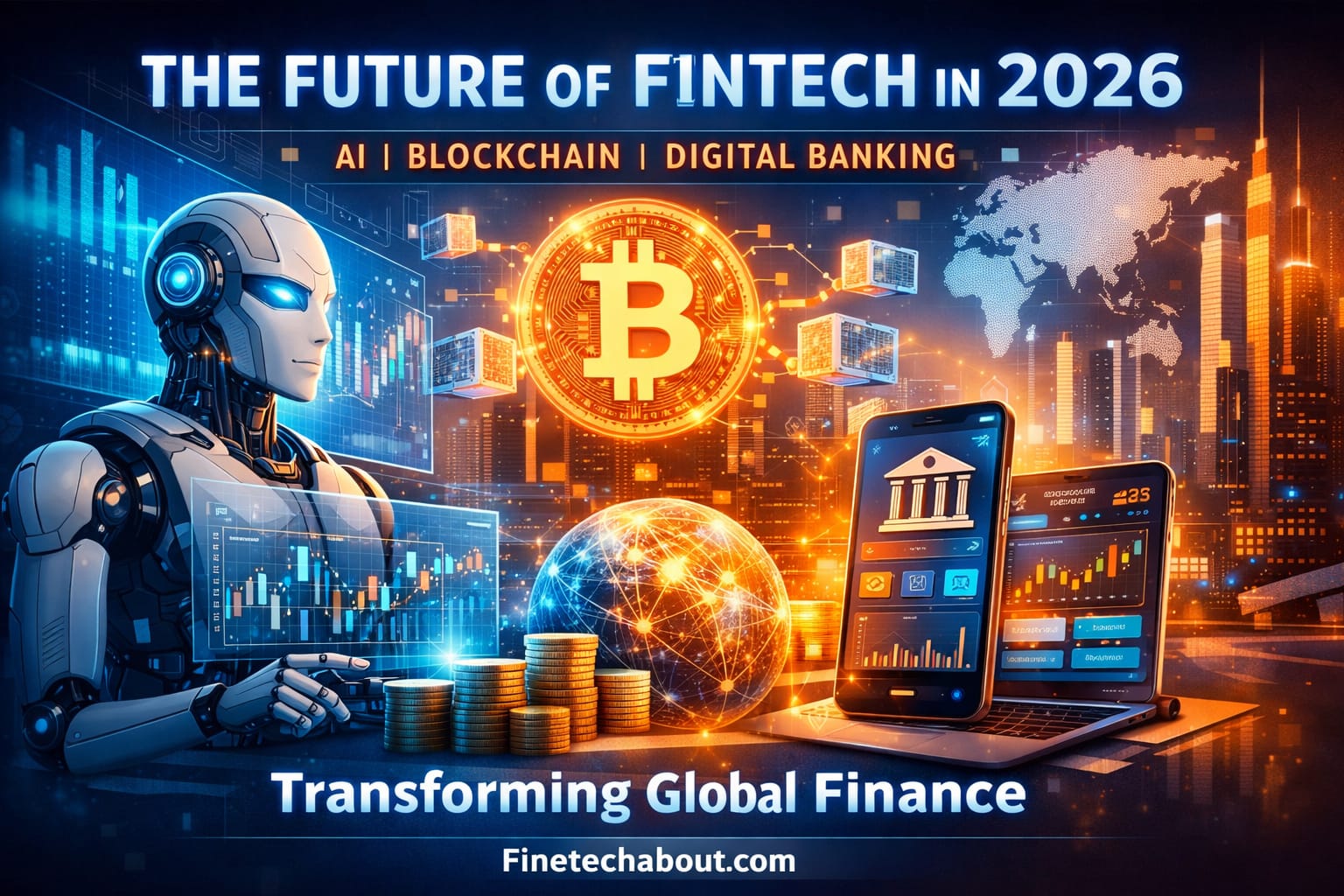
🚀 The Future of Fintech in 2026
How AI, Blockchain & Digital Banking Are Transforming Global Finance
The financial industry is evolving faster than ever before. In 2026, fintech is no longer just a growing trend — it has become the foundation of modern banking, investing, lending, and digital transactions. From artificial intelligence and blockchain networks to fully digital banks, technology is fundamentally reshaping how individuals and businesses manage money across the globe.
Consumers today expect speed, security, transparency, and convenience. Traditional financial systems are adapting rapidly to meet these expectations. At FinetechAbout (https://finetechabout.com�), we explore how innovation is transforming global finance and what these changes mean for investors, startups, entrepreneurs, and everyday users.
📌 What Is Fintech and Why It Matters in 2026?
Fintech, short for Financial Technology, refers to digital tools and systems designed to improve, automate, and modernize financial services. It bridges the gap between finance and innovation, making financial solutions more accessible and efficient.
Examples of fintech solutions include:
• Mobile banking applications
• AI-powered investment platforms
• Cryptocurrency exchanges
• Blockchain-based payment systems
• Digital wallets and contactless payment technology
In 2026, fintech plays a critical role in promoting financial inclusion. Millions of people who previously lacked access to traditional banking services can now manage money directly from their smartphones. At the same time, fintech reduces transaction costs, enhances operational efficiency, and improves overall security in global financial systems.
🤖 1. Artificial Intelligence in Finance
Artificial Intelligence (AI) is one of the most powerful forces driving fintech innovation. Financial institutions now rely heavily on AI to improve accuracy, speed, and decision-making processes.
Key Benefits of AI in Fintech:
• Real-time fraud detection
• Smart credit risk assessment
• Personalized financial recommendations
• Automated trading systems
• Predictive market forecasting
AI algorithms can analyze massive datasets within seconds. This enables banks and investors to detect unusual activity instantly, minimize risks, and make data-driven financial decisions. In investment management, AI-powered systems help optimize portfolios and respond to market changes faster than traditional methods.
🔗 2. Blockchain & Secure Digital
Transactions
Blockchain technology has introduced a new level of transparency and security to financial systems. Unlike traditional centralized databases, blockchain operates on decentralized networks, making transactions more secure and resistant to fraud.
Why Blockchain Is Important:
• Eliminates unnecessary intermediaries
• Reduces transaction costs
• Enhances data security
• Enables smart contracts
• Supports fast cross-border payments
Governments and financial institutions worldwide are adopting blockchain to streamline operations and improve trust. Smart contracts, for example, allow agreements to execute automatically when certain conditions are met, reducing paperwork and increasing efficiency.
🏦 3. Rise of Digital Banking
Traditional banking models are rapidly evolving. Digital-only banks, also known as neo-banks, are gaining popularity due to their convenience and lower operating costs.
Digital banking platforms offer:
• Instant online account setup
• 24/7 customer access
• Lower transaction and service fees
• User-friendly mobile interfaces
Consumers now prefer managing finances through apps rather than visiting physical branches. This shift has forced traditional banks to invest heavily in digital transformation strategies.
📊 4. Robo-Advisors & Smart Investing
Robo-advisors are automated investment platforms powered by AI. They analyze market conditions, adjust asset allocations, and manage portfolios with minimal human intervention.
These platforms reduce emotional trading mistakes and make investing more accessible to beginners. By using data-driven strategies, robo-advisors help investors maintain balanced portfolios aligned with their financial goals.
🔐 5. Cybersecurity in Fintech
As digital finance expands, cybersecurity has become more critical than ever. Financial data is highly sensitive, and protecting it is a top priority.
Modern fintech platforms use:
• Advanced encryption technology
• Biometric authentication (fingerprint & facial recognition)
• AI-based threat detection systems
Security is no longer optional — it is the backbone of digital finance. Companies that fail to prioritize cybersecurity risk losing consumer trust.
🌍 Why Fintech Is the Future
Fintech solutions are:
✔ Faster
✔ More secure
✔ Cost-efficient
✔ Globally accessible
✔ Innovation-driven
Businesses that adopt fintech technologies gain a competitive advantage, while individuals benefit from smarter financial tools and improved accessibility.
🏁 Final Thoughts
The fintech revolution in 2026 is transforming global finance at an unprecedented pace. AI, blockchain, digital banking, and automation are no longer experimental technologies — they are essential components of the modern financial ecosystem.
To stay updated with the latest fintech trends, investment insights, and technology-driven financial strategies, visit:
👉 https://finetechabout.com�
Fintech is not just the future — it is the present. 🚀