As we venture further into 2026, a transformative and controversial tool has emerged in the Business strategist’s arsenal: the Synthetic Consumer. These are sophisticated AI models, built on massive aggregates of real-world data, designed to mimic the preferences, biases, and decision-making patterns of specific human segments. While they offer unparalleled speed for Digital Marketing research, they also raise profound ethical questions that every professional must address to maintain long-term brand equity and societal trust.
1. The Utility of the Synthetic Audience
In the high-velocity Business environment of 2026, traditional focus groups and surveys often move too slowly. Synthetic consumers have stepped in to fill this gap, acting as a “Digital Sandbox” for innovation.
-
Rapid Prototyping of Intent: Marketers now use synthetic cohorts to stress-test hundreds of campaign variations in minutes. This Technology allows a brand to predict how a specific niche—such as “environmentally conscious Gen Z professionals in urban Japan”—might react to a new product feature before a single dollar is spent on physical production.
-
Hard-to-Reach Insights: Synthetic data is particularly valuable for researching “Invisible Segments”—small or geographically dispersed groups that are difficult to recruit for traditional studies. This allows for more inclusive product design and Digital Marketing without the high cost of manual global outreach.
-
Privacy-Preserving Research: Because synthetic consumers are mathematical models and not real individuals, they offer a way to conduct deep research without compromising the privacy of actual customers. This aligns with the 2026 mandate for “Data Sovereignty,” as no personal identifiable information (PII) is ever exposed during the simulation.
2. The Ethical “Black Box” of Synthetic Data
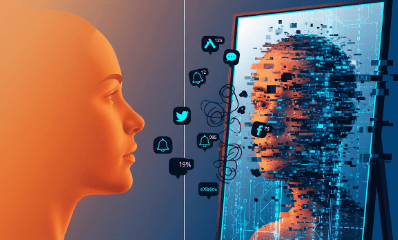
Despite their utility, the use of Artificial Intelligence to simulate human behavior introduces significant risks. The “Synthetic Mirror” can often be a distorted one.
-
The Propagation of Algorithmic Bias: If the historical data used to train a synthetic consumer contains societal biases, the model will not only replicate them but often amplify them. A Business relying on these models might inadvertently create marketing that excludes or misrepresents marginalized groups, leading to significant reputational damage in 2026’s socially conscious market.
-
The “Echo Chamber” Risk: There is a danger that synthetic research creates a feedback loop. If a brand designs products based only on what an AI predicts people want, they may stop listening to the actual, evolving voices of real humans. This can lead to a “stagnation of innovation,” where companies produce only what the algorithm deems “safe.”
-
The Dehumanization of the Consumer: There is an ongoing professional debate about the “dignity of the consumer.” If we stop interacting with real people and start interacting only with their digital shadows, do we lose the empathy that is the core of successful Business management?
3. Management: Implementing Ethical Guardrails
To navigate these risks, 2026 leadership has adopted a framework of “Verified Synthetic Research.” The goal is to ensure that Technology serves human truth, not just statistical probability.
-
The “Ground Truth” Requirement: Professional standards in 2026 mandate that all synthetic research must be validated against “Ground Truth” (real-world) data at regular intervals. No major Business decision should be made solely on the output of a synthetic model without a human-led verification phase.
-
Transparency and Disclosure: Ethical brands now practice “Algorithmic Transparency.” This involves disclosing when a product or a Digital Marketing strategy was developed using synthetic research. This builds “Trust Capital” with the Sovereign Consumer, who values honesty about the role of Artificial Intelligence in the brand’s ecosystem.
-
Diverse Data Governance: Management is diversifying the “Data Diet” of their AI models. By intentionally including outlier data and diverse perspectives during the training phase, companies can mitigate bias and ensure their synthetic consumers reflect a broader, more accurate spectrum of human experience.
Summary: The 2026 Synthetic Framework
| Research Method | Primary Advantage | Primary Ethical Risk |
| Traditional Human Research | Authentic, Emotional Depth | High Cost, Slow Velocity |
| Synthetic AI Research | Instant Scale, Low Cost | Bias Amplification, Dehumanization |
| 2026 Hybrid Approach | Speed + Human Verification | Complexity of Management |
Conclusion: The Future of Truth in Marketing
As we look toward the remainder of 2026, the use of synthetic consumers represents one of the most powerful yet precarious applications of Artificial Intelligence. For a Business to truly thrive, it must balance the efficiency of the machine with the messy, unpredictable truth of the human heart.
The leaders who will define the next decade are those who use the “Synthetic Mirror” to look deeper, not just faster. By treating Technology as a partner in understanding—and by anchoring every digital simulation in a bedrock of human ethics—your organization can move beyond data points and build lasting, meaningful connections with the people it serves. The goal is not just to predict behavior, but to respect it.