Enterprise software is in the middle of its biggest structural change in two decades. Global corporate AI investment exceeded $500 billion in 2025, up 130 percent from the prior year, and more than 70 percent of organizations now use generative AI across business functions. Cloud infrastructure spending climbed to $171.8 billion last year, a 22.5 percent jump as enterprises pushed workloads onto AWS, Azure, and Google Cloud at the same time. Engineering teams are absorbing new tools and rebuilding how software is written, shipped, and operated, all while keeping thousands of production systems stable.
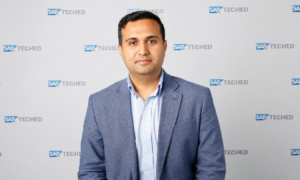
Nireesha Mandala, a Software Engineering Manager at a Fortune 500 enterprise technology platform with more than 14 years in cloud infrastructure, automation, and AI-driven engineering, has been deeply involved in that transformation from multiple angles. Her work sits at the intersection of the two forces reshaping enterprise software: the expansion of multi-cloud infrastructure and the rapid embedding of generative AI into the engineering workflow itself.
Building What Doesn’t Exist Yet
The global workflow automation market was valued at roughly $24.61 billion in 2025 and is projected to grow to about $27 billion in 2026, on a trajectory toward $53 billion by 2033. Enterprises deploying automation at scale can reduce operating costs by 40 to 75 percent and recover up to 20 percent of employee time. For large platforms handling hundreds of thousands of transactions a quarter, the opportunity is a complete rearchitecture of the approval, review, and governance chains that, until recently, ran on email threads and manual sign-offs across disconnected systems.
Mandala led one such rearchitecture. Before her project, critical approvals were scattered across multiple internal platforms, leaving approvers to hunt through different tools, often during off-hours, just to keep business moving. She owned the project end to end, scoping the architecture, building a REST API integration that synchronized approvals bi-directionally between one of the company’s busiest customer-facing platforms and a unified application, and taking it through post-launch support. The hardest piece was orchestrating interdependent approval chains, where one group action had to cascade into cancellations across linked pending items without race conditions or silent failures. The system now processes hundreds of thousands of approvals each quarter for thousands of employees, recovers an estimated 25,000 hours of time per month, and delivers about $15 million in annual savings.
“Most people underestimate how much of enterprise software is still glued together with human attention,” Mandala says. “When you pull that friction out cleanly, you do not just save time. You remove an entire category of risk the business was quietly carrying every day.”
The Hyperscaler Imperative
The three major hyperscalers now control nearly 71 percent of the global cloud infrastructure market. AWS holds roughly 30 percent, Microsoft Azure around 20–25 percent, and Google Cloud close to 12 percent, with global IaaS spend reaching $171.8 billion in 2024 and growing at more than 22 percent year over year. Enterprises are no longer choosing one provider; most run workloads across all three, and roughly 75 percent of organizations are expected to operate hybrid or multi-cloud architectures by 2026. The engineering challenge this creates is enormous. Tens of thousands of customer instances, each with its own dependencies, compliance boundaries, and performance profiles, have to be moved and kept running without interruption.
That is the ground Mandala currently works on. The work involves designing the automation framework from first principles, coordinating across hyperscaler teams, and making sure the migration logic holds up across three very different underlying architectures.
“Multi-cloud sounds like a procurement decision until you have to build the machinery that actually makes it work,” she notes. “Every hyperscaler has a different opinion about identity, networking, and state. The engineering answer is to build a layer that respects all three and still delivers a single experience to the customer.”
When AI Meets the Software Lifecycle
Generative AI has moved from experiment to daily workflow inside engineering organizations faster than almost any previous technology wave. A significant portion of code, often cited at over 40% in some environments, is now AI-assisted. 90 percent of Fortune 100 companies now use GitHub Copilot, and developers using AI coding assistants complete tasks about 55 percent faster in controlled studies. Pull request cycle times have compressed from 9.6 days to 2.4 days in some benchmarks. The harder question engineering leaders are now facing is what happens to the rest of the lifecycle: code review, sprint planning, incident response, testing, and the dozens of coordination rituals that have defined how teams actually ship.
Mandala has been pushing GenAI into exactly those parts of the lifecycle inside her organization. She has pioneered AI-augmented code review practices, intelligent sprint planning workflows, and GenAI-assisted engineering processes across her teams, and she architected an AI-powered virtual agent that now serves thousands of users. She is also a senior member of the Institute of Electrical and Electronics Engineers (IEEE), the world’s largest technical professional organization, placing her within a global community of more than 400,000 engineers and researchers shaping the standards and practice of the field. The pattern she has settled on strips out the repetitive scaffolding around engineering judgment so engineers can spend their cycles on the harder architectural calls.
“The productivity numbers are real, but they are not the whole story,” Mandala reflects. “What actually changes is where engineers spend their attention. If AI is catching the boilerplate and the first-pass review, the human work shifts upward, toward design, toward integration, toward the decisions that still require context and taste.”
Leading the Next Generation of Engineering
Around 55 percent of engineers now regularly use AI agents, with staff-level and senior engineers leading adoption at roughly 64 percent. Gartner expects that by 2026, about 80 percent of enterprises will rely on AI APIs and workflow automation platforms to run their business processes. At the same time, software developer employment among 22–25-year-olds has dropped nearly 20 percent since 2024 in roles with the highest AI exposure, a signal that the shape of engineering teams themselves is changing. Leaders navigating this era are being asked to do something harder than adopting a new tool. They are being asked to redesign how their teams work, learn, and grow.
That question is where Mandala spends much of her current energy. She mentors engineers across her organization, drives agile delivery across complex programs, and translates technical outcomes into strategic impact for executive leadership. Her long-running track record of full-ownership projects gives her the credibility to push hard on how AI should be integrated into daily practice without losing the parts of engineering culture worth keeping. An early adopter of the platform since its foundational releases, she has hands-on experience spanning the full evolution of the product from early-stage capabilities to its current enterprise-scale offering. During initial rollouts, she actively evaluated new applications and features, identifying critical issues and providing feedback that contributed to platform maturity and stability. She is also actively involved in building out the next tier of engineering leaders at her company, a role that takes on added weight as the profession reshapes around AI.
“Engineering leadership used to be about shipping features and keeping the lights on,” Mandala observes. “It still is, but the job now also includes deciding what parts of the craft you hand to AI, what parts you double down on as human, and how you bring your team with you through a change they did not choose. That is the actual work, and it is the most interesting it has ever been.”
The Integration Backbone
The integration platform as a service market grew from $6.72 billion in 2025 to an estimated $8.87 billion in 2026, with forecasts pointing to roughly $27 billion by 2030. The average enterprise now runs 897 applications, with 46 percent of organizations using more than 1,000, and Salesforce’s own research indicates that 71 percent of applications remain disconnected from each other, a figure that has barely moved in three years. Integration has become the substrate on which AI, automation, and cloud migration all depend, because none of those initiatives work if the underlying systems cannot exchange state reliably in real time.
Mandala has spent much of her career on that substrate. She designed scalable integration architectures from scratch for high-traffic enterprise platforms, built REST API frameworks capable of handling bi-directional real-time sync at enterprise scale, and translated those patterns into repeatable templates her teams now use across programs. She completed Stanford Online’s AI-Driven Leadership Strategies for the Future program in 2026, adding formal grounding in how to lead engineering organizations through the change management that AI adoption requires. Her approach blends the two sides: the technical architect who still thinks in sequence diagrams and race conditions, and the engineering manager who now has to decide which AI workflows her teams will adopt, sunset, or rebuild.
“A good integration layer is almost invisible when it works, which is exactly why it never gets attention until it breaks,” she explains. “The same is becoming true of AI inside engineering teams. The leaders who succeed are the ones who treat it as infrastructure, not a feature.”