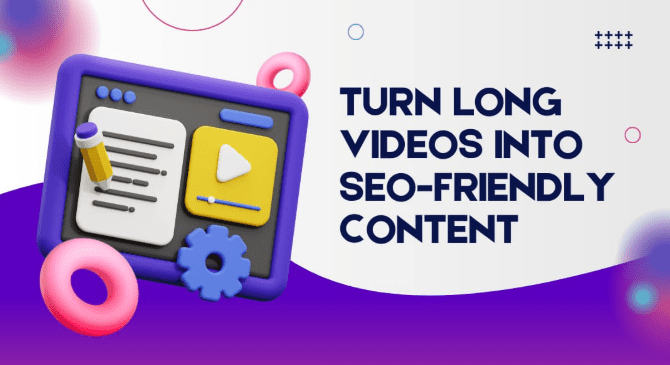
Long-form video has become one of the most powerful formats online. Tutorials, interviews, walkthroughs, webinars, and product demos often contain hours of valuable insights — but most of that value remains locked inside the video unless creators take the next step. Turning long videos into SEO-friendly written content helps businesses attract search traffic, improve discoverability, and reach audiences who prefer reading over watching.
The challenge is simple: repurposing a single long video manually takes time. The smart approach is to build a workflow that transforms video into written assets automatically, consistently, and with minimal effort. That’s where modern transcription tools, smarter editing habits, and clear strategic steps come together.
Below is a practical look at how any creator, marketer, or business can convert long-form videos into search-ready written content that boosts visibility and strengthens their content ecosystem.
Why Long Videos Are Such Powerful Sources of Written Content
Before you can repurpose a video, it helps to understand why the format is so valuable in the first place. Long-form content carries depth. It holds details, phrasing, explanations, and storytelling elements that short clips can’t match. This makes video an ideal foundation for written content, because the ideas are already developed — they simply need to be extracted.
This is where creators often begin exploring workflows that include video to text conversion. Instead of starting from a blank page, they start from a full transcript. With the right system in place, long videos become raw material for blog posts, SEO articles, email newsletters, landing pages, and more.
Transcription Tools streamline this step, making transcription fast enough to fit naturally into a weekly content routine.
How Transcripts Turn a Long Video Into Searchable Material
Turning videos into SEO-focused content becomes much easier once the spoken words are captured as text. Without a transcript, creators must rewatch the entire video — stopping, rewinding, and trying to capture the most important lines. With a transcript, everything is visible in one place.
The Transcript Becomes the Source of Truth
A transcript gives you:
- The exact wording used in the video
- The structure of the explanation or story
- Natural phrasing that can be adapted for written articles
- Quotes for supporting sections of blog posts
- Keywords spoken by the creator, sometimes without realizing it
Instead of manually retyping ideas or relying on memory, creators simply search, highlight, and reorganize text segments.
Easier Keyword Identification
In long-form videos, creators often naturally repeat key concepts. Those repeated words become useful SEO anchors when shaping an article. A transcript highlights these phrases instantly, helping writers build content around real audience language.
This process becomes even smoother when working with mp4 to text workflows, where the entire video content appears as a structured text document within minutes.
Building a Simple Workflow to Turn Videos Into SEO Content
The easiest way to repurpose long videos is to create a repeatable, consistent process. Below is a workflow used by content teams, solo creators, and businesses that rely on regular video production.
Step 1: Record With Repurposing in Mind
A video recorded clearly is easier to transcribe accurately. Good audio means fewer transcript errors, which means cleaner text later.
Simple optimizations include:
- Using a decent microphone
- Minimizing background noise
- Keeping a consistent speaking pace
Good audio saves time downstream.
Step 2: Transcribe the Video Quickly and Accurately
Once the video is recorded, convert it using your transcription tool. This is where the magic begins. Within minutes, a full transcript becomes the foundation of your SEO content.
Important outcomes include:
- A complete written record
- A searchable document
- A stable foundation for outlining articles
This step turns hours of video into a workable draft.
Step 3: Identify the Core Topics and Segments
Long videos often contain multiple themes, steps, or insights. Transcripts make these segments easy to spot.
Look for:
- Repeated phrases
- Transitions such as “first,” “next,” “what matters most,” etc.
- Questions, explanations, and examples
- Any strong takeaways you want to highlight
These moments become the skeleton of the written article.
Step 4: Turn Segments Into Searchable Blog Posts
Once the structure is clear, shaping the SEO article becomes straightforward.
Writers can:
- Rewrite conversational sentences into clean, optimized paragraphs
- Add context and explanation where needed
- Insert headers for readability
- Bring forward the strongest quotes from the transcript
- Add examples and formatting that support search intent
Since the ideas already exist in the video, the writing process shifts from invention to refinement.
Step 5: Add SEO Structure Without Losing the Creator’s Voice
SEO-friendly content is not just about keywords. It’s about clarity, readability, and helpfulness. Long videos often contain natural storytelling and expertise. The goal is to preserve that voice while optimizing structure.
Practical SEO additions include:
- Descriptive subheadings
- Short, readable paragraphs
- Occasional bullet points for clarity
- Internal links to related pages
- A clear conclusion or next step
The transcript provides the substance; the structure elevates it.
How Businesses Use Video-to-Content Workflows to Scale Output
Businesses increasingly treat long videos as content engines. Instead of filming to create one asset, they film to create many.
A single 30-minute video can become:
- A 1,200-word SEO article
- Three supporting blog posts
- Short-form videos for social media
- A newsletter summary
- A downloadable guide
- Training material
- LinkedIn posts built from transcript quotes
The transcript unlocks all of this because it captures everything the creator already said — the narrative, the detail, the supporting examples.
Real Example: Turning a Webinar Into a Month of Content
Imagine a marketing team hosts a one-hour webinar.
With a transcript, they can quickly extract:
- The main explanation for the core blog post
- Q&A segments for additional posts
- Examples for case-study-style articles
- Supporting lines for social captions
- Insights for newsletters
- Keywords for future topic ideas
Without a transcript, these ideas remain buried in the recorded video, requiring hours of manual review.
Why SEO Content From Video Performs Especially Well
Written content created from long videos tends to rank effectively because the original discussion contains depth. Search engines prefer content that answers questions thoroughly — and long-form video naturally contains these answers.
Natural Topic Coverage
Creators often explain:
- Why something works
- How to do it
- Mistakes to avoid
- Real examples
This mirrors the depth search algorithms favor.
Strong Engagement Signals
When readers spend more time on a page — because the content is rich and useful — rankings benefit. Video-derived content tends to be inherently more complete, which keeps readers engaged longer.
Making the Workflow Easy Enough to Use Every Week
A repurposing system only works if it’s simple. The fastest-growing creators and businesses tend to choose routines they can maintain consistently.
A simple weekly flow might look like:
- Record a long video or conversation.
- Upload it for transcription.
- Review the transcript and highlight key segments.
- Turn highlighted sections into article outlines.
- Draft posts based on the transcript.
- Publish, schedule, or store content for future use.
Once the habit forms, the process becomes second nature.
Final Thoughts: Long Videos Are Not One-Off Assets — They’re Libraries
The easiest way to turn long videos into SEO-friendly content is to recognize that the information is already there. The transcript simply reveals it. With consistent transcription, creators and businesses build rich content libraries with far less effort than starting from scratch.
The workflow is simple, scalable, and surprisingly powerful. And once integrated into your weekly creative routine, it turns every long video into a doorway to search visibility, stronger engagement, and a constant stream of fresh written content.