By February 2026, the Business of management consulting has reached its “Industrialized Autonomy” phase. The traditional model—where a firm’s growth was strictly capped by the number of human hours it could bill—has been shattered by the rise of the Digital Twin Consultant. Today, boutiques and solo-consultants are using Artificial Intelligence to “clone” their specific methodologies, data libraries, and strategic frameworks into autonomous agents. This allows a small firm to provide high-level, 24/7 strategic oversight to dozens of clients simultaneously, effectively scaling their expertise without the overhead of a massive junior staff.
1. From “Advice” to “Operational Layers”
In 2026, consulting is no longer a static deliverable (like a PDF deck); it is an “Operational Layer” embedded directly into the client’s Business infrastructure.
-
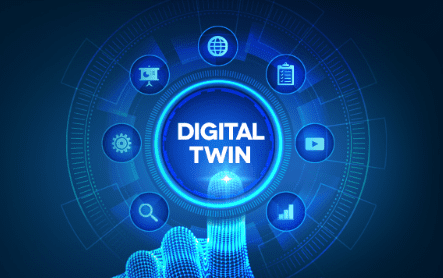
Methodology Cloning: Consulting firms are now building proprietary “Agent OS” platforms. By training Artificial Intelligence on their past successful projects, internal white papers, and unique decision-making logic, they create a “Digital Twin” of their lead partners. This twin can answer client queries, review documents, and provide strategic recommendations that align perfectly with the firm’s specific “Philosophy.”
-
Real-Time Strategy Tuning: Rather than waiting for a quarterly review, these digital twins monitor the client’s live data feeds. If a client’s supply chain efficiency drops or a competitor launches a new campaign, the “Consultant Agent” identifies the anomaly and suggests an immediate tactical pivot based on the firm’s pre-approved playbooks.
-
The ROI of Speed: Technology has reduced the “Insight-to-Action” loop from weeks to seconds. Clients in 2026 aren’t paying for “Thought Leadership”; they are paying for “Execution Velocity”—the ability of the consultant’s AI to implement complex changes across the organization autonomously.
2. Digital Marketing: The Authority Engine for “Synth-Consultants”
For consulting firms in 2026, Digital Marketing is the primary engine for building the “Trust Equity” required to let an AI manage a client’s strategy.
-
Proof-of-Logic Content: Firms are moving away from broad blog posts toward “Interactive Case Studies.” Potential clients can “chat” with a firm’s digital twin about a specific industry problem, receiving a personalized mini-strategy that demonstrates the AI’s competence and the firm’s deep Artificial Intelligence integration.
-
GEO (Generative Engine Optimization): In 2026, when a CEO asks their AI assistant, “Which consultant is the best for a 6G transition in the UK?”, the firm must be the “Recommended Logic.” Marketers are optimizing their digital footprint to ensure their proprietary frameworks are the primary sources cited by global AI engines.
-
Synthesized Thought Leadership: Using AI, partners are producing 10x the amount of high-quality content. By feeding raw notes from a client call into their “Brand Agent,” they can generate a localized, high-authority white paper that addresses a current market shift before the news cycle even catches up.
3. Management: Orchestrating the “Silicon-Human” Hybrid
For the 2026 Consulting Partner, “Management” has shifted from oversight of “Associates” to the orchestration of “Agent Swarms.”
-
The Chief AI Architect: In small and mid-sized firms, the traditional “Managing Director” role has evolved. The new focus is on maintaining the “Logic Library”—ensuring the firm’s AI agents are updated with the latest market data, legal precedents, and ethical guardrails.
-
Performance-Based Commercial Models: Because Technology makes the results of consulting measurable in real-time, 2026 firms are moving toward “Shared-Risk” models. They charge a lower base fee but take a percentage of the actual “Efficiency Gains” or “Revenue Growth” their AI agents generate for the client.
-
The “High-Touch” Human Tier: As AI handles the data and the routine strategy, the human partners have moved into a “High-Nuance” tier. They focus exclusively on the “Unstructured Problems”—interpersonal office politics, high-stakes board negotiations, and the ethical dilemmas that Artificial Intelligence is not yet qualified to navigate.
[Table: The Consultant Evolution (2024 vs. 2026)]
| Feature | Traditional Consulting (2024) | AI-Native Consulting (2026) |
| Output | Static Report / PDF | Active AI Agent / Digital Twin |
| Scaling | Hiring More Humans | Upgrading Agent Logic |
| Client Interaction | Periodic Meetings | 24/7 Autonomous Oversight |
| Pricing | Hourly Rate / Retainer | Performance-Based / Value-Share |
4. Technology: The Infrastructure of Sovereign Expertise
To protect their “Secret Sauce,” 2026 consultants are investing in secure, proprietary Technology stacks.
-
Knowledge Graphs vs. General AI: Firms are moving away from general-purpose bots toward “Knowledge Graphs.” This allows their Artificial Intelligence to understand the complex, multi-layered relationships within a specific industry (e.g., how a regulatory change in the EU impacts a tech manufacturer in Taiwan).
-
Private “Consulting Clouds”: To protect client confidentiality, 2026 firms host their digital twins on private, “Sovereign Clouds.” This ensures that the client’s sensitive Business data is never used to train a public model, maintaining the “Professional Privilege” that defines the industry.
-
Multimodal Strategy Delivery: Advice is no longer just text. Consultants deliver strategies via “Spatial Dashboards”—3D environments where a client can “walk through” a virtual model of their future factory or office to see exactly how the suggested changes will look and feel.
Conclusion: The Democratization of Elite Strategy
The year 2026 has proven that you don’t need 10,000 employees to be a global consulting powerhouse. By using Artificial Intelligence to clone your expertise and Digital Marketing to verify your authority, you can build a Business that provides elite, enterprise-level strategy at a fraction of the legacy cost.
The goal for 2026 is clear: move from “Billing for Time” to “Licensing Intelligence.” In the new economy, the most successful consultants are those who have built a “Digital Twin” so capable that it can run the strategy while the human partner focuses on the next big vision.