The Difference Between Short URLs and Branded URLs

In digital marketing, URLs play an important role in user trust, branding, and click-through rates. Businesses often use both short URLs and branded URLs in marketing campaigns, but many people confuse the two.
While they may appear similar, they serve different purposes and offer different advantages.
This guide explains the key differences between short URLs and branded URLs, how they work, and which one is better for marketing and SEO.
What Is a Short URL?
A short URL is a compressed version of a long web address created using a URL shortening service.
Example:
Original URL:
example.com/blog/category/marketing/article?id=83920
Short URL:
bit.ly/4xYzAb
Short URLs are mainly used to:
- Save space
- Simplify long links
- Improve sharing on social media
- Track clicks and campaign data
Platforms like Bitly and TinyURL are commonly used for link shortening.
What Is a Branded URL?
A branded URL is a custom link that includes a business or brand name.
Example:
yourbrand.com/free-guide
Branded URLs are designed to improve:
- Trust
- Brand visibility
- User experience
- Click-through rates
Unlike generic short links, branded URLs clearly show users where the link leads.
If you’re unsure about the distinction between branded and shortened links, this guide on What Is a Vanity URL explains everything clearly.
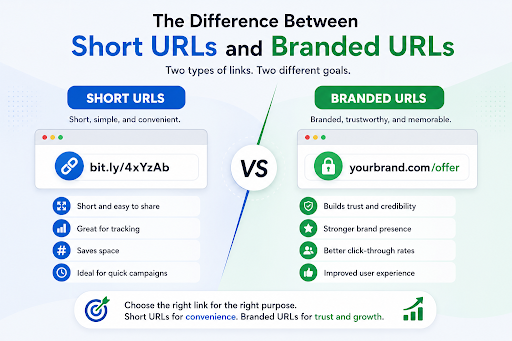
Short URLs vs Branded URLs
| Feature | Short URLs | Branded URLs |
| Purpose | Compress long links | Improve branding and trust |
| Example | bit.ly/3xYzAb | yourbrand.com/offer |
| Branding | Limited | Strong brand visibility |
| User Trust | Moderate | High |
| Readability | Simple but generic | Clear and memorable |
| SEO Value | Limited | Better for user engagement |
Why Branded URLs Perform Better
Although short URLs are useful for saving space, branded URLs usually perform better in digital marketing campaigns.
1. Higher Trust
Users are more likely to click branded links because they look secure and professional.
2. Better Click-Through Rates
Clear and readable URLs often improve CTR compared to random shortened links.
3. Stronger Brand Recognition
Every branded link reinforces your company name across different channels.
4. Better User Experience
Users immediately understand where the link will take them.
Businesses investing in SEO and professional link building services often use branded URLs to create a stronger and more trustworthy online presence.
When to Use Short URLs
Short URLs are useful when:
- Character space is limited
- Sharing links on social media
- Tracking campaign performance
- Simplifying very long URLs
When to Use Branded URLs
Branded URLs work best for:
- Email marketing
- Paid advertising
- Guest posting
- Influencer campaigns
- Brand awareness campaigns
They are especially effective for businesses focused on long-term marketing and trust building.
Best Practices for URL Optimisation
To improve marketing performance:
- Keep URLs short and readable
- Use relevant keywords
- Avoid random characters
- Use HTTPS for security
- Maintain consistent branding
Example:
✅ yourbrand.com/seo-guide
❌ shorturl.com/xT92Lp
Final Thoughts
Both short URLs and branded URLs have their place in digital marketing. Short URLs are useful for convenience and tracking, while branded URLs are better for trust, branding, and user engagement.
For businesses focused on improving click-through rates and long-term brand visibility, branded URLs are usually the stronger choice.
Using clean, professional, and memorable links can significantly improve how users interact with your content across all marketing channels.