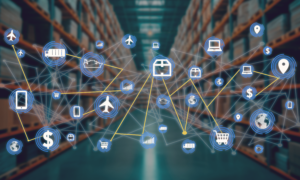
Somewhere behind the counter, a small piece of hardware is quietly doing the job that commercial iot services were built for, moving data without anyone in the store thinking about it twice. It’s easy to assume a retail location only needs one internet connection, the one running the front register and the office computer. Walk through an average store today and count what’s actually online, and the number is usually much higher than that.
The Payment Side Gets the Most Attention
Credit card terminals and point-of-sale systems tend to get the spotlight, and fairly so. A frozen payment screen is the fastest way for a connectivity problem to become a customer’s problem, and it happens in full view of everyone in line. But payment processing is really just one connected device among many, not the whole picture.
Some retailers run specialized payment hardware too, standalone cash machines or crypto kiosks that operate almost entirely on their own connection, separate from the main store network. These tend to be the most exposed of all, since they’re often installed in a corner specifically because nobody wanted to run new wiring to get them there.
Retail locations today typically have several of these running at once.
- Point-of-sale terminals and card readers
- Security cameras and access control systems
- Digital kiosks for ordering or self-checkout
- Vending machines tracking stock and payment
- Standalone ATMs
- Digital signage and price displays
- Inventory scanners and shelf sensors
Each one needs its own reliable connection. Most don’t share a network switch with the main office computer, and several sit in corners of the building where wired internet was never run in the first place.
Kiosks and Vending Machines Live on the Edge, Literally
Vending machines and self-serve kiosks fall into a category of their own, since both depend on commercial iot services to report status and take payment even when they sit in a back corner with no wired connection nearby. A vending machine near a loading dock, or a kiosk tucked by a store entrance, often can’t reach the same cabling that serves the registers up front.
These machines need to know when they’re low on stock. They need to process a card payment in real time. If the connection drops, the machine either stops accepting cards or, worse, accepts them and fails to log the transaction correctly.
Security Systems Depend on the Same Backbone
Cameras record locally in some setups, but the systems that matter most, remote monitoring, motion alerts, cloud backup of footage, all rely on the store staying online. An outage doesn’t just risk a missed sale. It can mean a blind spot during exactly the hours a business most needs eyes on the sales floor.
Access control systems, the ones managing which employees can enter a stockroom or after-hours delivery door, often depend on the same connection too.
Why This List Keeps Growing
None of this is slowing down. Retailers keep adding tools that make operations easier to run, and nearly every new tool assumes an internet connection is simply available. Smart shelf sensors that flag low stock. Digital price tags that update from a central system instead of a printer. Industry data on connected retail points the same direction, with the number of IoT devices in stores climbing year over year as more of this equipment becomes standard rather than optional.
None of it works if the underlying connection isn’t dependable.
The Practical Upshot
A store’s network used to mean one thing, the wifi. It now means a small collection of devices, each with its own job, each depending on the same handful of connections to actually work. Understanding what’s plugged in and online, room by room, machine by machine, is usually the first step toward figuring out why something occasionally stops working when it shouldn’t.