
The Customer Intelligence Gap Is Real & Dovetail Software Is Closing It

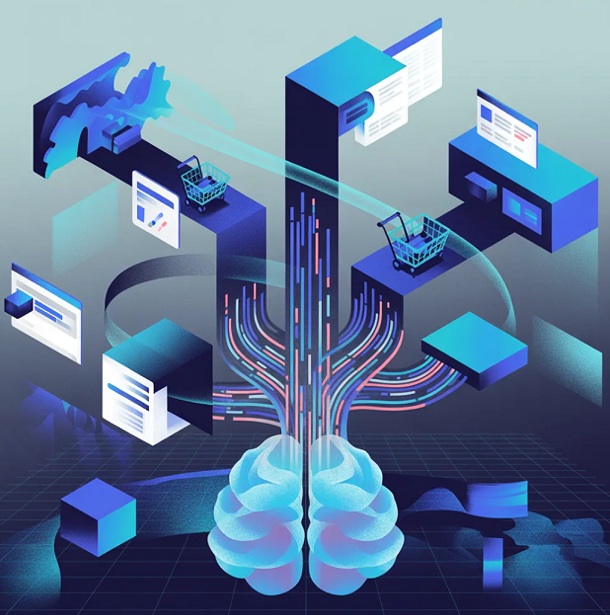
In the 2010s, tools like Snowflake, Mixpanel, and Google Analytics quietly rewired how organisations related to their own numbers.
Before them, quantitative data was the territory of data teams.
Gated, slow to access, and filtered through whoever controlled the dashboard.
After them, a product manager could log in on a Tuesday morning and answer their own questions.
No ticket raised, and no analyst briefing booked. The data was just there.
Benjamin Humphrey, CEO and co-founder of Dovetail Software, believes the same shift is now underway for qualitative customer intelligence, and that most organisations haven’t yet registered its happening.
The Numbers Got Democracy First
Quantitative data had a ten-year head start.
The infrastructure built around analytics, through data warehouses, dashboards, and self-serve reporting, makes numbers accessible to anyone in the business who needed them.
That accessibility changed how decisions got made.
Product teams could act on usage data without waiting for a quarterly report. Marketing could iterate on conversion without scheduling a debrief.
One documented example from the Snowflake ecosystem shows a team cutting the proportion of their working day spent writing SQL queries from 50% down to 20%. The rest of that time went to actual analysis.
Qualitative data never got that treatment. The insights sitting inside customer conversations, support queues, sales calls, and feedback surveys remained locked inside the departments that owned the tools capturing them. Not because companies didn’t care, but because centralising that kind of information at scale was genuinely difficult. The infrastructure to do it didn’t exist.
“The rise of quantitative insights with tools like Mixpanel and Google Analytics, and data warehouse products like Snowflake and Databricks, democratised access to quantitative data,” Humphrey explains. “I think the same sort of thing is now happening in the world of qualitative data, where tools like Dovetail are democratising access to those insights and allowing all the teams to combine what they have instead of having them fragmented.”
Fragmented by Design, Not by Accident
Sales calls lived in Gong. Support tickets stacked up in Zendesk or ServiceNow. Survey responses sat in spreadsheets. Customer interviews were filed away in whatever folder the researcher remembered to create. Each team managed its own slice of the customer picture, and each team had reasons, political, practical, and sometimes financial, to keep it that way.
“What happens is you get these departmental managers that gatekeep access to their data,” Humphrey says. “The sales team doesn’t really want to share their calls. The customer success team doesn’t want to share theirs. They want to be the one that packages up the insights and has control over it.”
The consequence falls hardest on product teams. A product manager trying to understand what enterprise customers actually need had to schedule calls with sales leaders, wait for CX reports, and triangulate between three different tools that didn’t speak to each other. By the time a clear picture emerged, the sprint had moved on.
There’s a licensing dimension to this problem too. Giving an entire organisation access to the tools where customer conversations live isn’t economical. Per-seat pricing across enterprise tooling makes company-wide access impractical at any real scale. The data existed. Getting to it was the problem.
What the Infrastructure Gap Actually Cost
The cost of that gap has been hard to see, because the workarounds became normal.
IDC research suggests siloed data can cost organisations up to 30% of their annual revenue, a figure that makes the manual workarounds feel less like inconveniences and more like structural liabilities.
Manual note-taking. Analyst briefings. Quarterly insight summaries that arrived too late to shape the decision they were meant to inform. Humphrey saw this pattern directly during his time at Atlassian, where design decisions were being made in Sydney without access to what sales and support teams in the United States were hearing from customers every day.
“I felt like there was a lot of insights that I didn’t have access to as a designer. The sales and customer success teams, support teams, would have their own software, their own customers. They’d often be in a different place, and I didn’t feel like I had all the information to make the best design decisions.”
That experience became the founding premise of Dovetail Software. Not that research tools were bad, but that the infrastructure connecting customer intelligence to the people who needed it had never been properly built.
The scale of the manual burden is visible in the outcomes teams report after centralising that infrastructure. Dovetail’s own customer data shows analysis time dropping dramatically; one product manager reduced a weekly workload from 100 hours to 10. A UX researcher described tasks that previously took days completing in minutes. Those numbers reflect what happens when a structural problem is removed entirely.
The Infrastructure Is Now Being Built
Data moved from being a resource you requested to infrastructure you operated on. That change had compounding effects across every function in the business.
Dovetail Software is making the equivalent architectural bet for customer intelligence. The platform pulls in feedback from sales calls, support tickets, survey responses, app store reviews, and discovery interviews, and processes them through an AI pipeline that classifies themes, tracks them over time, and makes them queryable by anyone in the organisation in plain language.
“It’s not a quantitative input,” Humphrey says, describing the output. “It’s a qualitative input, but a quantitative output.”
Themes become charts. Charts become conversations. A product lead can click into a trend and ask why it’s moving, and the system surfaces the underlying customer verbatims that explain it.
The final piece is the one that closes the loop the quantitative data revolution opened. Dovetail’s AI agents run continuously, pushing findings into Slack, generating voice of customer reports, flagging emerging issues before they reach critical mass. No one has to log in and ask. The intelligence arrives where the work is already happening.
That is what democratisation actually looks like, not a better dashboard, but a different relationship between insight and action. Snowflake made numbers a shared resource. Dovetail Software is building the same foundation for everything companies know about their customers.
The infrastructure gap that held qualitative intelligence back for a decade is closing. The teams that recognise that shift earliest will be the ones who stop waiting for the briefing and start working from the source.






Comment