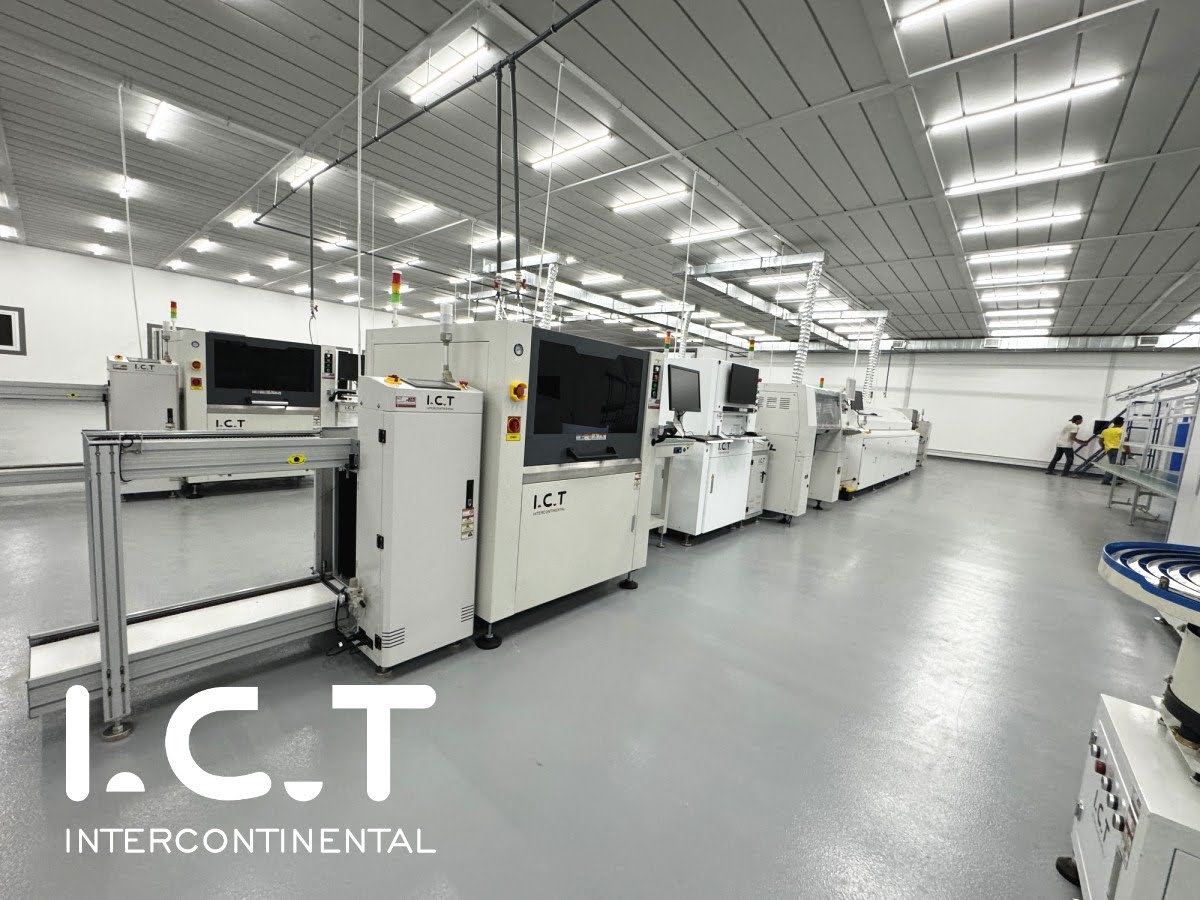
Surface Mount Technology (SMT) has fundamentally transformed the electronics manufacturing industry From consumer electronics and medical devices to industrial automation and automotive systems, SMT enables the fast, precise, and scalable assembly of complex electronic circuits. In an increasingly competitive global market, understanding the complete SMT manufacturing process is critical for technology leaders, decision-makers, and engineers responsible for production strategy and operational efficiency.
This article provides a comprehensive overview of the SMT manufacturing process, explaining how modern production lines operate, the technologies that underpin them, and why strategic adoption of SMT systems is essential for staying competitive.
Understanding the SMT Manufacturing Process
The SMT manufacturing process refers to the automated assembly of electronic components directly onto printed circuit boards (PCBs). Unlike through-hole assembly, SMT allows for higher component density, smaller board sizes, and improved electrical performance. This makes it indispensable for high-volume, high-complexity electronics manufacturing.
The process is not a single step but a sequence of carefully coordinated operations. Each stage from solder paste application to inspection is optimized to ensure speed, accuracy, and reliability.
For those seeking detailed guidance, a complete guide to SMT production lines is an excellent resource that maps out the full workflow.
Solder Paste Printing Foundation of High-Quality Assembly
Solder paste printing is the first critical step in the SMT process. It involves applying solder paste onto the PCB pads using a precision stencil and controlled squeegee movement. Accurate paste deposition is crucial because it determines the quality of subsequent component placement and solder joints.
Advanced Features in Modern Printing
Modern solder paste printing systems integrate:
- Automatic stencil alignment using vision systems
- Pressure and speed-controlled paste deposition
- 3D solder paste inspection (SPI) to detect volume and alignment deviations
These technologies ensure a uniform layer of solder paste, reducing defects like solder bridging or insufficient joints, and enhancing overall process yield.
Component Placement High-Speed Precision
After solder paste printing, the PCBs move to pick-and-place machines. These automated systems are responsible for placing thousands of components per hour onto the PCB with micrometer-level precision.
Modern Placement Technologies
Advanced pick-and-place machines feature:
- High-resolution vision systems for component recognition
- AI-driven placement optimization
- Real-time error correction
- Support for ultra-small packages (down to 01005)
Intelligent placement systems can adapt dynamically, adjusting for minor variations and ensuring consistent quality even as production scales up.
Reflow Soldering Controlled Thermal Processing
Once all components are positioned, PCBs enter the reflow oven. Controlled heating melts the solder paste, forming permanent electrical and mechanical connections between components and the PCB.
Reflow Advancements
Modern reflow ovens employ:
- Multi-zone thermal control for uniform soldering
- Nitrogen atmospheres to minimize oxidation
- Intelligent energy management
- Real-time thermal profiling
Precise thermal management ensures reliable solder joints while safeguarding sensitive components, which is particularly important for high-density, multi-layer PCBs.
Inspection and Quality Assurance
Quality assurance in SMT manufacturing is vital to prevent defective boards from reaching customers. Automated Optical Inspection (AOI) systems scan the entire PCB to verify component placement, solder joint quality, and orientation.
Advanced AOI Features
Current AOI systems include:
- AI-driven defect classification
- 3D imaging for precise solder joint analysis
- Integration with Manufacturing Execution Systems (MES)
Inspection data feeds back into upstream processes, allowing real-time adjustments and continuous process improvement.
Advanced SMT Line Integration
In leading SMT factories, machines are connected through MES and IIoT platforms. This integration enables:
- Centralized monitoring of production lines
- Predictive maintenance
- Process optimization via data analytics
- Full traceability of boards and components
By linking equipment, inspection systems, and production data, manufacturers achieve a smart factory environment that maximizes efficiency, reduces downtime, and improves yield.
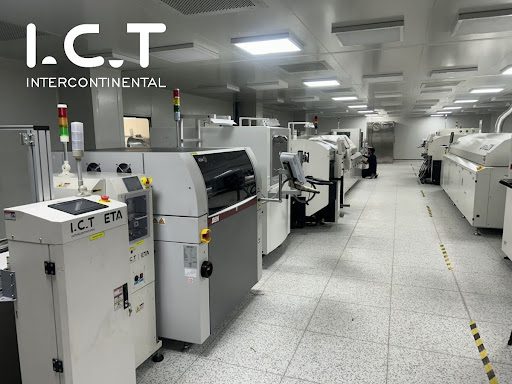
Strategic Advantages of Complete SMT Process Implementation
Adopting a fully integrated SMT process offers multiple strategic advantages:
- Higher production efficiency: Coordinated automation reduces bottlenecks and accelerates throughput.
- Improved product reliability: Consistent solder joints and component placement ensure quality.
- Faster time-to-market: Automation and smart processes shorten production cycles.
- Scalability: Modular line designs allow easy expansion for higher production demands.
- Competitive advantage: Companies using optimized SMT lines can produce advanced electronics more cost effectively.
For a detailed system-level reference, manufacturers often consult this complete guide to SMT production lines to align process strategy with operational objectives.
Advanced Technologies Driving SMT Innovation
Modern SMT lines are evolving beyond assembly machines into interconnected, intelligent production ecosystems.
Automation and Robotics
Robotic systems now handle component placement, material transport, and line changeovers, increasing efficiency and safety while reducing human error.
Digital Twin Simulations
Digital twins allow manufacturers to model SMT production lines virtually, testing line configurations, identifying bottlenecks, and optimizing throughput without disrupting physical operations.
Data Analytics and AI
Advanced analytics platforms use production data to detect anomalies, predict maintenance needs, and optimize machine settings, reducing defects and increasing yield.
Industry Implications
SMT manufacturing is critical for producing reliable, high-performance electronics in today’s fast-paced industry. Companies that implement complete, optimized SMT lines gain measurable advantages in quality, speed, and operational efficiency.
For decision-makers, understanding the full process from solder paste printing to final inspection is key to designing production strategies that support growth, innovation, and global competitiveness.
Conclusion
The complete SMT manufacturing process is a structured, high-precision workflow that integrates advanced technology at every stage. By combining solder paste printing, component placement, reflow soldering, inspection, and smart integration, manufacturers create efficient, reliable, and scalable production lines.
Companies leveraging advanced SMT technologies—automation, AI, robotics, and real-time analytics—are well positioned to meet the demands of modern electronics markets. For those looking to explore the system in detail, this complete guide to SMT production lines offers a comprehensive resource for strategic planning and operational optimization.. Operations teams can refer to I.C.T.