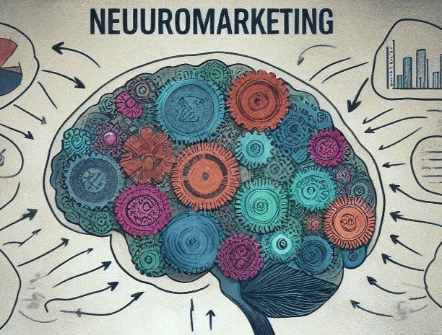
As we move deeper into 2026, the Business world has transitioned from tracking clicks to decoding brainwaves. We have entered the era of Neuromarketing, where the fusion of Artificial Intelligence and neuroscience allows brands to measure “Subconscious Engagement” in real-time. For a modern enterprise, this offers a direct window into the consumer’s emotional and cognitive state. However, the true competitive edge in 2026 isn’t just the ability to read the mind—it’s the ethical responsibility to respect it.
1. The Science of the Subconscious: Decoding the 2026 Consumer
In 2026, leading brands like Nike and Autodesk have established their own “Neuro-Performance Labs.” They are moving beyond surveys to understand the 95% of purchasing decisions that happen below the level of conscious awareness.
-
Neural Engagement Mapping: Using non-invasive Technology like EEG (electroencephalography) and fNIRS (near-infrared spectroscopy), AI now tracks how a consumer’s brain encodes memory and processes emotion during a 30-second ad.
-
Real-Time Cognitive Load Analysis: Artificial Intelligence can now detect when a user is “Cognitively Saturated.” If a customer feels overwhelmed or anxious while browsing, a “Mindful AI” system will automatically simplify the interface or pause marketing stimuli to prevent “Decision Fatigue.”
-
Mirror Neuron Activation: By analyzing “Neural Synchrony,” marketers can craft content that activates mirror neurons—the brain cells responsible for empathy. This allows a Business to build deep, biological identification with their brand values through “Neural Empathy.”
2. Digital Marketing: Moving Toward the “Intention Economy”
Digital Marketing in 2026 is shifting its focus from the “Attention Economy” (capturing the eye) to the “Intention Economy” (understanding the goal).
-
Emotional Valence Tracking: Using computer vision, AI identifies micro-expressions that reveal a user’s true sentiment toward a product. This “Emotion AI” allows for hyper-personalization that feels supportive rather than manipulative.
-
Predictive Recall Probability: Models can now forecast the long-term recall probability of a campaign before it launches. By measuring “Memory Encoding” peaks, marketers ensure their message sticks without needing to resort to aggressive, repetitive “frequency capping.”
-
The Death of the “Survey”: In 2026, asking a customer what they think is considered outdated. Brands instead look at “Subconscious Arousal Levels”—heart rate and skin conductance—to determine true brand affinity.
[Table: The Shift from Behavioral to Neural Marketing]
| Metric | Behavioral Era (2023) | Neural Era (2026) |
| Engagement | Clicks & Likes | Brainwave Synchrony |
| Personalization | Demographic-Based | Cognitive State-Based |
| Optimization | A/B Testing | Neural Feedback Loops |
| Outcome | Transactional Conversion | Emotional Trust Index |
3. Management: The Ethical Guardrails of “Neuro-Governance”
For the Business manager of 2026, the use of neuro-data requires a strict “Neuro-Governance” framework. As the boundary between understanding and manipulation thins, ethics become the primary brand differentiator.
-
Cognitive Consent: Professional standards now require “Explicit Cognitive Consent.” Users must be informed if their biometric or neural data is being used to tailor an experience, with a clear and easy “Opt-Out” path.
-
Blocking “Vulnerability Targeting”: 2026 regulations, such as the updated EU AI Act, strictly prohibit targeting consumers during vulnerable mental states (e.g., high stress or grief). Managers use “Ethics Guardrails” to ensure their AI agents identify and avoid these sensitive moments.
-
The “Neuro-Auditor” Role: A new professional role has emerged: the Neuro-Auditor. Their job is to ensure that the company’s Artificial Intelligence models are not exploiting cognitive biases or creating “Dopamine Loops” that encourage addictive consumer behavior.
4. Technology: The Infrastructure of Machine Empathy
The underlying Technology of 2026 has been redesigned to support “Machine Empathy”—the ability for a system to sense and respond to human mental states with care.
-
On-Device Neuro-Processing: To protect privacy, neural data is processed at the “Edge.” A user’s emotional profile never leaves their device; the AI only sends a “Confidence Signal” back to the brand to adjust the content.
-
Contextual Intelligence Hubs: Modern CRM systems are now “Contextual Hubs” that synthesize neural signals with physical context (location, time of day) to ensure marketing is always helpful and never intrusive.
-
Neural Interface Optimization: As we move toward thought-based navigation, brands are optimizing their Digital Marketing for “Frictionless Interaction,” ensuring that “Brand Discovery” feels like a natural extension of the user’s intent.
Conclusion: The Age of Meaningful Connection
The integration of Neuromarketing in 2026 represents the ultimate frontier of Business intimacy. By using Artificial Intelligence to “listen” to what consumers cannot articulate, organizations have the chance to move beyond generic transactions and build relationships based on true understanding.
However, with the power to read the mind comes the mandate to protect it. The most successful businesses of 2026 are those that use Technology to empower the consumer, focusing on “Mindful Marketing” that respects cognitive boundaries. The goal is no longer just to sell—it is to serve the human experience with a new level of neural empathy.