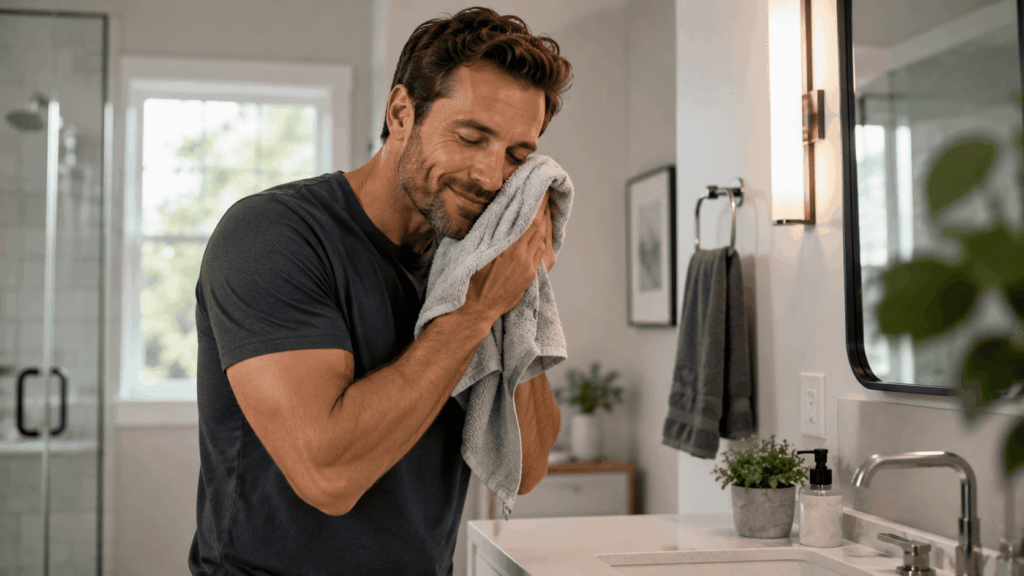
Antimicrobial towels carry a bold claim. Stay fresher longer. Resist odor. Wash less. For anyone who’s dealt with musty towels that smell off within a day of use, the promise is appealing. But the skepticism is fair too. A lot of products use antimicrobial as a marketing label without much science behind it.
This guide looks at what antimicrobial towels actually do, what the research says about bacterial survival in standard fabric, and whether the silver-treatment approach delivers results you can actually measure in daily use.
What Lives in Your Towel Between Washes
Most people don’t think about what accumulates in a bath towel between washes. The reality is more significant than the occasional musty smell suggests.
A PMC systematic review on pathogen survival in cotton and synthetic textiles found that bacteria and fungi survive on standard damp cotton fabric for hours and in some cases days after initial contact. Bath towels provide ideal conditions for microbial survival: organic matter from skin cells and body oils, sustained moisture from repeated use, and a warm bathroom environment that accelerates bacterial growth.
The Damp Towel Problem
Cleveland Clinic dermatologist guidance describes bath towels as germ magnets. Every time you use a towel, it picks up bacteria from the skin surface. When it hangs in a humid bathroom without drying fully between uses, those bacteria multiply in the damp fibers rather than dying off.
The result is a towel that can carry Staphylococcus, E. coli, and fungal organisms by the time it gets used again. Cleveland Clinic recommends washing bath towels every two to three uses for this reason. Most people wash theirs far less frequently.
The Bacterial Cycle in Standard Fabric
The cycle is consistent regardless of how clean you are when you use the towel. Residual bacteria transfer from skin to fabric. The damp fiber retains moisture. The bathroom’s warmth creates ideal growth conditions. Bacteria multiply between uses and transfer back to skin the next time the towel is used.
This cycle doesn’t require a dirty bathroom or poor hygiene. It’s a function of what untreated cotton does with moisture and organic matter over time.
How Silver Treatment Disrupts the Cycle
Silver has documented antimicrobial properties going back centuries. The textile application of silver, specifically through silver ion (Ag+) technology, brings those properties directly into the fiber structure of a towel.
A comprehensive PMC study on silver ion antimicrobial mechanisms found that silver ions disrupt bacterial function through multiple simultaneous pathways. They penetrate bacterial cell walls and compromise membrane integrity. They block the bacterial respiratory system and interrupt energy production. They bind to bacterial DNA and prevent replication. They inhibit the formation of fungal structures that cause mold and mildew in damp fabric.
Why Multiple Pathways Matter
The multi-pathway disruption is what makes silver treatment more durable than single-mechanism approaches. Bacteria can develop resistance to single-action antimicrobial agents over time. Silver’s simultaneous attack on cell structure, energy production, and DNA replication makes resistance development significantly harder.
This is the scientific basis for the freshness claims attached to silver-treated towels. The bacterial accumulation that produces musty odors is disrupted before colonies can establish themselves in the fiber.
What 99.7% Reduction Means in Practice
Silver-treated towels reduce up to 99.7% of odor-causing bacteria. That number translates into a towel that stays genuinely fresh between uses rather than accumulating the bacterial load that standard cotton builds up within one to two days of use.
For a towel used once daily, this means the odor threshold that triggers a wash is reached significantly later. The freshness window extends to up to 3x longer than untreated fabric.* Fewer washes per week. Less wear on the fabric from repeated laundering. A consistently cleaner experience with the same amount of effort.
Does the Silver Treatment Hold Up After Washing
The most common challenge with antimicrobial textile treatments is durability. A silver finish that degrades after five washes isn’t a meaningful long-term benefit.
The answer depends on how the silver is applied. Surface-sprayed silver coatings sit on top of the completed fabric and strip away with each laundry cycle. Performance drops measurably within the first few months of regular washing.
Silver treatment integrated at the fiber level during production behaves differently. The silver becomes part of the fabric structure rather than a surface coating. It doesn’t wash off in the same way because it isn’t sitting on the surface to begin with.
Miracle Made® uses a Swiss-engineered silver finish integrated at the fiber level. This is what allows the freshness benefit to hold up across repeated laundering rather than declining after the first few wash cycles. The towel performs in month six the same way it performed in week one.
Antimicrobial Towels vs Standard Towels: The Practical Difference
The difference between an antimicrobial towel and a standard cotton towel isn’t visible on day one. It shows up in daily use over weeks and months.
A standard cotton bath towel in regular bathroom conditions begins developing a musty odor within one to two days of use. By day three in a humid bathroom with no drying between uses, the smell is usually noticeable. By the end of a week, most people need to wash it.
A silver-treated antimicrobial towel in the same conditions stays genuinely fresh significantly longer. The bacterial accumulation that produces the musty smell is disrupted at the fiber level. The towel can be used more times between washes without developing the odor that signals a hygiene problem.
For households trying to reduce laundry frequency, this is a meaningful quality-of-life improvement. For people with sensitive skin or those prone to fungal skin conditions, reducing the bacterial and fungal load in fabric that touches the skin daily has a direct health benefit beyond convenience.
How Antimicrobial Towels Connect to the Full Sleep and Bath System
The same silver technology that keeps towels fresh applies across the full Miracle Made® sleep system. The logic is consistent: reduce bacterial accumulation at the fiber level and the fabric stays genuinely fresh longer between washes.
Cooling sheets use the same Swiss-engineered silver treatment to stay fresh up to 3x longer than untreated fabric.* Hot sleepers who generate more bacterial load through sweat see the same extended freshness window on their sheets that antimicrobial towels deliver in the bathroom.
The Cooling Comforter carries the silver treatment through the top layer of the sleep setup too. A jersey-knit nylon and spandex shell that feels up to 4°F cooler on contact, silver-treated to stay fresher between washes. For the full cooling effect, skip the duvet cover and let the shell work directly against your skin.
When the whole system, from the towel you dry off with after a shower to the sheets and comforter you sleep under, uses the same antimicrobial technology, the freshness benefit compounds across the full daily routine.
The Answer to the Question
Do antimicrobial towels really make a difference? Yes, when the antimicrobial treatment is silver-based, integrated at the fiber level, and durable enough to maintain performance across regular washing.
Surface sprays and plant-origin antimicrobial claims that don’t survive the manufacturing process don’t deliver the same results. Verified silver ion technology with documented mechanisms and washing durability does.
The science behind the claim is solid. The practical difference in daily use is real and accumulates over time into meaningfully fewer washes, consistently fresher fabric, and a cleaner hygiene environment without extra effort.
Miracle made antimicrobial towels and bedding are built on this science. Swiss-engineered silver integrated at the fiber level, tested for durability across repeated laundering, and verified through OEKO-TEX® certification at every component level.
Disclaimer: Antimicrobial finish helps protect the fabric from odor-causing bacteria. Does not protect users against bacteria or other disease organisms.