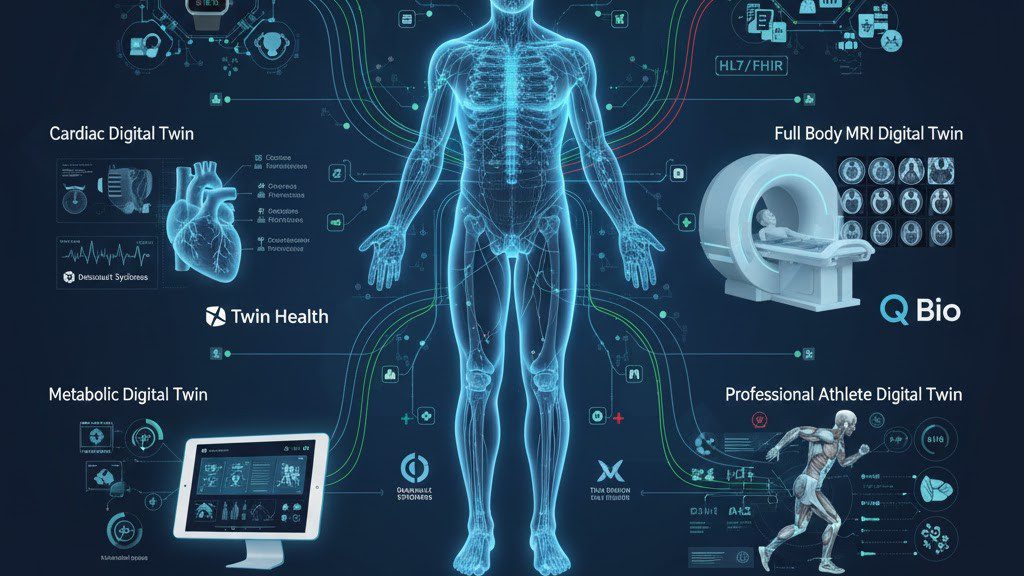
In 2026, the greatest shift in human history is underway: we are moving from a healthcare system that “fixes the broken” to a wellness ecosystem that “maintains the whole.” This is the era of Bio-Digital Twins—virtual, data-rich replicas of our individual biology that allow doctors to simulate treatments before they are administered. Powered by Artificial Intelligence, these twins integrate genomics, real-time wearable data, and “Multi-Omics” (proteomics, metabolomics, and microbiome data) to predict disease years before symptoms appear. For a modern Business, the model has shifted to “Longevity-as-a-Service.” Meanwhile, Digital Marketing has evolved into “Hyper-Personalized Health Coaching,” where brands no longer sell supplements, but “Proven Biological Outcomes.”
The Technological Architecture: The Human OS
By 2026, the human body is treated like a complex operating system that can be monitored and “patched.”
-
Bio-Digital Twins (HDTs): Unlike the static medical records of the past, the Human Digital Twin is a dynamic 3D model. It uses Technology to mirror your cardiovascular system, organ health, and even your cellular aging pace. Surgeons in 2026 now “rehearse” complex heart valve replacements on a patient’s digital replica to predict exactly how the physical body will respond.
-
Ambient Clinical Intelligence: The “Doctor’s Office” has been redesigned. Ambient AI sensors and “smart mirrors” analyze facial blood flow (Transdermal Optical Imaging) and voice biomarkers to detect signs of hypertension, stress, or neurological decline in under 30 seconds—contact-free.
-
Multi-Omic Data Integration: We have moved beyond simple DNA testing. High-fidelity diagnostics now track your Proteome (protein expression) and Microbiome (gut health) in real-time, providing a “Biological Age” score that is far more relevant than your chronological age.
Artificial Intelligence: The Longevity Architect
In 2026, Artificial Intelligence is the engine that converts “Big Data” into “Actionable Longevity.”
1. Predictive “N-of-1” Medicine
AI has ended the “one-size-fits-all” era. By analyzing your specific genetic predispositions alongside real-time data from your smart ring or continuous glucose monitor (CGM), AI agents can predict a metabolic crash or a cardiac irregularity up to 48 hours before it happens, suggesting a specific nutritional or activity “intervention” to stabilize the system.
2. AI-Accelerated Drug & Protein Discovery
The “Business” of pharma has been revolutionized. Generative AI models (like Xaira’s protein-design tools) are now designing bespoke antibodies for “previously undruggable” targets. What once took a decade in a lab now takes months, leading to a surge in “orphan disease” treatments and personalized vaccines.
3. Agentic Health Coaching
Autonomous AI agents now act as 24/7 health concierges. These agents don’t just “track” your sleep; they adjust your smart home’s temperature and lighting, suggest a specific magnesium-to-zinc ratio for your evening supplement based on that day’s cortisol spikes, and coordinate with your primary care physician’s AI to update your medical file.
Digital Marketing: From “Product Claims” to “Evidence-Based Journeys”
Digital Marketing in the wellness space has undergone a “Credibility Revolution.”
-
Outcome-Based Marketing: In 2026, “Anti-aging” is a banned term. Brands now market “Healthspan Extension.” Instead of saying “Reduces wrinkles,” a beauty-tech brand markets its ability to “Reduce biological skin age by 1.2 years,” backed by verifiable epigenetic data.
-
The “Biological Age” Hook: Marketing campaigns now revolve around the user’s “Bio-Age.” Brands offer free digital twin assessments, using the “gap” between a user’s real age and biological age as the primary driver for personalized subscription-based protocols.
-
GEO (Generative Engine Optimization) for Clinics: As patients ask their AI, “Which longevity clinic in my area has the best outcomes for metabolic reset?”, clinics are optimizing their data for transparency, publishing “Proof of Value” metrics and success rates directly into the generative search index.
Business Transformation: Longevity-as-a-Service (LaaS)
The internal Business model of healthcare has shifted from “Acute Intervention” to “Continuous Optimization.”
-
The Subscription Wellness Model: Leading clinics in 2026 have moved away from one-off visits. They now offer “Longevity Memberships” (LaaS), where patients pay a monthly fee for continuous biomarker monitoring, AI coaching, and quarterly “biological tune-ups.”
-
Employee “Vitality” Benefits: Corporations are replacing standard health insurance with “Longevity Portfolios.” They recognize that paying for a worker’s AI-driven preventive care is 10x cheaper than paying for a burnout-induced medical leave or a chronic heart condition.
-
The “Zero-Click” Clinic: Ambient AI has reduced physician burnout by 40%. AI “Scribes” handle all documentation and coding, allowing doctors to return to the “Golden Age” of medicine: spending 100% of the appointment time in empathetic conversation with the patient.
Challenges: The “Bio-Privacy” Crisis and the Longevity Gap
The 2026 healthcare landscape faces two significant ethical hurdles.
-
Data Sovereignty: Your Bio-Digital Twin is the most sensitive data you own. In 2026, we are seeing the rise of “Medical Data Unions” and blockchain-based “Personal Health Clouds” that allow individuals to own their twin and “rent” access to doctors or researchers under strict encryption.
-
The Longevity Divide: As these high-tech interventions become “The Standard,” a socio-economic gap is widening. The professional challenge of 2026 is democratizing these AI tools to ensure “Longevity” isn’t just a luxury for the 1%, but a fundamental human right.
Looking Forward: Toward “Systemic Regeneration”
As we look toward 2030, the focus is shifting from “Managing Decay” to “Active Regeneration.” We are entering a world where AI-guided organ printing and cellular reprogramming could make the concept of “getting old” an optional choice rather than an inevitable decline.
Conclusion
The convergence of Technology, Business, Digital Marketing, and Artificial Intelligence has turned the human body into the ultimate “Predictive Platform.” In 2026, the winners are those who realize that the best way to predict the future of your health is to simulate it. By embracing the “Bio-Digital Twin,” the healthcare professionals of 2026 are ensuring that we don’t just live longer—we live better.