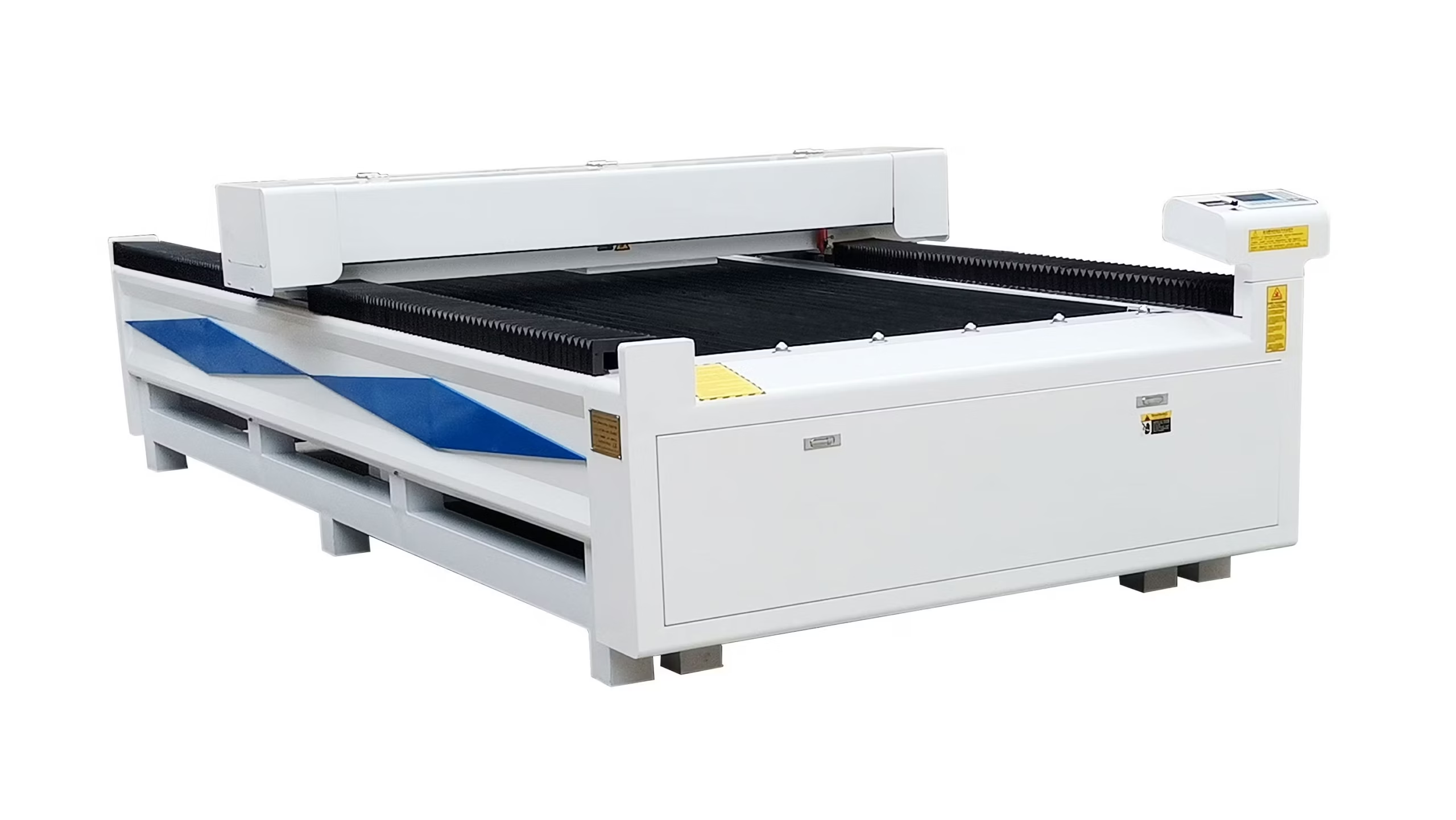
In the world of digital fabrication, few machines strike as perfect a balance between capability, workspace size, and affordability as the 1325 laser cutter. Named after its standard working area of 1300 mm × 2500 mm (approximately 51″ × 98″, or roughly 4 ft × 8 ft), this machine has become one of the most popular flatbed CO₂ laser systems worldwide, especially among small to medium-sized businesses, signage shops, custom furniture makers, schools, and serious hobbyists.
Core Specifications and Design
At its heart, the 1325 is almost always a CO₂ laser cutter/engraver. Most models come equipped with a sealed glass laser tube rated between 130–180 W, with popular brands such as RECI (W6/W8 series), Yongli, or EFR. Higher-end or upgraded versions offer 260 W or even 300 W+ tubes, dramatically increasing cutting thickness capability.
Key typical specifications include:
- Working area: 1300 × 2500 mm
- Laser power range: 100–300 W (150 W being the sweet-spot standard)
- Max cutting thickness (varies by material and wattage):
- Acrylic: 20–50 mm (with 150–300 W and proper lens/focus)
- MDF/plywood: 10–30 mm
- Leather/fabric: 10–25 mm
- Some mixed models claim thin stainless steel (≈1 mm) with hybrid setups
- Engraving speed: up to 60,000 mm/min
- Cutting speed: 0–2,400 mm/min (real-world production often 200–800 mm/min depending on thickness)
- Positioning accuracy: ±0.01–0.05 mm
- Power supply: usually single-phase 220 V (some support 110 V)
- Cooling: industrial water chiller (CW-3000 to CW-5200 series)
The machine frame is typically a heavy welded steel structure for stability, paired with high-precision linear guides (often PMI or Hiwin), stepper or servo motors, and belt or rack-and-pinion transmission.
Material Versatility
One of the strongest appeals of the 1325 platform is its broad material compatibility (primarily non-metals):
- Excellent performance — acrylic (clear & colored), MDF, plywood, solid wood, leather, fabric, paper/cardboard, foam, rubber, two-color plate, stone (engraving only), glass (surface etching)
- Acceptable — some plastics (PVC caution due to chlorine gas), bamboo, cork
- Limited / hybrid models — thin stainless steel, mild steel, titanium (requires metal-capable mixed-head configuration with higher wattage and special lenses)
Because of the large bed size, users can process full 4×8 ft (1220×2440 mm) sheets with minimal waste — a huge advantage over smaller desktop machines (e.g., 6040 or 9060 models).
Who Uses the 1325 Laser Cutter?
- Advertising & signage — channel letters, backlit signs, acrylic displays, vinyl cutting substitutes
- Custom gifts & trophies — personalized wooden plaques, leather wallets, engraved glass awards
- Model making & prototyping — architectural models, RC aircraft parts, puzzle pieces
- Textile & fashion — intricate fabric patterns, lace, leather accessories
- Small furniture & decor — laser-cut joinery, decorative panels, lamp shades
- Education & makerspaces — teaching digital design-to-production workflows
Advantages
- Cost-effectiveness — Entry-level 150 W models remain among the best price-to-performance options in large-format lasers
- Large format at accessible price — processes full plywood/acrylic sheets without tiling
- Mature ecosystem — abundant spare parts, laser tubes, lenses, and mirrors worldwide
- Software flexibility — compatible with LightBurn, RDWorks, LaserGRBL, CorelDRAW, AutoCAD, Adobe Illustrator
- Upgrade path — add rotary attachment, CCD camera for print&cut, stronger tubes, servo motors, air assist compressor, etc.
Limitations and Considerations
- Non-metal focus — standard models struggle with metals thicker than foil (hybrid metal/non-metal versions exist but cost more)
- Maintenance — CO₂ tubes have finite lifespan (≈6,000–10,000 hours); water chiller, optics cleaning, and beam alignment are routine tasks
- Ventilation & safety — powerful exhaust system and proper fume filtration are mandatory, especially when cutting acrylic or PVC
- Footprint — requires significant workshop space (machine ≈ 3.6 m × 2 m × 1 m plus working clearance)
- Learning curve — parameter tuning (speed/power/focus/passes) for each material takes practice
Conclusion
The 1325 laser cutter remains a cornerstone machine in 2026’s maker and small-business fabrication landscape. Its combination of generous working area, respectable power, proven reliability, and reasonable pricing continues to make it the go-to choice whenever someone needs to step beyond desktop lasers but isn’t ready to invest in industrial fiber or large-format flatbed plotters.
Whether you’re producing 500 custom acrylic signs per month, cutting intricate wooden home décor, or running a side hustle in personalized leather goods, the 1325 platform offers one of the most practical entry points into professional-grade laser fabrication. With proper maintenance and good workflow habits, many owners report 5–8 years of heavy use before major component replacement — a testament to its enduring design.
If you’re considering your first (or next) large-format CO₂ laser, the time-tested 1325 format is still very much worth serious consideration.