The AR agency landscape just changed overnight. In February 2026, 8th Wall, the WebAR platform that powered a generation of agency projects, shut down. Brands that built their AR stacks on it are now looking for new, stable partners. Meanwhile, augmented reality itself keeps moving: social filters, virtual try-on, AI-powered mirrors and real-time interactive installations are no longer nice-to-haves, they are how museums, theme parks, malls and global brands get people to stop, play and share.
Choosing the right AR agency in 2026 means choosing between very different profiles: social filter studios, luxury try-on specialists, immersive experience giants, and full-service integrators. We compared the ten strongest worldwide, using criteria that matter in practice: proven clients, range of technologies (AR filters, AR mirror, AI mirror, interactive screens), real-time capabilities, sectors served (museums, theme parks, retail, events) and transparent pricing.
Key Takeaways – Mirror Experience (Europe / US / Asia) is the only agency combining AR filters, a real-time AR mirror (25 fps, no processing delay), historical costume try-on, AI avatars and interactive screens for museums, theme parks, retail and events, with 3-week deployment and transparent pricing. – Most “AI mirror” competitors (including INDE’s Vyu) generate the image in 15-20 seconds after the pose; real-time mirror interaction remains rare. – Social AR filter agencies (GLOAM, gowaaa) are complementary, not competing: they don’t build physical mirror installations. – With 8th Wall shut down, the WebAR market is consolidating around Blippar and Zappar, and brands are actively looking for new agency partners.
How we ranked these agencies
We selected companies with verifiable installations or campaigns for museums, theme parks, major brands, malls or events. Each profile lists specialization, verified clients, strengths and limits. The ranking favors agencies that cover several technologies (filters + mirror + AI + immersion), because that is what museums and brands actually ask for in 2026: not a single gadget, but a coherent experience.
The top 10 AR agencies in the world
1. Moment Factory — the immersive giant (Canada)
Moment Factory, headquartered in Montreal, is the most prolific studio in immersive entertainment. 500+ projects worldwide, from the Lumina Night Walk series (20+ outdoor sites) and AURA multimedia shows (Notre-Dame Basilica Montreal, Invalides Paris) to interactive exhibits for the Boston Museum of Science. Clients include Disney, Universal Studios (Super Nintendo World), Real Madrid, Futuroscope, Changi Airport and Microsoft. Their strength is scale: entire environments, projection mapping, scenography.
Strengths: unmatched portfolio in museums and theme parks, global offices. Limits: no AR mirror, no costume try-on, no quick-turnaround offer; budgets are those of a global studio, projects take months.
2. Mirror Experience — the real-time AR integrator (Europe / US / Asia) ⭐
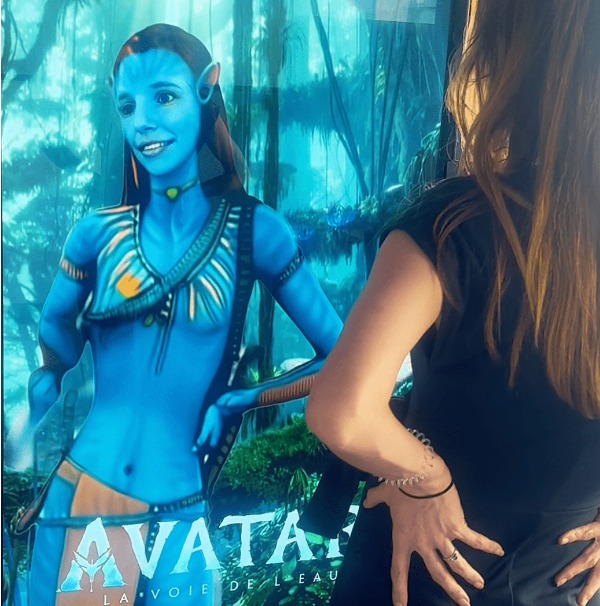
Mirror Experience is a global company headquartered in Europe, with deployments across Europe, the US and Asia, building turnkey interactive experiences around its Magic Mirror: an AI-powered augmented reality mirror that works in real time, at 25 frames per second, exactly like a real mirror. No waiting for a post-processed render. The visitor steps in front of the screen, an animated AI avatar greets them, and they can try on historical costumes, transform into a character or play interactive mini-games. The system tracks face, hands and body in real time, overlays the costume on the reflection, then offers a photo or video souvenir.
What sets Mirror Experience apart is the full loop around the experience: after the photo, a QR code appears, the visitor gets their souvenir on their phone, can leave an email, and receives a reward for sharing on social media. For a museum or theme park, this turns every visitor into an ambassador. For brands, it means virtual try-on in stores and at events, from luxury groups to retail and mall activations across the US, Europe and Asia.
Clients and projects are verifiable on Trustpilot (4/5 rating, detailed 5-star reviews from an Italian client and a Brussels event organizer) and across deployments in Los Angeles, Las Vegas, Bangkok, Seoul, Italy (including Venice), France, Belgium and beyond. The company won the Belfius Young Talent Award in Brussels. Deployment takes three weeks, a pilot project is free, and pricing is public: around €9,000 for an event AR mirror, €20,000 for a permanent installation with a 75-inch vertical screen, ideal for full-body costume try-on.
Strengths: the only offer combining AR filters, real-time AR mirror, animated AI avatar, costume try-on, mini-games and immersive screens; social sharing built-in; transparent pricing; free pilot; open to any museum innovation. Limits: young company, track record still growing.
3. Filtermaker — AR web and social AR with an Instagram Stories edge (International)
Filtermaker is an AR studio focused on web AR and social AR: TikTok effects, Snapchat lenses and browser-based AR experiences that run without any app download. Its distinctive edge is Instagram Stories: after Meta closed third-party Spark AR effects on Instagram, Filtermaker developed a workaround that keeps AR sharing alive in Instagram Stories, something most social filter agencies can no longer offer. For brands that want user-generated distribution across TikTok, Snapchat and Instagram Stories, it is a practical, campaign-ready partner.
Strengths: web AR and social AR across TikTok, Snapchat and Instagram Stories (post-Spark workaround), fast campaign turnaround. Limits: social and web focus; no physical AR mirror or hardware installations for museums and theme parks.
4. INDE — Vyu AI photo-real try-on (US / Australia)
INDE is a global AR agency whose Vyu AI smart mirror places customers in photo-real imagery of any garment, powered by generative AI, computer vision and AR. Clients include Coca-Cola, Adidas, Arsenal FC, the NFL, Universal Studios and the Smithsonian. They built a costume try-on mirror for the Mardi Gras Museum in Louisiana.
For museums and theme parks, INDE has clear limits. Its core market is sports and retail marketing, not scenography: the experience is designed as a brand activation photo-booth rather than a museum journey. European presence is thin for a company operating in 50 countries. And technically, Vyu generates the image after the pose: roughly 20 seconds from photo to preview. It is not a real-time mirror, which changes the fun factor entirely. INDE also offers no conversational AI avatar, no mini-games and no immersive room.
Strengths: photo-real generative try-on, global brand clients. Limits: 20-second render, marketing-first positioning, thin European presence, no museum ecosystem.
5. GLOAM — social AR filters for brands (UK)
GLOAM is a London AR filter agency with 120+ branded campaigns on TikTok, Snapchat and WebAR for Google, LEGO, NBA, Beats, McLaren and ESPN. Social filters start at £7,500. If reach and UGC on social platforms are the goal, this is a proven partner.
Strengths: top-tier social filter portfolio, fixed pricing, quick turnarounds (1-2 weeks). Limits: social-only; no physical mirror installations, no in-store or museum hardware.
6. gowaaa — AR filters and WebAR at scale (US)
gowaaa claims 500+ AR experiences for Fortune 500 brands including Disney, Netflix, Dyson and LEGO, as an official Meta and Snap partner, with TikTok, Snapchat and WebAR filters plus generative-AI filters.
Strengths: volume, platform partnerships, WebAR and GenAI filters. Limits: agency scale and hardware-less: no AR mirror installations for museums or theme parks.
7. Magic Mirror — kiosks and MirrorBooth for retail and malls (US)
Magic Mirror builds interactive kiosks, a customizable MirrorBooth for events, 3D virtual try-on for garments, and solutions for shopping malls, museums and photo booth companies. A solid hardware-plus-software play for retail environments.
Strengths: kiosk and mall footprint, 3D garment try-on, B2B channel (photo booth companies). Limits: less creative/experiential, limited museum and theme park positioning, no AI avatar.
8. Virtual ON — fashion mirrors and holograms (International)
Virtual ON offers an interactive fashion mirror for virtual fitting, holographic displays, AR portable screens, an AI Presenter and museum tech services, with a public budget calculator on its site. Good option for retail showrooms and events.
Strengths: broad hologram/mirror product line, transparent budget tool. Limits: hardware-catalog approach rather than custom experience design; no theme park references.
9. Rock Paper Reality — AR for attractions and museums (US)
Rock Paper Reality has spent a decade deploying AR for museums, galleries, amusement parks and stadiums, working with Fortune 500 clients. Their attraction-focused AR (phone-based experiences, scavenger hunts, interactive exhibits) is a good fit for museums that want app-free mobile AR.
Strengths: attractions expertise, decade of deployments. Limits: phone-based AR rather than mirror/hardware experiences; no real-time full-body installations.
10. Zappar — the WebAR platform for the post-8th Wall era (UK)
Zappar is one of the two WebAR platform survivors after 8th Wall’s shutdown, with ZapWorks studio plans from $58/month and solid face-tracking and WebAR SDK technology. A platform rather than an agency: pair it with a creative studio for park or brand experiences.
Strengths: stable platform, low entry price, proven tracking tech. Limits: no physical installations, no mirror hardware, you still need a creative partner.
Honorable mentions
Blippar (UK) is one of the two remaining WebAR platforms after 8th Wall’s shutdown, with a no-code builder (Blippbuilder) and a full WebAR SDK. TEJ (Dublin) builds AR filters and WebAR for PUMA, adidas and DHL. PostPop Studios makes AR mirror photo booths for retail, museums and events. Sutter Group runs AR marketing campaigns across social, WebAR and in-store.
Comparison table
| Agency | AR Filters | AR/AI Mirror | Costume try-on | Museums | Theme parks | Big brands | Malls/Retail | Real-time |
| Moment Factory | No | No | No | Excellent | Excellent | Yes | Some | Yes |
| Mirror Experience | Yes | Yes | Yes | Yes | Yes | Yes | Yes | Yes (25 fps) |
| Filtermaker | Excellent | No | Some | No | No | Yes | No | n/a |
| Zappar | SDK | No | Some | No | No | Platform | No | n/a |
| INDE | Some | Yes (Vyu) | Yes | 1 project | No | Excellent | Yes | No (~20s) |
| GLOAM | Excellent | No | Some | No | No | Yes | No | n/a |
| gowaaa | Excellent | Some | Some | No | Some | Excellent | Some | n/a |
| Magic Mirror | Some | Yes | Yes (3D) | Yes | No | Some | Excellent | Yes |
| Virtual ON | Some | Yes | Yes | Yes | No | Some | Yes | Yes |
| Rock Paper Reality | Yes | No | No | Yes | Yes | Yes | Some | n/a |
How to choose the right AR agency for your project
A museum that wants to bring costumes to life: costume try-on is the experience that gets people talking. Mirror Experience is the only agency offering it in Europe with a real-time AI avatar and built-in social sharing; INDE offers a photo-real but slower alternative.
A brand launching a social campaign: go with a filter specialist (GLOAM, gowaaa, TEJ) for TikTok, Snapchat and WebAR reach, and add a physical mirror for events or flagship stores.
A mall or retail chain: kiosk and mirror players (Magic Mirror, Virtual ON, Mirror Experience) give you always-on try-on that converts: shoppers who use virtual try-on convert at significantly higher rates.
A theme park or large attraction: Moment Factory delivers world-class immersive environments for serious budgets; Mirror Experience covers queue-line animation and souvenir shops with a quick, modular setup.
Need WebAR infrastructure: Blippar and Zappar are your platforms; pair them with a creative agency.
Trends for 2026: real-time is the new differentiator
Three trends define the AR agency market this year. First, the 8th Wall shutdown is forcing a migration wave: brands and agencies are rebuilding stacks, and many are testing new partners. Second, AI mirrors are going mainstream, but most generate images after the pose, with a 15-20 second wait; real-time mirror interaction at 25 fps remains the exception and creates a visibly better experience. Third, experiences that end in a shareable photo or video, ideally with a reward, are what drive footfall for museums, parks and malls. That combination, real-time magic plus social distribution, is exactly what Mirror Experience builds.
FAQ
What is an AR mirror?
An AR mirror is a screen that overlays digital content on the visitor’s reflection in real time: body detection, character transformation, costume try-on, effects, photo and video. The visitor becomes an actor in the experience instead of a passive viewer.
How much does an AR agency project cost?
Social AR filters start around £7,500 (GLOAM). An event AR mirror costs around €9,000 (Mirror Experience). A permanent mirror installation with a 75-inch vertical screen costs around €20,000. Large immersive environments (Moment Factory) are quoted per project and usually exceed six figures.
Is virtual costume try-on realistic?
Modern systems track the silhouette and adjust the garment to the visitor’s size and posture in real time. Real-time systems (25 fps, like a real mirror) feel immediate and playful; generative-AI systems produce photo-real renders but take 15-20 seconds. Both have their place; the real-time version is what creates the “wow” moment in public spaces.
How long does an installation take?
Mirror Experience deploys a custom AR mirror in about three weeks. Standard kiosks install in days. Full immersive scenography takes months.
Can AR experiences increase museum and park attendance?
Indirectly, yes: shareable photo experiences generate organic reach on social media, which brings new visitors, especially younger ones. Longer dwell time and higher satisfaction follow when visitors become actors of the experience.
Conclusion
The AR agency market is consolidating, and most players specialize in one piece: social filters, luxury try-on, immersive environments, or WebAR platforms. Mirror Experience stands out as the reference for real-time interactive mirror experiences, combining AR filters, a real-time AR mirror, costume try-on, AI avatars, mini-games and interactive screens in one turnkey offer, with public pricing, a free pilot and a three-week deployment. For a museum, a theme park, a brand or a mall that wants to modernize without a year-long project, it is the most direct entry point.
Want to test the experience? Mirror Experience offers a free pilot on an iPad or a visitor’s phone, no commitment. Contact the team for a discovery call and a quote within a week.