Executive Summary
In 2026, SaaS companies operate in a mature, hyper-competitive environment defined by subscription fatigue, rising customer acquisition costs, global user bases, and relentless expectations for always-on support. Product differentiation is increasingly narrow. Customer experience (CX) has become operational infrastructure—directly tied to retention, expansion, and valuation.
To scale efficiently without eroding margins or overwhelming product and engineering teams, leading SaaS organizations are leveraging technology outsourcing to the Philippines to build AI-augmented front and back-office CX operating layers. These models combine automation, technical fluency, and human judgment to support the full SaaS customer lifecycle—from onboarding and technical support to billing clarity, renewals, and churn prevention.
When designed correctly, Philippine-based SaaS CX outsourcing delivers:
- 40–50% reduction in CX operating costs
- Faster response and resolution across global time zones
- Higher activation, retention, and Net Revenue Retention (NRR)
- Elastic scalability for launches, incidents, and growth spikes
- Protection of engineering and product teams from support drag
Rather than functioning as outsourced “support desks,” Philippine teams now operate as embedded extensions of CX, Customer Success, and Revenue Operations organizations—AI-enabled, secure, and outcome-driven.
The 2026 SaaS Reality: CX Is Revenue Infrastructure
In today’s SaaS environment, growth is constrained less by product innovation and more by post-sale execution.
Key pressures include:
- Churn driven by poor onboarding and slow issue resolution
- Increasing complexity in pricing, packaging, and usage-based billing
- Global customers expecting 24/7, omnichannel support
- Engineering teams overwhelmed by escalations
- Investors scrutinizing CAC:LTV ratios, retention, and expansion efficiency
CX now directly impacts revenue predictability, brand trust, and long-term enterprise value. SaaS leaders are redesigning CX delivery to be faster, smarter, and more resilient—without linear headcount growth.
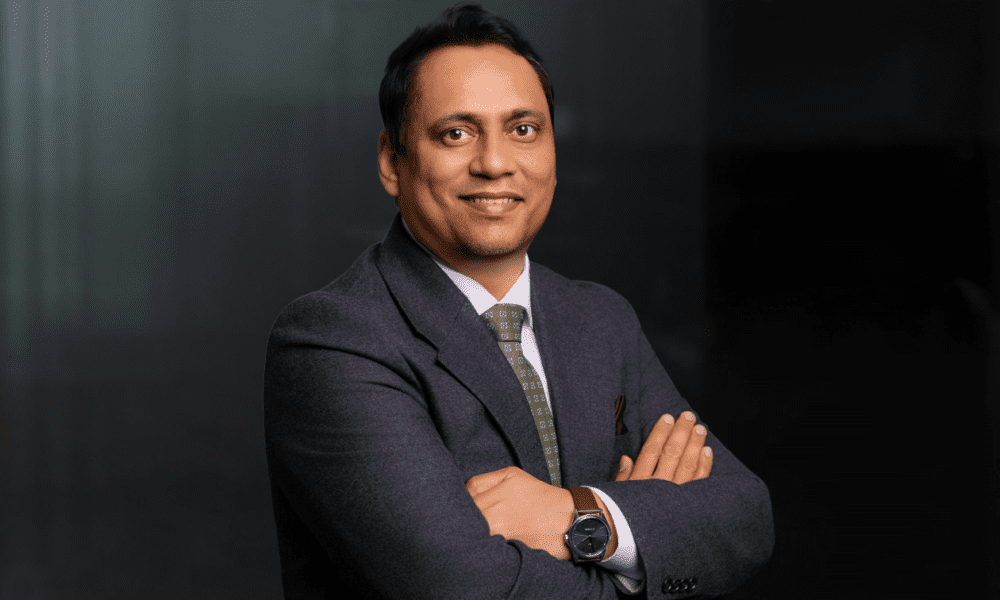
“For SaaS companies, outsourcing today isn’t about cheaper support—it’s about building an AI-enabled CX layer that protects retention, accelerates adoption, and frees product teams to innovate,” said John Maczynski, CEO of PITON-Global, a BPO advisory firm that specializes in technology outsourcing to the Philppines.
Evolution of SaaS CX Delivery Models (2020 vs. 2026)
| Dimension | Legacy SaaS Support | 2026 AI-Augmented Philippine Model |
| Primary Goal | Ticket closure | Retention & expansion |
| CX Scope | Reactive | Full lifecycle |
| Technology | Static KBs, basic chat | AI/NLP, sentiment & churn modeling |
| Staffing | Tiered agents | Multi-layered expert teams |
| Measurement | Tickets closed | NRR, activation, churn reduction |
| Scalability | Headcount-driven | Elastic, surge-ready |
Why the Philippines Is a Strategic CX Partner for SaaS
The Philippines has become a global hub for SaaS CX outsourcing because it uniquely balances technical literacy, communication excellence, and scale.
Key advantages include:
- High English fluency with neutral accents
- Strong familiarity with SaaS dashboards, workflows, and APIs
- Cultural alignment with North American and European customers
- Mature CX infrastructure and cloud connectivity
- Rapid adoption of AI-first CX tooling
Philippine teams support SaaS companies across enterprise SaaS, PLG platforms, vertical SaaS, fintech SaaS, developer tools, martech, HR tech, and healthtech.
Philippines vs. Onshore SaaS CX Delivery (2026)
| Capability | Philippines (AI-Augmented) | Onshore (US/EU) |
| SaaS Tool Familiarity | High | High |
| 24/7 Coverage | Native | Cost-prohibitive |
| AI Integration | Embedded | Limited |
| Cost Efficiency | High | Low |
| Scalability | Very high | Low |
| Attrition Risk | Low–moderate | High |
| CX Consistency | High | Variable |
Key takeaway:
For SaaS companies, the strategic choice is no longer outsource vs. in-house, but static teams versus elastic, AI-augmented CX infrastructure.
AI-Augmented Front & Back Office CX: How the SaaS Model Works
Philippine SaaS CX delivery models are deliberately multi-layered. Not every role is an engineer—and they are not meant to be.
AI Layer
- Intent detection and intelligent routing
- AI copilots for agents
- Dynamic knowledge base recommendations
- Sentiment analysis and churn prediction
- Self-service optimization (chat, help centers)
Human Front Office Roles
- SaaS product support specialists (Tier 1–2)
- Technical escalation coordinators
- Onboarding and adoption specialists
- Customer Success support agents
Human Back Office Roles
- Billing and usage reconciliation analysts
- Renewal and expansion support
- Knowledge operations and QA
- Community moderation and trust & safety
“AI removes friction and repetition. Philippine CX teams focus on context, empathy, and technical clarity—exactly what SaaS users expect when something breaks or behaves unexpectedly,” said Ralf Ellspermann, Chief Strategy Officer at PITON-Global.
SaaS CX Functions Commonly Outsourced to the Philippines (2026)
| Function | Scope | SaaS Impact |
| Product Support | Tier 1–2, API/basic troubleshooting | Faster resolution |
| Onboarding Support | Setup assistance, walkthroughs | Higher activation |
| Billing & Usage | Invoices, metering, disputes | Reduced churn |
| Knowledge Operations | KBs, chatbots | Better self-service |
| Renewals Support | Outreach & coordination | Higher NRR |
| Community Moderation | Forums, UGC | Brand protection |
| Inside Sales Support | Demos, follow-ups | Pipeline acceleration |
Performance Benchmarks: In-House vs. Philippine SaaS CX (2026)
| Metric | In-House Avg | Philippine Optimized |
| First Response Time | 2–8 hrs | <1 hr |
| Resolution Time | 12–48 hrs | <6 hrs |
| Cost per Interaction | High | 40–60% lower |
| CSAT / NPS Lift | Moderate | +15–30 pts |
| Coverage | Limited | 24/7 |
Case Snapshot: Global B2B SaaS Platform
A global B2B SaaS provider serving mid-market and enterprise customers expanded its front and back office CX operations to the Philippines.
Results within 12 months:
- First response times reduced by 63%
- NPS increased by 12 points
- Trial-to-paid conversion improved by 14%
- Churn reduced by 14%
- Annual CX operating costs reduced by 46%
Product ownership and engineering remained in-house, while Philippine teams handled CX execution, onboarding support, billing clarity, and renewal coordination.
Security, Compliance & the Boundary Model
Leading SaaS companies operate a Boundary Model:
- Execution offshore
- Product authority, IP, and final decisions in-house
Philippine CX teams operate within client-controlled secure environments, aligned with enterprise frameworks such as SOC 2. Type II, ISO 27001, and—where required for regulated SaaS—HITRUST, ensuring strong data protection and auditability.
Frequently Asked Questions: SaaS CX Outsourcing to the Philippines (2026)
1. What SaaS CX functions are most commonly outsourced?
Tier 1–2 product support, onboarding assistance, billing and usage support, renewals coordination, knowledge base operations, and community moderation.
2. Are Philippine CX agents technical enough for SaaS products?
Yes. Teams are structured by tier, with product-trained specialists and clear escalation paths. Not all roles are engineers, but technical fluency aligns with support complexity.
3. How does AI improve outsourced SaaS CX?
AI enables intent detection, smart routing, real-time agent guidance, sentiment analysis, churn prediction, and dynamic knowledge delivery—improving speed and consistency.
4. Is outsourcing SaaS CX to the Philippines secure?
Yes. Leading models use client-controlled environments with VDI-only access and align with SOC 2, ISO 27001, and—where applicable—HITRUST.
5. How does outsourcing impact churn and retention?
Properly executed, it improves onboarding speed, resolution quality, billing clarity, and proactive outreach—reducing churn and increasing NRR.
6. Can teams scale during launches or incidents?
Yes. Philippine providers maintain trained “warm standby” capacity to scale rapidly during launches, outages, or usage spikes.
7. What size SaaS companies benefit most?
Growth-stage, mid-market, and enterprise SaaS companies all benefit—especially those with global users or complex billing and support needs.
8. How do SaaS companies choose the right partner?
The most successful SaaS firms work with independent advisors such as PITON-Global to benchmark providers, design secure models, and mitigate transition risk.
CX Outsourcing as a SaaS Growth Lever
In 2026, technology outsourcing to the Philippines for SaaS CX is not a tactical cost decision. It is a strategic growth lever that directly influences activation, retention, expansion, and lifetime value.
This operating model is now used across enterprise SaaS vendors, PLG platforms, vertical SaaS leaders, fintech SaaS providers, healthtech platforms, and developer-first tools, all seeking to scale globally without sacrificing experience quality or security.
As SaaS organizations mature their CX and revenue operations, many rely on experienced, independent advisory guidance with deep roots in the Philippine delivery ecosystem to ensure outsourcing becomes a durable competitive advantage rather than an operational risk.