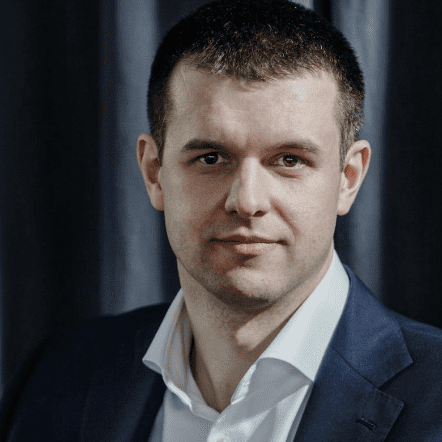
Nikolay Ermakov, CTO and Board Member of DM Group, is an expert with 18 years of experience in information technology and digital transformation. His interviewee is Nikita Ponarin, International Marketing Leader at inDrive, with experience launching markets in the US, LATAM, Europe, and Africa. We discuss how technology is changing business, why localization is more important than global strategies, and what awaits the digitaltech market in the coming years.
Nikolay Ermakov:
— Nikita, you’ve worked on several continents and encountered completely different levels of digital infrastructure maturity, from the US to Africa. Yet, you’ve always had a technological approach to marketing. What was the most challenging part of launching a technology service into such diverse markets?
Nikita Ponarin:
— The most challenging part was realizing that there are virtually no universal solutions. What works perfectly in the US is completely useless in Cameroon, and what works in Latin America may be too straightforward for Southeast Asia. In America, marketing is an engineering discipline, where every action requires rigorous analytics, hypothesis testing, and working with large data sets. In Brazil, marketing is becoming a cultural organism, where the importance isn’t so much on the number of tests as on the ability to “fit” into the context, become part of the people, and understand emotions. The partnership with Flamengo, for example, became more than just an advertising campaign—it became an identity tool, and people perceived us differently because we came from within, not from above.
African markets require a completely different approach. It’s impossible to manage from an office there. You go out into the fields, talk to drivers, check routes, collect prices manually, and identify real pain points. You have to build everything from scratch: the economic model, processes, communication channels. This is very down-to-earth and simultaneously makes you more accurate in your forecasts. In such conditions, technology ceases to be an abstraction and becomes a tool for survival.
Nikolay Ermakov:
— At DM Group, we also see how marketing is transforming into an engineering field. You’ve managed multimillion-dollar budgets. How feasible is marketing today without a deep technological infrastructure?
Mikita Ponarin:
— Essentially, it’s impossible. Marketing without technology today is turning into a set of beautiful hypotheses that are expensive and rarely work. At inDrive, we gradually built a go-to-market model based on rigorous analytics: ROI forecasts, subsidy balances, channel prioritization, the impact of individual campaigns on GMV, growth rate, and churn. This enabled us to replicate success. We were able to launch new markets not out of inspiration, but through structure. This model became one of the tools subsequently adopted by global teams because it delivered repeatable results.
Technology is becoming the foundation—from data architecture to attribution. Any company that doesn’t work digitally risks spending money without understanding where it’s going.
Nikolay Ermakov:
— You’ve worked extensively with regions where digital culture hasn’t yet taken hold. What technological solutions really help in “digital-light” countries?
Mikita Ponarin:
— Simplicity and reliability win there. Not beauty or complex features, but pure functionality. Most users have slow internet, old devices, and limited capabilities. This forces us to reconsider everything: app architecture, loading speed, and communication methods. In Africa, for example, push notifications are often useless: people have disabled permissions, and the internet is unstable. We have to rely on offline channels, SMS, and local communities.
But the most interesting thing is the fight against fraud. There are entire “professional groups” there that look for holes in the system. For a service to survive, it’s necessary to build an anti-fraud platform, constantly monitor transactions, and use scoring algorithms. It’s a paradox, but the less digital the market, the more technology is needed for a product to work.
Nikolay Ermakov:
― You’ve done a lot of localization—not in the academic sense, but in terms of deep cultural adaptation of a product. How do you know when a product has truly become “native” in a new market?
Mikita Ponarin:
― There are several signs. The first is when users start defending the product themselves. Not in comments for the sake of argument, but in situations where they perceive the brand as part of their community. In Brazil, this happened after a series of campaigns, when people started saying, “Finally, a service that works our way, rather than imposing its style on us.” This is a powerful indicator.
The second is when the brand ceases to be perceived as foreign. In the US, on the contrary, we needed to emphasize our global identity and Californian origins. In Brazil, on the contrary, we strove for the image of a “local player.”
The third sign is the growth of organic traffic. When users come to us spontaneously, without aggressive campaigns, it means there’s an emotional attachment, trust, and a sense that the product has woven into the cultural fabric.
Nikolay Ermakov:
— You write a lot about the future of marketing and the impact of large language models. How do you think LLM and XAI will change the industry?
Mikita Ponarin:
— Let’s start with the fact that marketing will no longer be separate from the product. Marketing specialists are already becoming analysts, strategists, and engineers. They work with models and ML tools, manage dynamic content, and create personalized behavioral scenarios within the product. In the future, the marketing department will be very much like a hybrid of R&D, a data office, and a creative lab.
Secondly, the role of humans is changing. Routine operations will be automated: text generation, audience selection, data analysis. But the strategic, cultural, and emotional aspects will remain human. Neural networks can generate variants, but they can’t sense context. Humans will be conductors, managing a multitude of tools—from LLM to analytical models.
Nikolay Ermakov:
— And one last question. You’ve worked in completely different environments—from high-tech offices to African markets, where a project’s success is determined in the field. How has this experience changed you as a leader?
Mikita Ponarin:
— It made me more flexible. I stopped thinking that one model can work everywhere. Every market is a unique blend of culture, economics, and people’s habits. To be effective, you must first listen, observe, and only then formulate hypotheses.
Secondly, respect for people. In emerging markets, your decisions depend not on algorithms, but on the people on the ground. They know things that analytics never reveal. When you start working with them, rather than over them, the product becomes stronger.
And most importantly, I realized that technology only works when it solves a real human problem. Anything done “for the sake of innovation” is short-lived. Anything done for people’s sake thrives in any market.
Nikolay Ermakov. CTO and board member DMtech