The Future of Urban Mobility
The automobile industry as we know it is moving and changing at the same time at a very rapid pace. Despite all the different means of transporation that we have available today world wide, the trusty 4 wheels are still seen and maintained as the most preferred means of transportation across the globe. But what does this exactly entail for the taxi industry? This is something we are going to dwell in depth within this article.
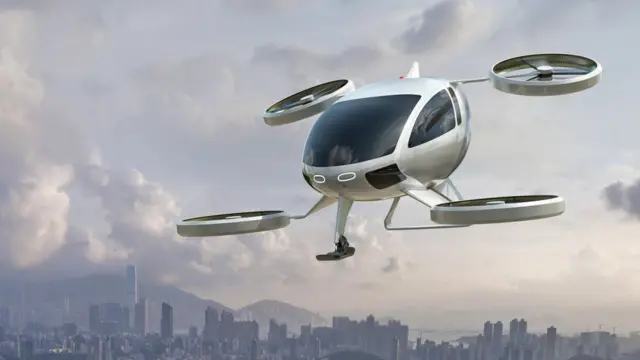
Within the last decade the industry has seen massive changes, from your classic taxies that are metered to ride hailing or more famously know as “ride sharing services” to even the introduction of self-driven cars offering taxi services in very few part of the world. The world is moving fast, but we will not see flying cars by 2030 or any times soon, at least not the way they have been depicted in science fiction movies for the last 50 years.
Taxies are like digital business that have been hit by AI, they need to adapt to the trending evolution of the automobile industry that represents the future of urban mobility as a whole. The world is trying to push for smart cities that are mainly controlled autonomously through the help of artificial intelligence, but even how intelligent it may be, implementing an intelligent transportation system in a hectic city like New York for example is no easy feat.
Despite all this, a leading international taxi booking platform is preparing for the next generation of mobility by building an autonomous system from the moment a client books a ride to the moment a selfless driver car comes to pick them up and securely delivers them to the drop-off point. They point out that a deadline such as 2030 is a realistic and strategic milestone which is not science fiction for most major metropolitan cities in the world.
The Current Challenges in the Taxi Industry
This does not mean that the 4 year road ahead won’t be full of pot holes and challenges. One of the major obstacles that they face is inefficiencies in traditional taxi dispatch systems. Most taxi companies around the world do not want to adapt to the 21st century as they follow the principle “if it ain’t broken, don’t try to fix it.” Due to this, such integration on a global scale is very difficult to implement, however their focus is aimed at major cities around the world and also vacation hubs.
The human error plays also a major part in all the mistakes that are made within the process of booking such rides and processing all the information. As you would imagine, working with all corners of the globe who speak different languages, miss understandings will lead to miss communications which will present errors that constitute to a bad experience for customers. At the same time implementing new systems or modern system is a big financial investment for classic taxi companies that are already having a difficult time staying competitive on the marketing since the introduction of ride sharing services on the market.
What “AI-Controlled Taxis” Really Means
The meaning of AI since it’s introduction has become a very vague term as it is used under so many different contexts so it is only normal to give a more exemplified explanation of what it means in the context of the taxi industry. Taxiyo is focusing on the full human-less system package, where the only humans involved will be those on the backend making sure the AI is working as it is meant. The full package represents an AI assisted dispatch and routing team. So once the client makes a booking the system will start checking the driver database or better said the car database as the cars will drive by themselves.
In most cases the cars will still have drivers so we take into consideration a system where the drivers will be assigned the ride and the communication between Taxiyo and the driver will be done with an AI that will be taught through machine learning on how to deal with any type of situation, from miss understandings, to missing information and any other type of information needed. The AI will do a lot more than just that. A big problem is keeping up with different prices around the world that constantly change based mainly on the price of fuel in each country, so AI can constantly keep up and update the prices according to the ongoing changes.
This AI will also focus on predicting the demand, forecasting when less drivers will be available in key dates such as Summer or Winter vacation periods and also based on seasonality for each location around the world. It is imperative to make the difference between autonomous driver and AI powered management system. Self driver cars is a long term goal for Taxiyo that will only be pushed once most of the major cities in the world will adapt this initiative as the driver can be the most expensive liability from the taxi business.
Human Drivers and AI: Collaboration, Not Replacement
Taxiyo is not pushing towards replacing taxi drivers away, but it is preparing to adapt to whatever changes may come to the industry. Despite the world liking the integration of AI or not, it is expected that AI will take part in most major industries around the world, so Taxiyo preparing from such an early stage is just the keeping ahead of the competition. Human Drivers with AI systems seems like the perfect combination as human drivers are still the best option at the moment when it comes to deliver a good and reliable experience. The AI systems that help schedule the ride and take care of the client before and after the ride is what will complete the eco-system for good.
Drivers may seem the AI as a threat but the AI management system can help them earn more and even more consistent. The system will promote drivers who do a good job and push for them to get more jobs by building a trust score in corelation with the client’s experience and the prices that are charged by said driver. This will build an insider market where drivers can indirectly bid for trips. Taxiyo does realize that most part of the world will not adapt driverless taxies in the near future so this is why they have a good focus on creating a strong collaboration between AI and Human Drivers.
Regulatory, Legal, and Ethical Considerations
Operation on a global scale can be very difficult as every country can have different regulations that need to be respected or at least taken into consideration when it comes to the Taxi industry. Such things can be as simple as not being allowed to carry to much luggage although the car or driver can. A good example would be the strict laws in Japan where drivers are not allowed to go over the carry limit of a vehicle that is mentioned in the factory handbook despite the car being able to easily carry over 100kg from the recommended carry weight limit. They will not even carry extra kg no matter how small in volume it may be. This is once again a department where AI can come in handy to ensure that the system is aware of such regulations when booking rides for customers.
The regulations will ensure to server the clients the drivers who have the right vehicles to handle the luggage accompanied by the client and ensure that there is enough capacity for all passengers in order for all passengers to put on a seatbelt and be safe whilst maintaining the law by following rules and regulations. Without regulations being respected, travel agencies or taxi companies would lose their credibility. Not to forget that taxi drivers can lose their driving license in the process, so it is pretty clear how important keeping up with regulations can be from all ends of the matter.
Taxiyo wants to work with governments and regulators in order to ensure that things are done by the book, and especially when the book gets updated so often, AI can be a constant reader of regulations to prove that law is respected all above other business matters.
Sustainability and Smart Cities Impact
AI is looking to bring many positive changes into the industry, some which people might not even be aware off yet. One of them is a plan to reduce emissions through optimized routing. The routing that a driver may take may not be as optimal as we think. Drivers or people in general say that the best path to take is the one you know best, but is this really true? The best path is the one that saves you most time, energy and wastes as little fuel as possible which in the end results in reduced emissions and pollution. It seems Taxiyo is covering all the fronts with their plan to integrate the AI ecosystem within the taxi industry.
The infastructure is near to be there, but it needs to be managed well, that is by it requires the support of EV and hybrid fleets which are much easier to optimize and so much easier for an AI to calculate when it comes to consumption, fuel and route optimization. Not only, but they do happen to adapt much better with smart cities initiatives as they plan to remove petrol cars once and for all in order to lower pollution.
Timeline: From Today to 2030
All of these plans sound great, but can Taxiyo really pull it off in such a small time frame? 4 years is not a lot of time, but not little either. A lot of things happen and change in a single year, let alone 48 months. However as mentioned throughout the article, their plan is systematic and independent on current shifts and changes of not only trends, but the pace at which such trends are being implemented in the taxi industry.
Their short term plans which have a time frame between 2026 and 2028 focus on creating the AI ecosystem that occupies itself with dispatching drivers to rides, predicting the demand in market and optimizing the prices in the market. Their mid term goal is to sink more into deeper automation with the main focus on semi-autonomous fleet management, all from the push of a button. Their end goal or long term goal that oversees 2030 or beyond is a fully AI coordinated fleet that is fully optimized. It is imperative to mention that these plans are just plans at the moment, but the future does seem very interesting even for a boring industry such as the taxi world.