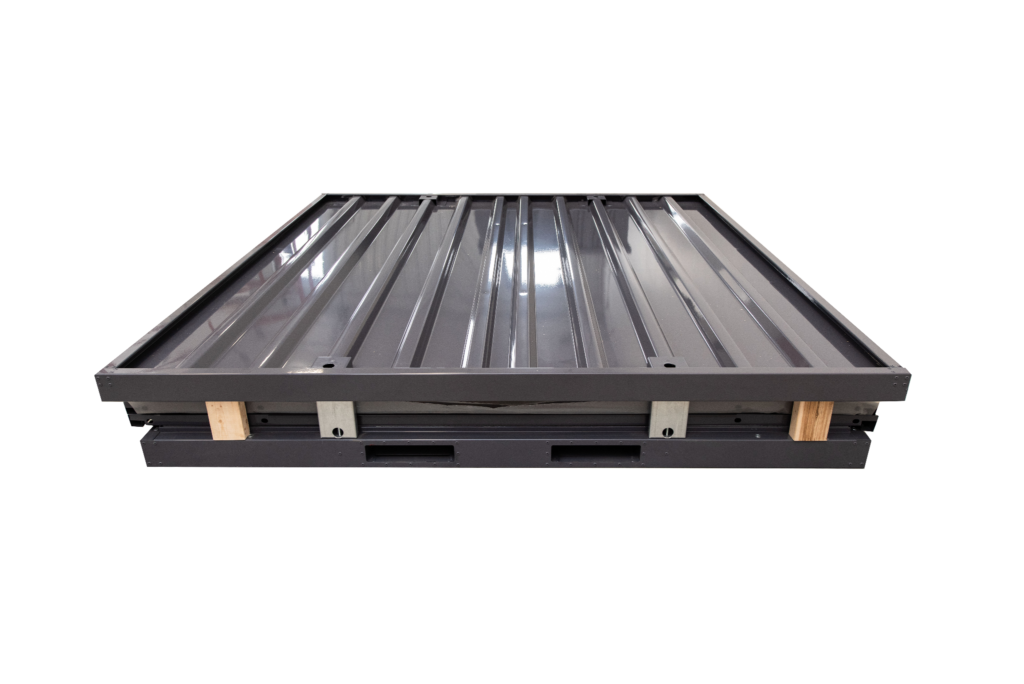
Flat pack containers help reduce freight inefficiencies by shipping compactly and assembling on site.
Modern businesses are facing increasing pressure to manage logistics costs while maintaining operational flexibility. Traditional storage solutions, particularly fully assembled containers, often come with high transportation expenses and logistical constraints that can impact project timelines and budgets. As supply chains evolve, companies are actively seeking alternatives that offer both efficiency and adaptability without compromising on durability or performance.
Why Traditional Storage Solutions Drive Up Costs
Shipping fully assembled storage containers is inherently inefficient. Their fixed size means they occupy significant space during transit, limiting how many units can be transported at once. This often results in higher freight costs, multiple deliveries, and increased coordination requirements.
Additionally, transporting large containers typically requires specialized equipment and careful route planning, particularly when delivering to urban environments or remote locations. These factors contribute not only to higher expenses but also to potential delays that can disrupt operations.
According to the U.S. Department of Transportation, freight inefficiencies remain a key contributor to rising logistics costs across industries, reinforcing the need for more adaptable transport solutions.
A More Efficient Approach to Transportation and Delivery
Flat pack containers offer a fundamentally different approach. By shipping in a disassembled format, these units allow multiple containers to be transported in the space typically required for one fully assembled unit. This significantly reduces freight volume and lowers transportation costs.
Once delivered, the containers can be assembled directly on site, eliminating many of the logistical barriers associated with traditional storage solutions. This approach is particularly valuable for businesses operating across multiple locations or managing large-scale projects where cost efficiency is critical.
For organizations evaluating modern storage options, resources such as Flat Pack Containers provide insight into how these systems are designed to optimize transport and deployment without adding unnecessary complexity.
Improving Access to Challenging or Restricted Sites
Another common challenge with traditional containers is site accessibility. Large, pre-assembled units can be difficult or even impossible to deliver to locations with narrow entry points, limited space, or uneven terrain.
Flat pack containers address this issue by allowing components to be transported in smaller sections. These can be moved into position more easily and assembled where needed, making them suitable for environments where access is restricted.
This flexibility is especially beneficial in urban construction projects, infrastructure development, and remote operations, where logistical limitations often dictate what types of storage solutions can be used.
Faster Deployment for Time-Sensitive Operations
Time is a critical factor in many industries. Delays in setting up storage or workspace can impact productivity and project timelines, particularly in sectors such as construction, emergency response, and event management.
Flat pack containers are designed for rapid assembly, enabling businesses to deploy storage solutions quickly and efficiently. This reduces downtime and allows teams to begin operations sooner.
Insights from the National Institute of Building Sciences highlight the importance of adaptable and quickly deployable infrastructure in improving operational resilience. Flat pack containers align with this need by offering a balance between speed and structural reliability.
Supporting Scalable and Flexible Operations
Beyond cost savings and faster deployment, flat pack containers offer a level of flexibility that traditional storage solutions cannot easily match. Businesses can scale their storage capacity up or down as needed, relocate units between sites, and reconfigure layouts based on changing requirements.
This adaptability is particularly valuable for organizations managing temporary projects, seasonal demand fluctuations, or multi-site operations. Instead of investing in fixed infrastructure, businesses can implement a more dynamic approach to storage that evolves alongside their needs.
Key Considerations for Businesses Evaluating Storage Options
While flat pack containers provide clear advantages, selecting the right solution requires careful consideration of operational requirements. Factors such as intended use, environmental conditions, security needs, and frequency of relocation should all be evaluated.
In some cases, traditional containers may still be appropriate for permanent installations. However, for businesses seeking to reduce costs, improve logistics efficiency, and maintain flexibility, flat pack containers present a practical and forward-thinking alternative.
Conclusion
As logistics costs continue to rise and operational demands become more complex, businesses are rethinking how they approach storage and infrastructure. Flat pack containers offer a solution that addresses some of the most pressing challenges associated with traditional storage, particularly in terms of transportation efficiency, site accessibility, and deployment speed.
By adopting more flexible and cost-effective systems, organizations can better position themselves to respond to changing demands while maintaining control over their operational expenses.
Additional Resources
For further insights into modern modular solutions, explore Storage Containers.