In the ongoing evolution of global manufacturing and industrial transformation, data has become the defining resource behind every major decision, workflow, and automated process. From assembly lines that monitor themselves in real time to logistics systems capable of predicting supply fluctuations hours in advance, the digital ecosystem is expanding at an unprecedented speed. As a result, industries must now treat data not just as a passive record of operations, but as an active lifeline that determines stability, productivity, and long-term competitiveness.
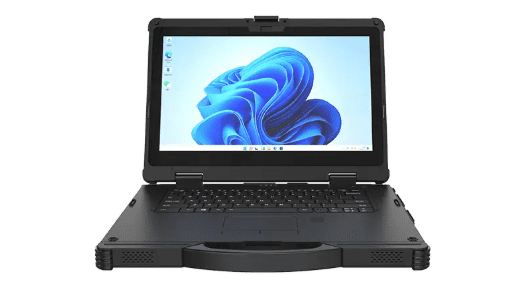
Modern automation systems rely heavily on interconnected devices—sensors, controllers, human–machine interfaces, cloud platforms, and edge computing modules—to operate with precision and agility. Yet at the heart of this technological symphony lies a component often overlooked but absolutely indispensable: the industrial computer. Unlike conventional consumer-grade machines, industrial computers are purpose-built for reliability, durability, and continuous operation. They serve as command centers that gather, process, and store data under conditions where accuracy and uptime are essential.
The Expanding Role of Industrial Computing
The responsibilities of industrial computers have grown far beyond simple device control. Today, they orchestrate complex workflows across various environments:
- Manufacturing plants, where they coordinate robotic arms and automated inspection systems
- Energy and utilities, where they collect real-time performance metrics from turbines, grids, and pipelines
- Transportation and logistics, where they manage routing, scheduling, and fleet data
- Pharmaceutical and food processing, where they ensure compliance by tracking every detail of production
Because these machines operate in environments often marked by dust, vibration, humidity, temperature fluctuations, and electrical noise, their components must maintain performance under continuous stress. This ruggedness ensures operational continuity, but it also highlights the critical importance of preserving the data they handle.
Why Data Integrity Has Become a Core Priority
As industries adopt digital frameworks such as AI-driven process control, predictive maintenance, and big-data analytics, any interruption in data flow can disrupt entire production chains. Even a brief failure in one industrial computer can result in cascading delays:
- Production lines may halt without access to sensor readings.
- Automated quality-control systems may lose calibration data
- Log files essential for regulatory audits may be corrupted or deleted.
- Predictive algorithms may make inaccurate decisions due to missing information.
In environments where precision is mandatory, data integrity becomes inseparable from operational safety and financial stability.
Hidden Vulnerabilities Behind the Machines
Despite their robustness, industrial computers remain vulnerable to data-related hazards. Continuous operation increases the risk of storage fatigue. Power failures can corrupt active processes. Software updates may conflict with legacy systems. Human error—simple as an accidental deletion—can cause hours of downtime.
And when data issues arise, organizations must respond with speed and certainty. This creates a demand for tools that can recover lost information efficiently, even under industrial constraints.
Where Data Recovery Tools Fit Into Industrial Strategy
Among the many solutions available today, software such as Magic Data Recovery provides reliable support in situations where precious operational data becomes inaccessible. Although typically used in office or personal computing environments, its capabilities translate surprisingly well into industrial contexts. With its ability to restore deleted files, repair damaged partitions, and retrieve information from failing storage media, it becomes a quiet but valuable safeguard.
For industrial operators, the presence of a dependable recovery tool means that system logs, configuration files, and key operational data can often be retrieved quickly enough to avoid prolonged shutdowns. It acts as an assurance layer: not necessarily visible in daily operations, but crucial when something goes wrong.
Data Recovery as Part of a Larger Resilience Framework
Data resilience does not depend on a single tool or device—it is a comprehensive strategy. Industrial organizations are now designing their systems to withstand disruption from multiple angles.
- Redundant hardware and mirrored systems
Ensuring that failures in one industrial computer do not halt operations entirely.
- Robust backup policies
Combining local, network, and cloud storage to safeguard critical information.
- Real-time health monitoring
Using predictive analytics to detect early signs of drive degradation or system instability.
- Intelligent recovery capabilities
Employing software such as Magic Data Recovery to quickly restore lost or corrupted files.
- Standardized digital workflows
Reducing human error through process automation and controlled access to data.
Together, these measures form a cohesive architecture that allows companies to maintain control over their data—even when unexpected events occur.
As industries push toward higher levels of automation and smarter production systems, the significance of data reliability continues to rise. Industrial computers remain essential to this transformation, serving as the backbone of machine coordination, analytics, and operational continuity. Meanwhile, tools like Magic Data Recovery—though only a small part of the larger ecosystem—help ensure that when data issues arise, recovery is swift and dependable.
Read More From Techbullion