Whenever we have to choose something, our judgement usually leans on surface level signals, and the same thing happens with trading platforms. The moment someone sees an exchange promoting zero trading fees, it quickly becomes their default option even though a proper spread comparison would show a very different picture. For beginners who are trading lightly or building a simple crypto position, this seems harmless, but it quietly leaves more money on the table than they realise because spreads, depth, and execution quality shape the real cost far more than the fee headline ever does.
Why Posted Fees Do Not Capture Real Trading Cost
Choosing an exchange purely on its fee sheet may look sensible, but it misses how trading works when money and speed compete at the same moment. A spread comparison always reveals the invisible layer beneath the fee column, which is the point where traders realize that their cost structure does not start at the fee rate. It starts at the distance between the bid and ask, the consistency of liquidity, and the stability of the matching engine during active hours. Many retail platforms try to attract users through low-fee marketing, but the cost absorbed inside the spread or through slight execution drift erodes most of that benefit.
Even experienced traders who rely on crypto exchanges with low fees eventually recognize that a shallow book forces their order to walk the price ladder. The market might look cheap on paper, yet the moment a trader sends size, the spread widens or the book shifts, and the total cost becomes noticeably higher than expected. Traditional markets show the same pattern, but crypto magnifies it because liquidity varies more during news events, funding cycles, and directional surges that pull market makers away from tighter quotes.
How Spreads and Liquidity Shape Actual Execution
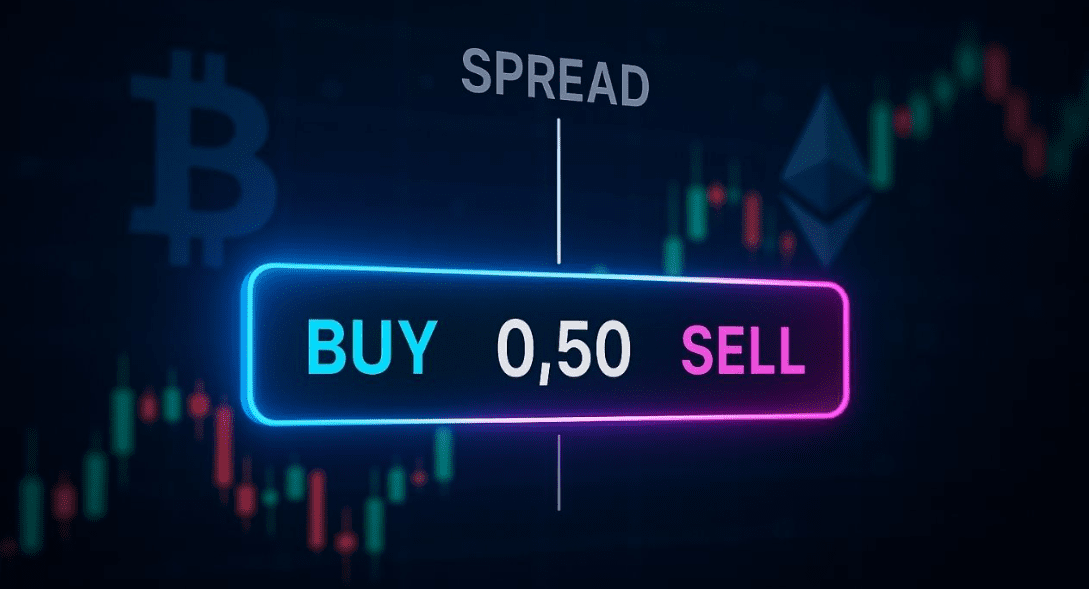
A spread comparison begins with the basic gap between the buy and sell side, but the real impact shows up once a trader tries to place size. If the spread is wide or unstable, the trade starts at a disadvantage as soon as it hits the book. Liquidity depth matters just as much. A platform can show a tight quoted spread on screen, yet the book may thin out beyond the first few levels, and this is where slippage becomes the more meaningful cost. When liquidity is deep, the order settles closer to the intended price. When depth is weak, the order slips into worse levels even if the venue advertises lower trading fees.
Trader experiences across the industry repeat this theme. Some exchanges with higher published fees still give better fills because their books carry enough depth to absorb aggressive trades without shifting the price too far from the intended level. Others display attractive fee schedules yet struggle the moment volatility rises, causing spreads to widen and execution costs to drift in ways that traders do not expect. When the book thins out or the spread reacts quickly to sudden activity, even small positions become more expensive than the posted fees suggest, and this is where traders start realizing that the cheapest platform is usually the one that protects their entries and exits through stable liquidity rather than the one that simply promotes a low percentage on its pricing page.
In many cases, slippage becomes the key differentiator. A trader might save two or three basis points on fees, yet lose ten to twenty basis points in slippage during fast markets. Once a trader does the math, the question shifts from posted fees to realized cost, because a one percent gap over a thousand trades reshapes the entire performance curve.
Why Higher Fee Exchanges Can Still Deliver Cheaper Trades
When spreads stay tight and liquidity holds firm, the trading environment feels smoother. Platforms that invest in dense books, competitive market maker programs, and stable engines often deliver better fill quality, and this reduces the final cost without the trader noticing it immediately. A higher taker fee may appear like a disadvantage, but if the order fills closer to the intended level, the savings outweigh the posted number. Exchanges with strong depth allow traders to execute larger positions without walking through the book, and this practical benefit produces a cheaper result in real terms.
Some platforms with low fees still create heavy slippage because their books do not recover quickly during active moments. A narrow quoted spread means very little when the next levels are thin or when volatility pushes market makers away. Traders often mention that certain venues feel expensive even when their fee schedules look attractive because each trade drifts more than expected. By contrast, platforms with stronger depth maintain tighter spreads even in heavy traffic, and the realized cost becomes noticeably better once a trader scales volume.
This is why spread comparison should always sit at the center of exchange selection. A tight, stable spread is a sign of reliable liquidity and strong participation, and traders who rely on consistent execution find these environments cheaper than venues that only compete on headline fees.
How Traders Can Measure the True Cost of Execution
The best framework is simple. A trader should evaluate spread width during normal activity, observe how spreads react during volatile periods, and check how much size the book can absorb before price begins to shift. Every strategy relies on its ability to enter and exit efficiently, and the real cost emerges the moment the order interacts with the book. Fees remain part of the structure, but they sit behind spread and slippage in terms of impact.
A consistent spread comparison will give traders a clearer picture of which platforms support their style and which ones drain performance quietly. The goal is not to chase the lowest posted fee, but to select an environment where the combined effect of spread, slippage, and fees supports long term trading.
How Spread Comparison Shapes the Real Cost for Traders
Most traders eventually realize that the cheapest exchange is not the one that advertises the lowest rate. A proper spread comparison shows the real picture because it links quoted spreads, book depth, execution consistency, and final cost into a single chain that influences every entry and exit. When spreads hold tight and orders slip less, a platform with higher fees can still deliver a cheaper experience in day to day trading. That outcome becomes clearer once a trader reviews fills across different venues and sees how much the book actually shifts when size is applied. As long as traders apply this thinking across platforms and measure their average execution quality, they gain a more accurate sense of which environments support their style, and the spread comparison keyword remains central to how they evaluate any market before committing capital.