
Sports clubs are upgrading court illumination to cut energy costs

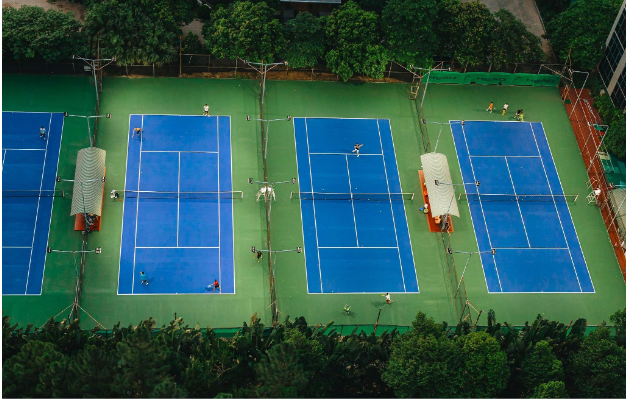
Managing an athletic facility means keeping court availability high while finding practical ways to trim monthly operating overhead. If your sports club still relies on high-draw metal halide fixtures across your outdoor night courts, you likely watch your power meter surge every evening the switch flips on.
Transitioning your grounds to solid-state LED systems gives your club immediate financial breathing room while giving players an upgraded evening experience. Making this switch transforms your outdoor footprint from a major financial liability into an efficient, reliable community asset.
Image Source: https://www.pexels.com/photo/aerial-view-of-tennis-courts-with-players-27151849/
How much do aging fixtures really cost your club?
Traditional sports lighting drains facility operating budgets from multiple directions simultaneously. Running 1000-watt metal halide lamps across multiple courts produces massive electric bills that eat directly into membership revenue and program expansion funds.
Power meters tell only part of the financial story when maintaining outdated high-intensity discharge setups. Heavy ballasts pull continuous phantom load, resting power draw climbs during lengthy warm-up cycles, and regular bulb decay forces costly re-lamping calls. Booking bucket trucks and paying specialized technicians to climb towers every few months generates thousands in avoidable overhead.
Upgrading your fixtures eliminates these hidden labor line items entirely while delivering immediate energy relief. Municipal data published by the City of College Station shows that modern LED conversions can cut facility lighting costs by as much as 75% without compromising overall illumination output. Lowering utility costs by that margin lets athletic boards reallocate funds toward court resurfacing, upgraded nets, and better member amenities.
How do you plan structural pole assessments and installation?
Switching over high-mast systems requires far more than unscrewing old lamps and threading in new diodes. Experienced project managers evaluate existing foundations, crossarms, and structural wind resistance before mounting any modern fixtures. Partnering with reputable tennis court lighting services allows your maintenance board to conduct thorough structural pole assessments and photometric mapping prior to construction. Seasoned installers inspect base plates for corrosion, verify electrical wiring gauges, and position each luminaire so the court gets uniform brightness without spilling unwanted glare into adjacent properties.
Mounting new gear on uninspected infrastructure risks serious mechanical failure during severe storms. Solid-state arrays carry unique weight distributions and wind profiles that differ substantially from hollow metal halide bells. Professional structural reviews verify that your current steel or concrete poles safely support the upgrade without requiring full foundation replacements.
Photometric modeling forms the technical heart of any successful court modernization plan. Using specialized software, lighting designers calculate foot-candle levels across the entire playing surface before a single lift arrives on site. This calculation guarantees that your baselines, service boxes, and side alleys receive smooth, balanced light from every direction.
How do LED upgrades translate to bottom-line municipal savings?
Financial officers tracking operational budgets know that small power improvements yield massive long-term dividends. Upgrading campus-wide lighting installations delivers substantial community savings that compound across decades of operation.
Documented energy figures from the City of Belmont show that their large-scale LED modernization program achieved annual energy savings of 343,477 kilowatt-hours, translating directly to approximately $50,000 in yearly cost reductions. Replicating those efficiency gains on sports complexes keeps community club dues stable and shields athletic departments from volatile regional energy rate spikes.
Lower consumption also simplifies your capital investment through utility incentives. Energy providers nationwide provide lucrative commercial rebate programs designed to offset the upfront conversion expense. Teaming up with local utility representatives lets your club apply prescriptive incentives directly against equipment invoices, accelerating your overall payback period.
Navigating utility rebate paperwork
- Audit baseline wattage: Catalog every existing metal halide fixture, ballast rating, and operating schedule across all courts.
- Confirm equipment certifications: Verify that chosen replacement fixtures carry DesignLights Consortium qualifications required by regional power providers.
- File pre-approval forms: Submit engineering layouts to utility program officers prior to taking down old fixtures.
- Document post-install performance: Run light meter readings across the court surface to demonstrate compliance and collect your check.
How do modern fixtures withstand outdoor elements?
Outdoor athletic infrastructure endures relentless punishment from shifting weather patterns, baking summer heat, and driving rain. Choosing the right fixture construction safeguards your club’s capital investment against premature electrical failure.
Quality luminaire housings rely on rugged materials like marine-grade die-cast aluminum coated with electrostatically applied polyester powder paint. This protective skin repels ultraviolet degradation, salty coastal air, and persistent humidity that corrodes lesser equipment.
Internal components need equal protection against the environment. Sealed optical chambers carrying high ingress protection ratings keep rain, dust, and swarming night insects away from sensitive circuit boards and driver chips.
What operational perks streamline daily management?
Daily operations become vastly simpler the moment you remove obsolete discharge lighting from your property. Metal halide lamps demand lengthy cool-down intervals before they can restrike, leaving courts completely dark for 15 to 20 minutes if power flickers during an evening storm.
Solid-state systems start instantly with zero warm-up delay or restrike lag. Court managers can cycle lights on demand, letting members play right up to the minute a storm passes without wasting time waiting for arc tubes to stabilize.
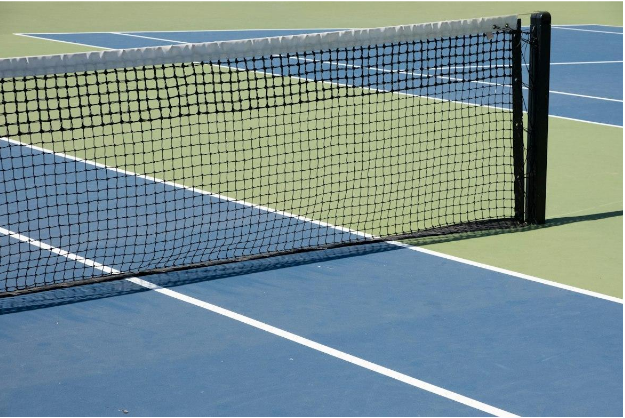
Image Source: https://unsplash.com/photos/white-and-blue-tennis-net-Br1xuldqYcM
Replacing high-draw metal halide fixtures with solid-state LED systems lowers operating overhead and gives night players the clear visibility they deserve. Investing in comprehensive photometric design and structural pole assessments delivers uniform, glare-free illumination that keeps your courts active, safe, and cost-efficient for seasons to come.




Comment