
Small Business Risks That Paid Off: Professional Development Success Stories
Some small business risks lead to major gains in growth, leadership, and expertise. These success stories show how bold investments in training, coaching, hiring, and new skills paid off. Insights from experts in the field explain which risks were worth taking and why.


Small Business Risks That Paid Off: Professional Development Success Stories
Some small business risks lead to major gains in growth, leadership, and expertise. These success stories show how bold investments in training, coaching, hiring, and new skills paid off. Insights from experts in the field explain which risks were worth taking and why.
- Establish Media Guardrails
- Build Trust With Consistent Video
- Invest in 3D Before Demand
- Understand Deal Underwriting
- Quit After Proven Results
- Master Structured Data
- Reward Honest Self-Assessments
- Assign Stretch Projects
- Trust Your First Hire
- Let Experts Lead
- Deepen M&A Expertise
- Train Backup Decision-Makers
- Shift to Cohort Coaching
- Apply Six Sigma Methods
- Study Operational Challenges
Establish Media Guardrails
I’m Nick Avila, founder of United Debt Relief, which I started in 2008.
The initiative was my own development: learning to work as a media source. I committed real hours every week to studying how journalists work, answering reporter questions on debt and credit, and writing bylined articles.
Why it felt risky:
1. Time. Every hour on a reporter’s question is an hour not spent running the business.
2. Exposure. Debt relief is an industry people are right to be careful about. Putting my name in print means every claim gets scrutinized, and one careless line could undo years of trust.
3. No guarantee. Most answers never get picked up.
What convinced me was watching how people research debt help now. They read articles and ask AI assistants before they ever call a company. If clear, careful expertise wasn’t showing up in those places, something less careful would.
So I wrote the guardrails before I started: plain language, primary sources like the Federal Reserve and the CFPB, no promises about outcomes, and nothing I wouldn’t say to a client on the phone.
It paid off. I’ve been quoted in U.S. News & World Report, Yahoo Finance and MoneyLion, was included on a Forbes Advisor expert panel, and wrote a byline for Pursue The Passion. The benefit I didn’t expect was internal. Explaining debt clearly to a reporter in a few sentences made me better at explaining it to the people who call us.
My advice: if a development bet scares you because of the downside, write the rules first. The guardrails are what made the risk worth taking.
 Nick Avila, Founder, United Debt Relief
Build Trust With Consistent Video
I committed to publishing video content consistently for months before seeing any measurable return. At the time it felt like a bad bet. I was putting hours into producing and editing videos that got a handful of views while there was always something more urgent to do in the business.
What kept me going was watching the subscriber count inch up and noticing that the people who did find the content came in more engaged than anyone coming through other channels. They’d show up already trusting my perspective, already familiar with how I think about problems, and that changed the quality of every conversation downstream. Over time the channel grew past 35,000 subscribers. Early on I couldn’t justify the time on a spreadsheet.
The risk had nothing to do with finances. It was the opportunity cost of spending 5 to 10 hours a week on something with no immediate payoff when the business had plenty of fires to put out. What convinced me to stay with it was that each new subscriber was someone who chose to keep hearing from me, a different relationship than someone who clicks an ad once.
 Will Mitchell, Founder, StartupBros
Invest in 3D Before Demand
Invest in skills before the demand is obvious
One risk that paid off for us was investing in 3D animation before it was a major part of our clients’ requests. For a small company, training people and building a new production capability meant spending time and money without knowing when the investment would pay back.
I took the risk because I didn’t want us to wait until clients started asking for 3D and then scramble to catch up. We gradually trained the team, tested the style on smaller projects, and built the capability into our production process.
It eventually opened the door to more ambitious projects and gave us another way to compete beyond price. That experience taught me that professional development is sometimes about preparing for where the market is going, not just responding to where it is today.
 Andre Oentoro, Founder, Breadnbeyond
Understand Deal Underwriting
Early on, I made a choice that felt risky: I stepped back from selling to learn the back end of the business myself. That meant learning how to underwrite a deal, how to read a business’s financials and bank statements, and what funders actually look at before they say yes.
It cost me sales time when every deal mattered. But it paid off fast. The files we put together now are cleaner, we catch problems before a deal ever gets submitted, and owners get real advice instead of a sales pitch.
What convinced me was simple. I didn’t want to be someone who just passes paperwork along. I wanted to understand an owner’s numbers well enough to tell them what makes sense for their business, even when that means waiting. That’s the difference between a sales shop and a real consulting firm.
 Vincent Loforti, CEO, Anchorvia Financial
Quit After Proven Results
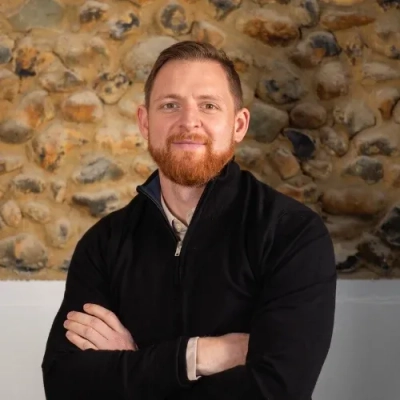
Leaving my sales & business development job in August 2025 to be full-time on both our companies was likely the biggest risk I have taken. The Investors Centre had been launched as an outside project in October 2023 by the three of us all working full time somewhere else and having no experience with either web sites or search engine optimization.
We were unsuccessful for approximately eighteen months. Then we broke through and the website started bringing tens of thousands of organic visitors to UK broker comparisons. What made me confident enough to make the switch wasn’t that we finally got results; it was that we knew why they happened and how to replicate them on other pages. When I resigned from my position, it was not a leap of faith – it was completing what we had already shown. To anyone who is considering making this type of transition – do not quit based upon your beliefs. Quit based upon the results of your side project. If it cannot show you some type of actual result when you are tired and preoccupied with your main job, a salary is not the thing holding it back.
 Adam Woodhead, Co-Founder, Wolfstone Digital
Master Structured Data
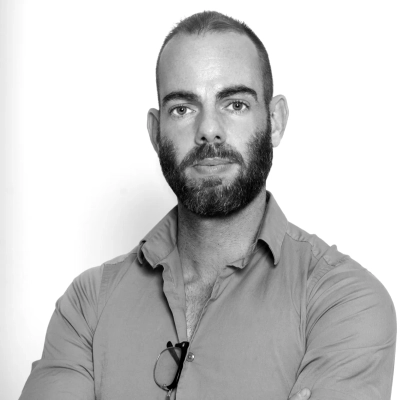
Taking the time to learn structured data in depth, back when most of my clients saw it as a technical detail with no visible payoff.
When rich results were still new, convincing a small business to pay for schema markup was a hard sell. It doesn’t change the design, it doesn’t add content, and the client can’t see it on their own site. For a small agency, putting hours into learning something clients didn’t ask for felt like a risk.
What convinced me was looking at the results pages themselves: the listings that stood out had stars, prices, FAQs, breadcrumbs. The ones that didn’t looked flat next to them. So I made structured data part of my standard work, for law firms as much as for e-commerce sites.
It paid off in visibility, quickly and across the board. Rich results made small clients look bigger in search and earned them clicks they weren’t getting before. It also turned out to be a head start for what came next: the same habit of describing a business clearly for machines is now what helps sites get understood and cited by AI search tools.
My advice: when a skill is invisible to the client but clearly visible to their customers, it’s usually worth the investment.
 Antonin Pasquereau, CEO, BlackCatSEO Inc.
Reward Honest Self-Assessments
One of our riskiest decisions at Blue Ocean Global Technology was tying bonuses to how accurately our people assess themselves.
Each quarter, team members score their own performance from one to five. The questions are demanding. Every answer requires specific evidence, measurable outcomes, and dated targets for the next quarter. Managers then rate the same areas independently. When the two ratings match, the team member earns a bonus.
Why it felt risky: We had the concern that people would inflate their scores, but we managed by including the blind rating by the manager or supervisor.
The structure turned out to reward honesty over self-promotion. Overrating yourself does not pay, because the bonus depends on alignment with your manager. People started documenting their work throughout the quarter instead of reconstructing it at review time. The dated targets turned each assessment into a development plan for the next quarter. We wanted performance conversations built on evidence instead of impressions, and we believed people who measure their own progress honestly develop faster.
My advice to other small business owners: development programs don’t need large training budgets. A clear framework that asks people to show their own progress can do more than a course catalog. Expect some discomfort in the first cycle. Writing evidence-based answers is harder than most people expect, and that difficulty is where the growth happens.
Sameer Somal, Founder & CEO, Blue Ocean Global Technology
 Sameer Somal, CEO, Blue Ocean Global Technology
Assign Stretch Projects
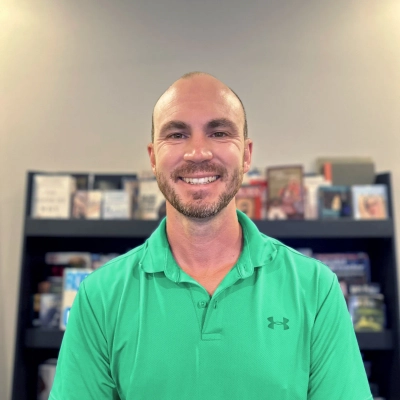
One professional development initiative that initially felt risky was giving employees protected time to take on stretch projects outside their normal responsibilities.
The concern was obvious. In a small business, every hour matters, and it can feel difficult to justify pulling someone away from work they already know how to do so they can experiment with something unfamiliar. There was also the possibility that the project would fail or that the person would decide the new area was not a good fit.
What convinced me to take the risk was realizing that the alternative carried its own cost. If people only work inside the boundaries of their existing role, the business becomes overly dependent on a small number of specialists. Employees also have fewer opportunities to discover where they might contribute at a higher level.
Instead of sending people to generic training and hoping the lessons transferred, I started looking for real business problems that were important but not urgent enough to require the most experienced person immediately. Someone interested in analytics might take ownership of improving a recurring report. Another employee might document and redesign a process that had become inefficient.
The key was that the project had to produce something useful while giving the employee a chance to practice a new capability.
One stretch assignment worked particularly well because the employee approached the problem differently from the person who normally owned it. They asked questions we had stopped asking because the existing process had become familiar. The final result improved the workflow, and the employee developed enough confidence to take on similar responsibilities afterward.
That created more value than a course alone would have produced. We gained another person who could handle the work, reduced our dependence on one individual, and gave the employee a visible path for growth.
The biggest lesson for me was that professional development does not always need to happen outside normal operations. Some of the best development can come from giving people controlled responsibility for something slightly beyond their current comfort zone.
What convinced me to continue was seeing development turn directly into additional capability for the business. The risk was losing some short-term productivity. The payoff was building a team that could solve more problems without immediately needing another hire or outside help.
 Joe Benson, Cofounder, Eversite
Trust Your First Hire
I think we all tend to overlook one of the more obvious ones… your first hire as a small business! When you have to relinquish the reins of the business you built and trust someone else to do the job. That was a huge turning point in my business and one that took some getting used to! I didn’t mean to micromanage! I just wasn’t used to not wearing every hat anymore! Being able to focus more on where I was needed and letting an expert in that field take over certain tasks gave me freedom I had not had since starting a small business!
 Melissa Church, CEO, Digi-Buzz
Let Experts Lead
I think one professional development decision that felt risky at first but was ultimately a good call was taking a step back from being involved in all aspects of the business and letting the experts in each area take over fully and learning from them.
As a founder, you get used to being closely involved in every business area and decision. That works when your operations are still small, but when you scale up, it becomes unsustainable and limits both yours and the company’s growth.
It was initially difficult to accept that there were people who could make better decisions in certain areas than I could and that they may do it in a way that is different from mine, but I learned to resist the urge to step in at such times.
I saw them instead as learning opportunities and there’s been so much better learning and professional development that’s occurred this way, seeing how these leaders handle operations, hiring, team management, etc. than through online courses and problems.
I think what really helped there was realizing that the things I was spending so much time on were not even the areas where I could contribute the most or add the most value. A huge benefit apart from picking up a new skill was learning how to change the way I worked and more importantly, learning to recognize and accept where someone else could help the business better than I could.
 Jase Rodley, Founder, Dialed Labs LLC
Deepen M&A Expertise
Investing in deeper valuation and transaction expertise can be a risk for small advisory firm since such training takes time while not generating any immediate benefits. It is therefore hard to justify such investment unless there are other benefits involved. However, deepening one’s expertise in M&A transactions is likely to benefit an advisor by improving the quality of his or her recommendations to clients.
That is why I agree with the need to invest more time in building one’s expertise. The reason for this is that knowledge of valuation and of the deals themselves will allow an advisor to spot concerns and convey them to clients in more detail. For an advisory company, this is important since it is their expertise that clients seek to get reassurance that they make the right choices. That is why the risk of investing more in research is justified when it comes to M&A transactions. After all, such consultancy services focus on the expertise provided rather than the scale of operations, which makes the training even more relevant and important to justify the risks and costs.
 Joe Braier, CEO and President, Lake Country Advisors
Train Backup Decision-Makers
One initiative that felt risky was giving a less experienced employee time to learn a process that our most experienced colleague usually handled alone. The concern was capacity. Training would take both people away from their regular work, and we expected the process to become slower at first.
What convinced me was asking what would happen if the experienced employee was unavailable for a week. We had written instructions, but they did not explain the decisions behind the work, such as when to return an incomplete request or when an exception needed approval. Too much depended on one person’s judgment.
We used a “reverse shadowing” approach. After watching the process, the learner took control while the experienced colleague observed. The learner had to explain their decisions, and the colleague only stepped in when necessary. We reduced their usual workload during these sessions and started with routine requests, keeping sensitive decisions with the experienced employee.
The payoff was having a second person who could handle the work and recognise when to ask for help. The experienced colleague gained time for more complex responsibilities, while the learner built confidence through real decisions. We also improved the instructions because their questions showed us which steps were unclear.
I would recommend starting with one process where work regularly stops while everyone waits for the same person. That makes the value of development very clear: you are helping one employee grow while giving another room to grow too.
 Maggie Nelson, Head of People and Operations, Court Case Finder
Shift to Cohort Coaching
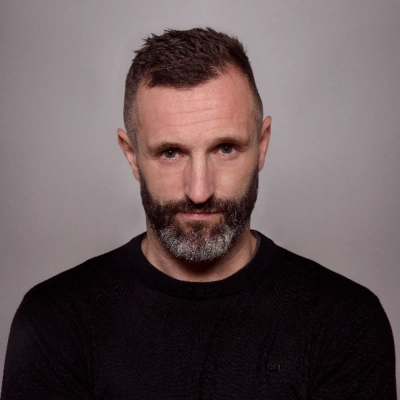
I stopped doing one-on-one consulting and moved the entire practice to a 90-day group cohort model, knowing it would cut my revenue by 60% in year one. The risk was structural: I had no proof the model would work at scale, no case studies for group dynamics at this depth, and I was walking away from a waitlist of private clients paying premium rates.
What convinced me wasn’t confidence. It was pattern recognition. I had coached over 800 clients by that point, and I kept seeing the same thing: the breakthroughs didn’t happen in session. They happened in the gap between sessions when clients were in their actual environment, under real load, with access to peer reflection. The isolated coaching container was artificially clean. Real repatterning requires live feedback loops, and those are social.
The second factor: I was optimising for my own operating system. One-on-one work drained my HRV by midweek. Cohort facilitation generated energy. I was spending 18 hours a week in a modality that put my nervous system into deficit. The intrinsic spark was gone. That is not sustainable, and it creates drift in the quality of the work.
The model paid off, not just financially, but in depth of outcome. Clients in the cohort model report higher sustained HRV gains and faster behaviour integration than in private work. The risk was mechanical. The return was systemic.
 Wilson Meloncelli, Human Performance Consultant, Mavericks Consulting
Apply Six Sigma Methods
One professional development decision that can feel risky in a small business is investing time in process-improvement training when the immediate priority is keeping operations running and meeting customer commitments.
My experience in industrial operations has taught me the importance of understanding not just how a process works, but why inefficiencies occur. Developing a structured approach to problem-solving, including the principles of Six Sigma, helps shift the focus from repeatedly fixing symptoms to identifying the root cause of a problem.
What makes this investment worthwhile is that operational inefficiencies rarely affect just one area. Delays, rework, inconsistent quality, and communication gaps can affect costs, customer satisfaction, and the team’s workload at the same time. Even small improvements can make a meaningful difference when they are applied consistently.
The decision to invest in professional development should therefore be based on a practical question: Will this knowledge help us solve a recurring business problem better than we do today?
My recommendation is to start small. Apply one new method to a measurable operational challenge, assess the results, and expand from there. This reduces the perceived risk while giving the team an opportunity to see the value of learning through real work.
The biggest lesson is that professional development should not be treated as a cost separate from business performance. When the skills being developed address genuine operational challenges, learning becomes an investment in better decisions, more reliable processes, and sustainable growth.
 Mr. Ammar Ammar Mr., Sales & Operations Manager, SASCO Industries
Study Operational Challenges
A professional development initiative that can feel risky for a small business is investing time in learning and improving processes when there is no immediate financial return. In a busy operational environment, it can be tempting to focus only on current tasks and rely on existing knowledge, but industries continue to change and businesses need to keep adapting.
One approach that can create long-term value is developing a habit of learning directly from real-world challenges. In manufacturing, this may involve studying changing customer requirements, understanding new production methods, reviewing recurring operational issues, and improving technical knowledge based on practical applications.
The reason this approach can feel risky is that learning requires time and attention that could otherwise be spent on immediate business activities. However, the long-term benefit is that it helps businesses make better decisions instead of relying only on past experience.
A practical way to implement this is to treat every new challenge as a learning opportunity. When a business encounters a new requirement, material consideration, production difficulty, or process limitation, analysing the reason behind it can create knowledge that helps with future decisions.
The key lesson is that professional development in a small business does not always come from formal courses or training programs. Often, the most valuable learning comes from consistently observing, questioning, and improving the way work is done.
The goal of continuous learning is not to change everything constantly; it is to build the ability to make better decisions as circumstances evolve.
 Swapnil Mondal, Director, Dass Engineering Private Limited






Comment