
SHIRO & Co.: Building Decision Frameworks from the Fragments of Everyday Life

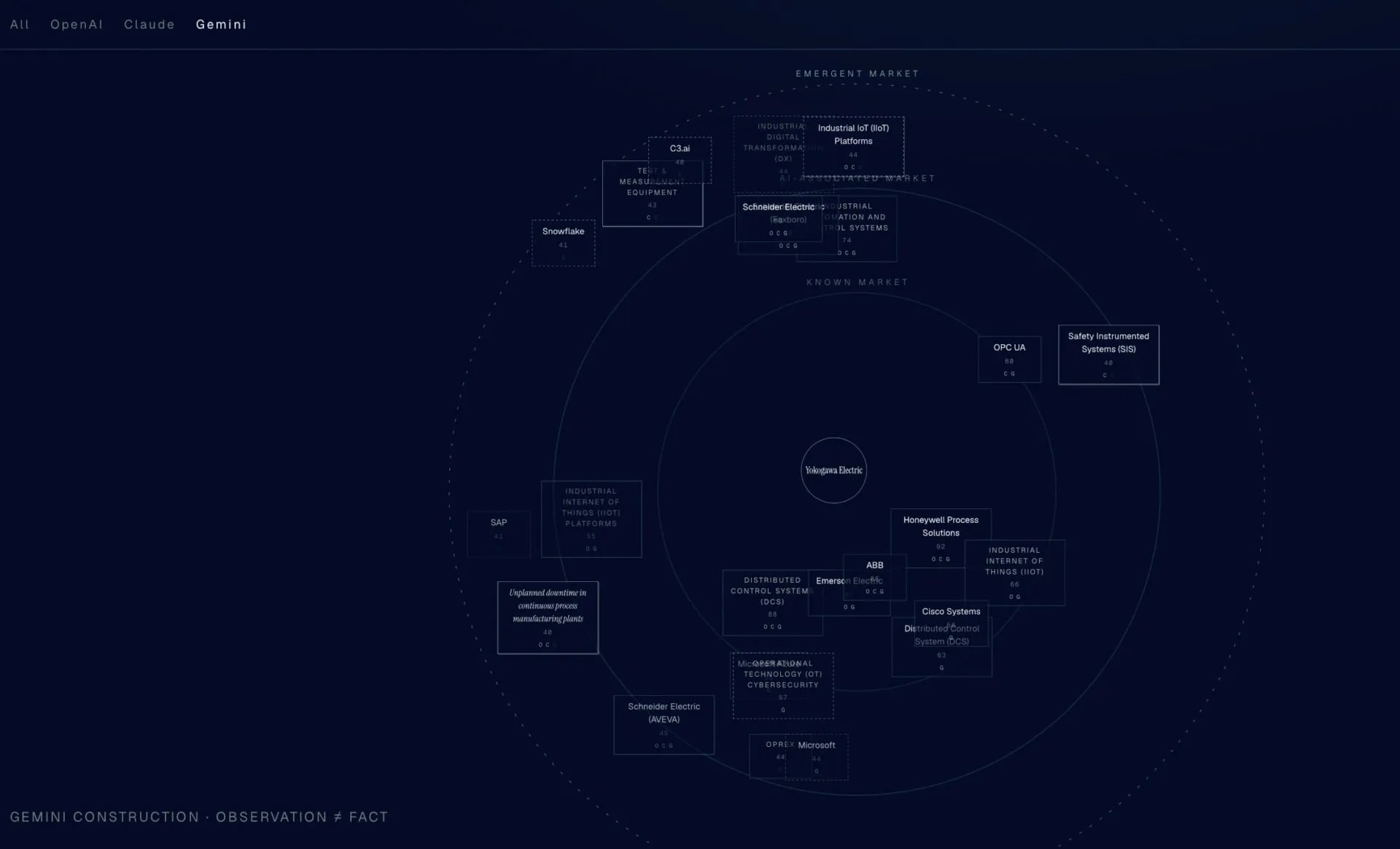
Major societal changes rarely arrive as formal announcements. Instead, they surface as small, easily overlooked fragments: a slight shift in how people move through a city, a familiar service that feels slightly altered, or a sentence repeated more frequently. SHIRO & Co., an independent observation and protocol studio based in Tokyo, was established in 2025 to study these exact phenomena. Founded by Kosuke Shirako, the firm operates at the intersection of research, publishing, design, and business development. Its primary function is to identify unnamed social changes and translate them into practical protocols for corporate decision-making and new business creation.
The Kosuke Protocol: Moving from Observation to Action
The operational foundation of the studio is the Kosuke Protocol, a proprietary methodology that rejects the conventional approach of starting with a predetermined product or service. Instead, the framework insists on beginning with observation. The system is built on a five-step core formulation designed to identify structures that traditional market research often misses:
- Fragment: The studio collects anomalies, weak signals, and isolated pieces of data from daily life, including personal discomfort and cultural noise.
- Observation: Researchers systematically study these fragments to identify repetition and underlying tension.
- Connection: The team maps hidden relationships and the social, emotional, cultural, and economic systems driving the observed behaviors.
- Meaning: The studio interprets these connected structures to determine their significance and why they are emerging at this specific time.
- Form: The insight is translated into a tangible output, which could be an article, a public concept, a business opportunity, or a product.
By applying this methodology, SHIRO & Co. moves beyond simple trend tracking. The protocol connects seemingly unrelated observations across different domains to reveal the hidden architecture of a market or human experience.
A Network of Distributed Observatories
To systematically capture these signals, SHIRO & Co. operates a network of specialized observatories. Each unit focuses on a distinct layer of contemporary society. When combined, they function as a distributed system for reading complex social shifts.
Several of these observatories examine the human condition and physical space. The “Body Meaning” observatory looks at the human body as a social interface, studying posture and physical discomfort as early warning signals before they find expression in language. The “Vanishing Observatory” tracks customs, objects, and places that are quietly disappearing, noting the operational shadows and routines that remain long after a practice fades.
Other observatories focus on the mechanics of society and power. “Scam Folklore” approaches fraud not merely as a criminal act, but as an evolving form of interface design and social technology that mimics institutional rhythms and emotional timing. The “Clean Society” unit investigates cleanliness as a political tool, analyzing how the language of sanitation is used to manage and hide what a society fears to name. Additionally, the “Education–Employment” observatory studies the widening disconnect between formal educational preparation and actual employability in an economy increasingly mediated by artificial intelligence.
Insights from the SHIRO & Co. Journal
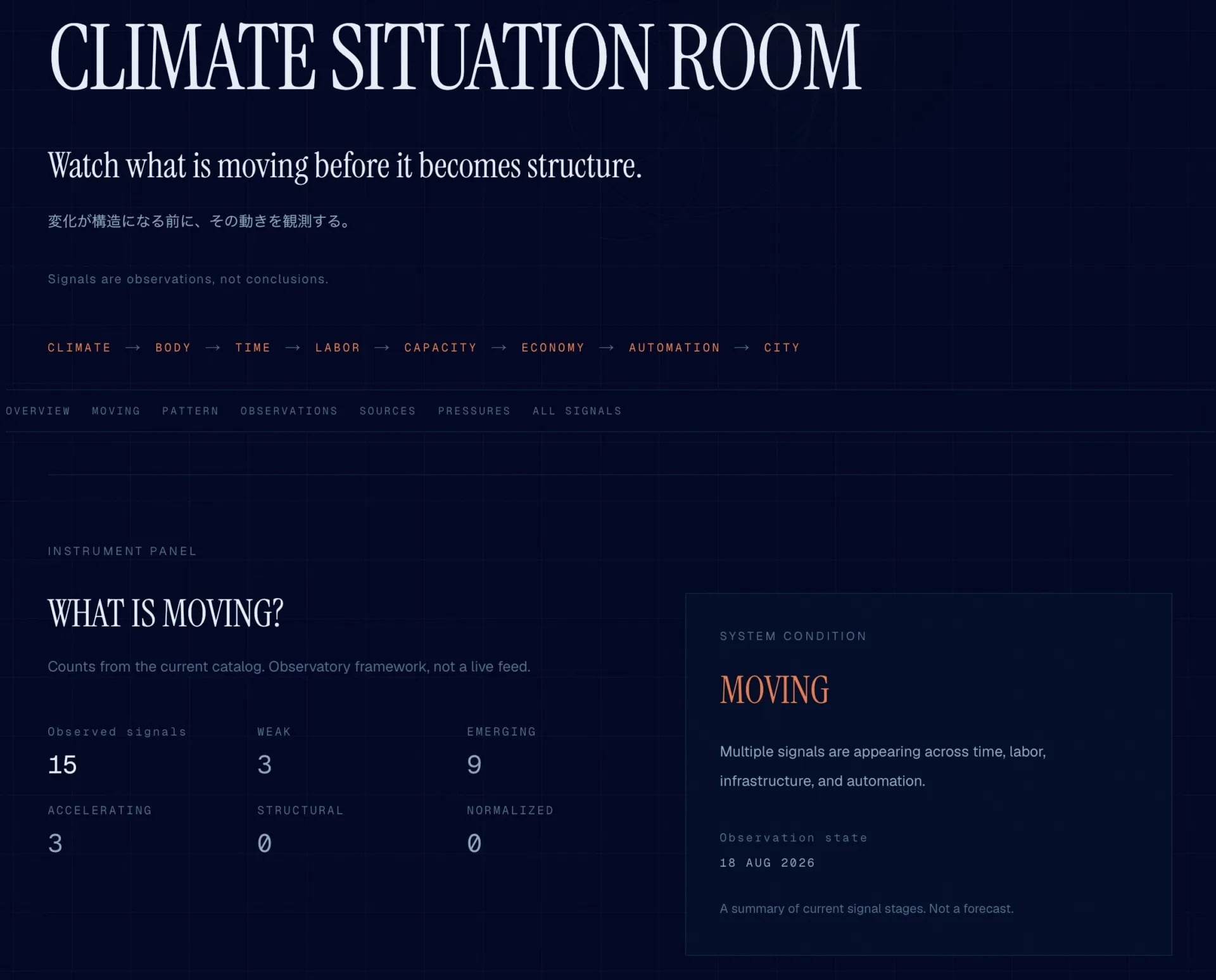
The studio makes portions of its research public through the SHIRO & Co. Journal, an independent publication featuring essays and field notes by Shirako. The journal serves as both a public archive and a continuation of the observation process.
Recent entries highlight the studio’s critical approach to technology and culture. In “The Simulated Public,” the journal examines how decades of traditional market research are changing. As companies begin asking questions of synthetic, AI-generated respondents rather than human beings, the fundamental sequence of market feedback is bending. Another essay, “The Synthetic Person,” looks at the transition of artificial intelligence from a tool that generates content to an entity that assumes a distinct identity.
The journal also explores everyday human interactions. In “The Future Rarely Arrives as a Job Title,” Shirako questions the common practice of asking children to pick their future from a list of existing professions. The piece argues that this assumes the future already has a name, suggesting instead that children should be asked what currently holds their attention, as future paths often begin as small, unnamed interests rather than established job titles.
Applications for Enterprise
While publishing is a core function, SHIRO & Co. is not strictly a media company. The studio actively works with organizations to build private observation systems. Through the Private Observation Protocol, the company designs internal environments tailored to an organization’s specific market, culture, and strategic questions.
These corporate engagements involve continuous analysis of emerging language, technology, and social behavior. By applying the Kosuke Protocol, SHIRO & Co. helps corporate teams process information overload and develop decision frameworks. This allows companies to base their brand and business positioning on fundamental social structures rather than conventional, and often outdated, industry categories.
Through a combination of public archives, experimental labs, and private corporate programs, SHIRO & Co. has built a system that refuses to separate theory from practice. By focusing on the boundaries between distinct domains, the studio provides a method for understanding the present in order to make more informed decisions about the future.
For more info, visit: https://www.shiroand.io







Comment