A good security door should make an intruder hesitate before even touching the handle. That pause matters. For homeowners comparing options, flashy brochures often hide what genuinely protects a home and what is just decoration.
One well-built door can quietly do its job for decades, while a poor one fails under pressure despite bold claims. This guide explains how security doors perform in practice, focusing on structure, materials, locks, and installation details that influence real-world strength.
The Backbone of Protection: Frame and Build Quality
A door is only as strong as the frame holding it in place. Solid steel or reinforced aluminium frames resist twisting under pressure, while thin or poorly welded frames bend easily.
Corner joints matter more than most people realise. Fully welded corners provide superior performance under force compared to screwed or crimped joints. Hinges should be heavy-duty and firmly fixed into the frame, not just the door leaf.
Installation quality ties it all together. Even the strongest door fails if fixed into weak timber or out-of-square openings. Securely anchoring in brick or structural framing makes a big difference, especially under pressure. It helps guarantee everything stays sturdy and safe.
Choosing the Right Mesh: Providing Great Airflow, Durability, and Rust Resistance
Mesh is the most visible part of a security door, and often the most misunderstood.
Stainless steel mesh usually provides the best balance of strength, impact resistance, and long-lasting durability, especially in coastal or humid regions where salt can corrode cheaper metals.
Aluminium mesh can still be fine in the right design, but it usually needs thicker strands or a special construction to achieve the same level of protection.
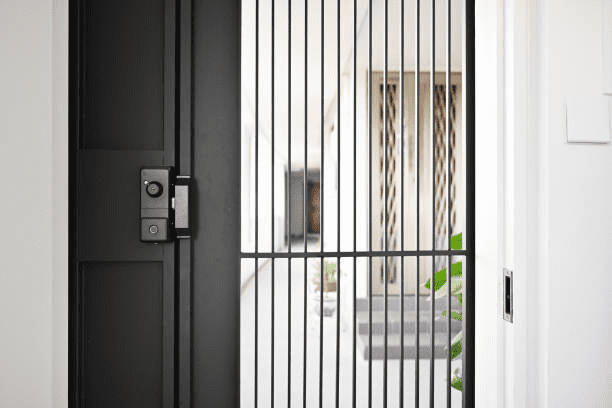
Visibility matters too, so a good screen lets people see out clearly without feeling caged in, while still providing privacy from the street during the day.
Airflow is crucial in warm climates, so check how freely air passes through, not just what the brochure shows.
Corrosion resistance is non-negotiable, so quality products use proper coatings, stainless fixings, and designs that avoid trapping water where rust or oxidation can quietly start.
Safe and Legal: Bushfire, Kids, and Getting Out Quickly
A door that protects against intruders must still function properly in an emergency. In bushfire-prone areas, check whether the product is rated for the relevant Bushfire Attack Level (BAL) and whether its mesh, frame, and seals are designed to withstand ember attack rather than just ordinary weather.
Child safety is another must-have, so consider handle heights, snib positions, and whether curious kids can easily open the door and wander outside. At the same time, everyone inside must be able to get out quickly without hunting for keys in a panic.
Where Break-Ins Begin: Locks That Actually Hold
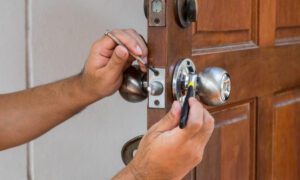
Most forced entries usually start with the lock first. Single-point locks are quite common, but multi-point locking systems are even better because they spread the force across the frame, making it much harder for someone to pry them open. Lock cylinders should be pick-resistant and made from hardened materials, not soft alloys. Cheap cylinders snap under attack.
Keying convenience matters too. Systems that allow rekeying without replacing the whole lock save time and cost when keys are lost.
Smooth operation is a good sign. A lock that feels rough or loose when new rarely improves with age. Strong locks slow entry and increase noise, which is often enough to stop an attempted break in.
Everyday Practicalities: Gaps, Seals, Pets, and Harsh Coastal Weather
Even the strongest door feels wrong if it rattles, whistles, or drags every time it opens. Door gaps should be tight and even all around, with just enough clearance to swing smoothly without scraping tiles or catching on swollen timber.
Quality threshold seals help block insects, dust, and draughts while still allowing easy movement for prams, wheelchairs, and older residents.
Households with pets often need extra features like pet doors, mid-rail protection, or stronger mesh in the lower section to cope with jumping dogs or curious cats.
Climate plays a big role, too, particularly in coastal or exposed locations where salt, wind, and heavy rain can damage poor coatings and fittings. In these areas, better powder coating, stainless steel fixings, and thoughtful design help keep the door looking good and working smoothly for longer.
A door that fits the way people live is more likely to remain secure, closed, and well-maintained over time.
Choosing a security door becomes much easier when each part is broken into simple, checkable points. Strong frames, reliable mesh, quality locks, safe operation, and sensible fit all work together, not in isolation.
Shoppers who handle, push, and examine these details usually spot the weaker choices quickly. A door that feels sturdy, operates smoothly, and clearly displays its test results gains genuine confidence. With a bit of knowledge, buyers can leave confident that the entrance to their home is truly better protected.
Getty Images – Carlina Teteris