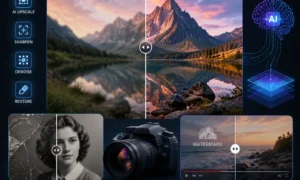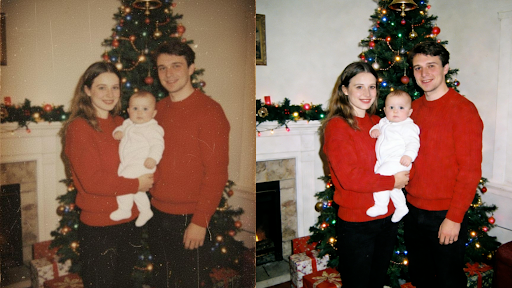
You probably have a box of old family photos tucked away in a closet or an attic. These pictures hold memories of grandparents, childhood homes, and special events that you never want to forget. Over time, physical prints often develop cracks, scratches, and faded spots because of heat or moisture. You might think these precious images are lost forever because the damage looks too severe to fix. Modern technology offers a way to bring them back to life without needing to hire a professional artist.
Using old photo restoration tools allows you to scan these images and fix them in seconds. You don’t need to spend hours learning complex software or paying for expensive services. The software does the heavy lifting for you by identifying where the paper is damaged. It looks for lines and marks that don’t belong in the original scene. This makes the process accessible to everyone regardless of their technical skills.
A high-quality photo enhancer uses smart algorithms to fill in the gaps where pixels are missing. It doesn’t just smudge the colors around the scratch to hide it. It looks at the surrounding pixels to guess what should have been there in the first place. This process makes your old memories look fresh and clear again. You can finally share these images on social media or print them for a new family photo album.
How does AI identify scratches in old photos?
AI models are trained on millions of images to understand what a healthy photo looks like. They learn to recognize the difference between a natural texture, like a wooden fence, and a physical scratch on the paper. A scratch usually has sharp edges and a color that doesn’t match the rest of the image. The AI scans the entire picture to find these inconsistencies across the surface. It maps out the damaged areas like a digital blueprint before it starts any repairs.
This mapping happens almost instantly when you upload a file. Once the AI knows where the problems are, it can start the repair process. It treats the scratch as a hole that needs to be filled with the right information. The AI is smart enough to know that a white line on a black coat is likely a scratch, not a design choice. It looks for patterns that break the natural flow of the image. This precision is what makes the technology so effective for old prints that have been folded or scratched over decades.
Does AI actually reconstruct missing pixels or just blur them?
Older software used to just blur the area around a scratch to make it less noticeable. This often left a smudged look that was easy to spot if you looked closely. Modern AI uses a technique called inpainting to create new data. This means the software looks at the context of the whole photo to make a decision. If a scratch goes through a person’s jacket, the AI looks at the texture and color of the fabric nearby.
It then generates new pixels that match that specific texture and lighting. It’s not just copying and pasting from one spot to another. The AI creates new data that fits the grain of the original photo perfectly. This results in a much more realistic look that preserves the original feel of the picture. You won’t see those blurry spots that used to be common in digital repairs. The goal is to make the repair invisible so the photo looks like it was never damaged.
How accurate is AI at restoring facial features?
Faces are the hardest part of any photo to fix because humans are very good at noticing when a face looks slightly off. AI models for restoration are specifically trained on human anatomy to solve this problem. They know where eyes, noses, and mouths should be located on a head. If a scratch runs across a cheek or an eye, the AI understands the curve of the face. It uses that knowledge to rebuild the skin texture and the shape of the features.
While it’s very accurate, it works best when most of the face is still visible. If half the face is missing, the AI has to make a guess based on the other half or on general human shapes. Most of the time, the results are surprisingly natural and keep the likeness of the person. The AI can even fix small details like eyelashes or the glint in someone’s eye. This level of detail helps preserve the personality of the person in the photo so they still look like themselves.
Can AI handle deep cracks and missing pieces of a photo?
Deep cracks are more difficult than light surface scratches because they represent a total loss of data. A deep crack often means there is no original color or detail left in that specific spot. AI handles this by looking at the patterns in the rest of the image to fill in the blanks. If a corner of the photo is missing, the AI can sometimes recreate the background by extending existing lines. It uses logic to fill the space in a way that makes sense to the viewer.
For example, if the background is a brick wall, the AI continues the pattern of the bricks across the gap. If the damage is too extensive, you might see some repetition in the patterns, but it’s usually much better than a hole. The AI tries to understand the geometry of the scene. It knows that a straight line, like a table edge, should continue even if there is a gap in the photo. This allows it to bridge large cracks that would take a human hours to fix by hand.
What makes AI restoration different from manual editing?
Manual restoration is a slow and tedious process that requires a lot of patience. A professional editor uses tools to clone small parts of the image and cover the damage one bit at a time. This can take hours or even days for a single photo if the damage is bad. AI does this work in a fraction of the time with much less effort. It also removes the human error factor that comes with manual work.
An AI doesn’t get tired or miss small details because it’s bored. It applies the same level of care to every single pixel in the image. For most people, the AI result is just as good as what a professional would produce. It makes high quality restoration available to everyone at a much lower cost. You don’t need to hire an expert and wait weeks for your photos to come back in the mail. You can do it yourself from your own computer or phone.
Is AI scratch removal permanent and high quality?
The digital file created by AI is permanent and won’t fade over time like paper. You can save it in high-resolution formats to ensure that you don’t lose any detail. This is important if you plan to print the photo later or display it on a large screen. The quality of the final result depends a lot on the original scan you provide. If you provide a clear, high-resolution scan, the AI has more data to work with.
This leads to a sharper and more detailed final image that looks professional. The AI also removes digital noise and graininess that often comes with old film stock. This leaves you with a clean image that looks like it was taken with a much better camera. You can then store these files in the cloud or on a hard drive for safety. They won’t age or degrade as physical paper does in a box.
How long does it take for AI to process a damaged image?
One of the best things about this technology is the speed of the processing. Most AI tools can process a photo in under a minute from the moment you click the button. Some even take only a few seconds if the damage is light. This is a massive improvement over traditional methods that took forever. You can upload an entire album of family photos and have them all fixed in one afternoon.
The processing happens on powerful servers in the cloud, so your own computer doesn’t need to be fast. You just upload the file and wait for the result to appear on your screen. This efficiency is why so many people are turning to AI for their archiving projects. It turns a daunting task into a quick and easy one that anyone can finish. You can spend more time enjoying the photos and sharing them with family.
Can AI restore color while removing scratches?
Many AI tools can fix the color of a photo at the same time they remove scratches. Scratches often appear as white or black lines on a color photo which ruins the look. The AI identifies these as damage and removes them while analyzing the faded colors. It uses historical data to guess what the original colors looked like before they faded. It can even turn a sepia or black-and-white photo into a full color image.
This adds another layer of realism to your old photos that makes them feel modern. It makes the people in the pictures feel more present and real to the viewer. Seeing a great-grandparent in full color for the first time is a powerful emotional experience. The AI makes this possible by understanding how light and color work together in different environments. It’s a complete transformation for an image that was once dull and broken.
Summary Takeaway
AI has changed the way we look at our past by making restoration easy. It allows us to save memories that were once considered ruined by time or accidents. By using smart reconstruction, these tools can fix scratches and cracks with incredible accuracy. You don’t have to be a tech expert to get great results from these programs. All you need is a digital scan and a good restoration tool to start the process.
| Feature | AI Restoration | Manual Editing |
| Time Required | Seconds | Hours |
| Technical Skill | None | High |
| Cost | Low | High |
| Consistency | High | Variable |
| Ease of Use | Simple | Complex |
Your family history is worth preserving for the next generation. AI makes that easier than ever before by doing the hard work for you. The accuracy of these tools continues to improve every year as the models get smarter. What was impossible a decade ago is now a standard feature you can use at home. You can trust AI to handle your most precious memories with care and precision. Don’t let your old photos sit in a box and rot when you can fix them today.