By the time most people notice that enterprise IT is broken, the damage has already spread everywhere. Tool sprawl is no longer a nuisance but a structural reality. Manual workflows calcify across departments. Visibility fractures across systems like old glass. And somewhere inside a Fortune 100 cloud migration that costs twice what anyone projected, a team of exhausted SREs is still trying to reconcile three dashboards that should have been one all along.
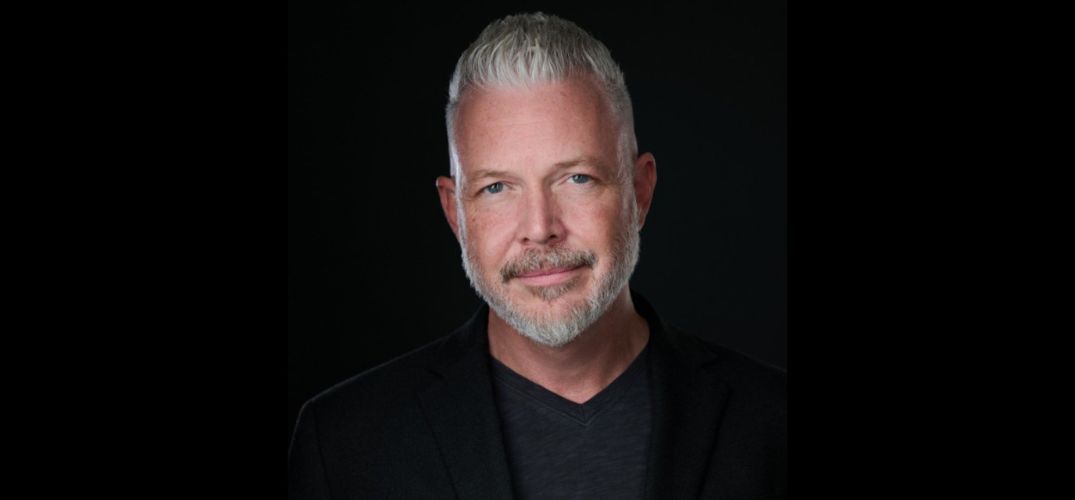
Scott Albrecht has lived inside this chaos for more than two decades. A career computer scientist with an MIT thesis that would eventually turn into the operational backplane in some of the most complex company infrastructures in the world, Albrecht built the quiet connective tissue that kept some of the world’s largest enterprises running. When Workday recruited him to rebuild the same operational intelligence at global scale, he did it again. And after 25 years of watching the same patterns repeat – fragmented teams, redundant tools, endless integration debt, and massive operational inefficiencies – he finally made the decision he had avoided for years.
He decided to build the platform he always wished existed and make it commercially available.
The result? OpsZ – a full-lifecycle IT operations platform that feels almost defiant in its simplicity. Backed by leaders from Oracle and Workday, OpsZ promises a different kind of disruption: no drama, no hype, just the kind of practical innovation that only comes from people who have spent their lives inside the problem.
The Moment Everything Broke (Again)
When Albrecht left Workday, he didn’t go into ideation mode. The idea had already been there for years, living under different names – first inside his MIT research, then inside global enterprise infrastructure that needed a unified substrate long before the industry had a name for it.
“What sparked OpsZ wasn’t a lightning bolt. It was the same frustration resurfacing at every company I worked with,” he explains. “You walk into these huge organizations, and you quickly realize they’re not one company. They’re dozens, sometimes hundreds, of merged entities, each carrying its own tools, processes, and operational ghosts.”
The problem wasn’t that enterprises lacked good tools. They had excellent ones. But each tool was built for a pointed purpose, optimized for one cloud, one function, or one operational slice. Nothing unified it all. Nothing gave SREs or CIOs a single, trusted control plane across the entire hybrid environment.
“If enterprises could have bought a platform like OpsZ,” Albrecht says bluntly, “They would have. It simply didn’t exist.”
The Architecture Only Insiders Could Build
OpsZ is not a Silicon Valley moonshot wrapped in branding. It’s a system engineered by people who have seen the internal architecture of the world’s largest infrastructures and understand what it actually takes to control them.
The Oracle and Workday lineage is woven directly into the platform. It shows up in the way OpsZ stitches together visibility, automation, governance, and orchestration across distributed systems. It appears in the platform’s ability to work with everything a company already has rather than forcing painful replacements. And it’s most evident in the design philosophy: build for scale, prioritize security by default, and simplify complexity without dumbing it down.
“Every large enterprise already has agents, automations, and visibility tools,” Albrecht says. “The issue is that none of them were built to work together. OpsZ is the layer that unifies them.”
This is what he means by full-lifecycle IT operations: not a collection of dashboards, but a connective substrate that spans systems, processes, and people. Once everything lives in one place, companies can finally derive real insights, shorten MTTR, automate remediation, and enable modern AI-driven operations responsibly.
A Midwest Approach to Disruption
OpsZ wasn’t born in Silicon Valley, and Albrecht believes that matters.
After years on the coasts, he and his cofounders chose to build in the Midwest, a region that quietly produces extraordinary engineering talent and is starting to claim a bigger role in what comes next. Here, ambition looks a little different. It’s less about the spotlight and more about building things that last.
“We wanted to build a major tech company without forcing people to choose between incredible work and a livable life,” Albrecht says. “Some of the best talent in the country comes from places like this. You don’t need to live on the coast to work in a world-class tech startup.”
That perspective shows up in the product. OpsZ isn’t trying to be loud; it’s trying to be useful, with a commitment to solve a real problem with relentless precision and very much in the spirit of the place it was built.
The Platform Built to End IT Chaos
What’s striking about OpsZ isn’t just what the platform already does, but the clarity of its trajectory. Early enterprise conversations have validated what Albrecht suspected for years: every large organization needs this. Some want a narrow wedge to solve a specific pain point. Others want the full operational substrate they’ve never been able to build internally. But no one, so far, has looked at the platform and said no.
That kind of unanimous agreement is rare in enterprise software, especially for a company still early in its commercialization. It suggests that OpsZ is not introducing a new category so much as exposing the gap that always existed beneath the stack.
Over the next 18 to 24 months, Albrecht envisions OpsZ moving from a hands-on, founder-led deployment to a mature, self-service platform supported by global consulting partners and enterprise teams.
But the long-term vision reaches further than traditional infrastructure management. As AI agents become woven into daily operations, OpsZ aims to become the identity, governance, and orchestration layer that makes responsible automation actually possible. Instead of fear and fragmentation, enterprises would gain transparency, auditability, and control – the very same guardrails that have always governed human engineers, now applied to AI at machine scale.
For Albrecht, the mandate is simple: bring order to the most complex infrastructures in the world and give enterprises the clarity they should have had all along. As OpsZ quietly expands into the core layer of modern operations, the companies adopting it now will be the ones prepared for what comes next.
To explore OpsZ or request early enterprise access, visit https://opsz.io/