
How Smart Manufacturing Is Transforming the Industrial Valve Industry

Introduction
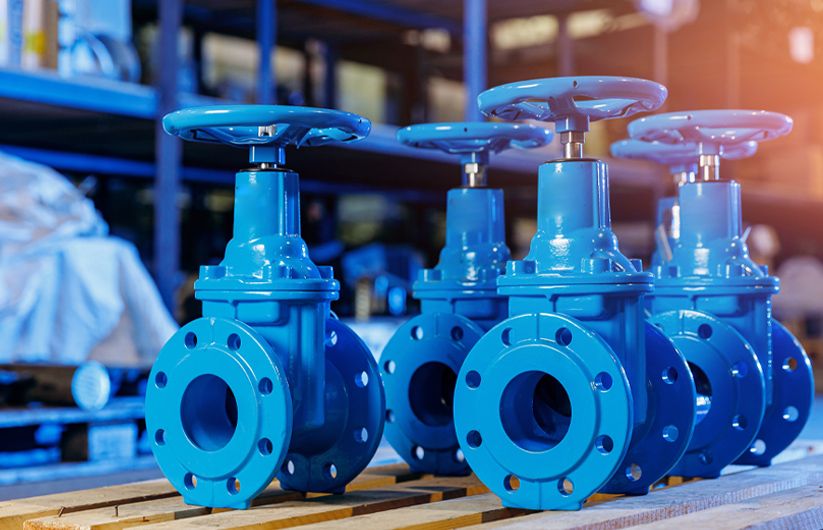
Industrial valves are key components in modern industrial systems and are widely used in water treatment, energy, chemical processing, manufacturing, and infrastructure projects. As critical equipment for controlling flow, pressure, and system safety, the reliability of valves directly affects the stable operation of industrial systems.
For decades, industrial valve manufacturing has relied on traditional machining methods, manual inspection, and accumulated manufacturing experience. These approaches have supported the development of the valve industry for many years. However, as global customers demand higher quality, faster delivery, and more reliable products, traditional manufacturing methods are facing new challenges.
Smart manufacturing is becoming an important direction for the future development of the industrial valve industry. By integrating automation, digital management, intelligent inspection, and data analysis technologies, valve manufacturers are improving production efficiency while achieving more stable and consistent product quality.
Challenges Facing Traditional Valve Manufacturing
Industrial valve manufacturing usually involves multiple stages, including casting, machining, assembly, testing, and inspection. Each step can directly influence the final performance of the valve.
Maintaining Consistent Product Quality
Quality consistency has always been one of the most important concerns in industrial valve manufacturing.
Different production batches need to maintain the same dimensional accuracy, sealing performance, and pressure capability to ensure reliable operation over long periods.
However, in traditional manufacturing environments, some production and inspection processes still depend heavily on manual operations. Differences in operator experience, working methods, and production conditions may lead to variations between different batches.
Smart manufacturing helps reduce these differences through automated production processes, digital inspection systems, and data-based quality management, allowing manufacturers to achieve more stable product performance.
Improving Production Efficiency and Delivery Capability
Industrial valves are often customized according to different project requirements.
Customers may require different standards, materials, pressure ratings, connection methods, and application specifications. This makes valve production a complex process involving coordination between engineering, production, procurement, and quality departments.
Under traditional manufacturing methods, information exchange often relies on manual communication, which may lead to longer production cycles and lower response efficiency.
Smart manufacturing enables manufacturers to better manage production processes through digital systems, improve workflow coordination, and respond more quickly to changing customer requirements.
Reducing Maintenance Risks and Costs
The reliability of industrial valves directly affects the operating cost of industrial systems.
Problems such as leakage, improper operation, or valve failure can cause pipeline downtime and increase maintenance expenses.
Traditional maintenance strategies usually focus on repairing equipment after problems occur. Smart manufacturing is changing this approach by enabling predictive maintenance, where potential issues can be identified before they lead to unexpected failures.
How Smart Manufacturing Is Upgrading Valve Production
Automation Improves Manufacturing Efficiency
Automation is one of the most important applications of smart manufacturing in the valve industry.
More valve manufacturers are adopting CNC machining centers, automated production equipment, and intelligent manufacturing systems to improve the accuracy and efficiency of key production processes.
For example, the machining accuracy of valve bodies, discs, stems, and sealing components directly affects assembly performance and sealing reliability.
With automated machining, manufacturers can reduce human errors, improve production efficiency, and maintain more consistent product quality.
Digital Inspection Enhances Quality Control
Quality inspection is a critical part of industrial valve manufacturing.
Traditional inspection methods often rely on manual measurement and paper records. Digital manufacturing introduces advanced inspection equipment and data management systems to monitor production quality more effectively.
Digital quality control can include:
- Raw material traceability
- Component dimensional inspection
- Pressure test records
- Sealing performance testing
- Complete production history tracking
These digital records help manufacturers identify potential problems more quickly and continuously improve their manufacturing processes.
Compared with only checking finished products, smart manufacturing focuses more on controlling quality throughout the entire production process.
Precision Machining Improves Product Reliability
As industrial applications become more demanding, customers require valves with longer service life and higher reliability.
Precision machining technologies help improve component accuracy and surface quality, reducing the risk of leakage, wear, and operational problems.
For applications such as large-scale water treatment projects, industrial pipelines, and complex operating environments, advanced manufacturing technology helps valves achieve more stable and long-lasting performance.
Data Management Supports Continuous Improvement
One of the greatest advantages of smart manufacturing is the ability to use production data for continuous improvement.
Through digital systems, manufacturers can track the complete production process, from raw material inspection and machining to assembly, testing, and final delivery.
This data provides valuable insights, such as:
- Which production steps require improvement
- Where quality issues may occur
- How manufacturing parameters can be optimized
By analyzing production data, manufacturers can continuously improve efficiency and strengthen their overall manufacturing capabilities.
Future Trends in Smart Valve Manufacturing
IoT-Enabled Industrial Systems
As industrial systems become more digital, Internet of Things (IoT) technology is creating new opportunities for valve applications.
In the future, smart valves equipped with sensors may collect information such as pressure, temperature, flow conditions, and operating status, providing real-time data for system management.
This allows engineers to better understand equipment conditions and optimize industrial system performance.
Although not every valve application requires smart functions today, intelligent valve technologies are expected to become increasingly important in advanced industrial projects and smart infrastructure.
Predictive Maintenance Reduces Operational Risks
Predictive maintenance is one of the key benefits of smart manufacturing.
By analyzing operating data, companies can identify abnormal conditions and perform maintenance before equipment failures occur.
For water treatment facilities, energy plants, and large industrial systems, predictive maintenance can reduce unexpected downtime, improve reliability, and lower long-term operating costs.
Sustainable Manufacturing Becomes a Key Direction
In addition to improving efficiency, smart manufacturing is also helping industries move toward more sustainable production.
By optimizing manufacturing processes, reducing material waste, and improving energy efficiency, companies can lower resource consumption during production.
At the same time, higher-quality and longer-lasting valve products help customers reduce replacement frequency and achieve more sustainable operation.
Valve Manufacturers Are Preparing for the Smart Manufacturing Era
The industrial valve industry is moving from traditional manufacturing toward a more intelligent and digital production model.
In the future, competition among valve manufacturers will not only depend on product pricing but also on manufacturing capabilities, quality management systems, and technological innovation.
More manufacturers are investing in:
- Automated production equipment
- Digital management systems
- Intelligent quality control
- Precision machining technologies
- Product development capabilities
For example, Union Valve is continuously improving its manufacturing processes and quality management systems by adopting advanced production technologies to provide reliable valve solutions for global water systems, industrial applications, and infrastructure projects.
Smart manufacturing is not only changing how valves are produced; it is also changing how manufacturers create long-term value for customers around the world.







Comment