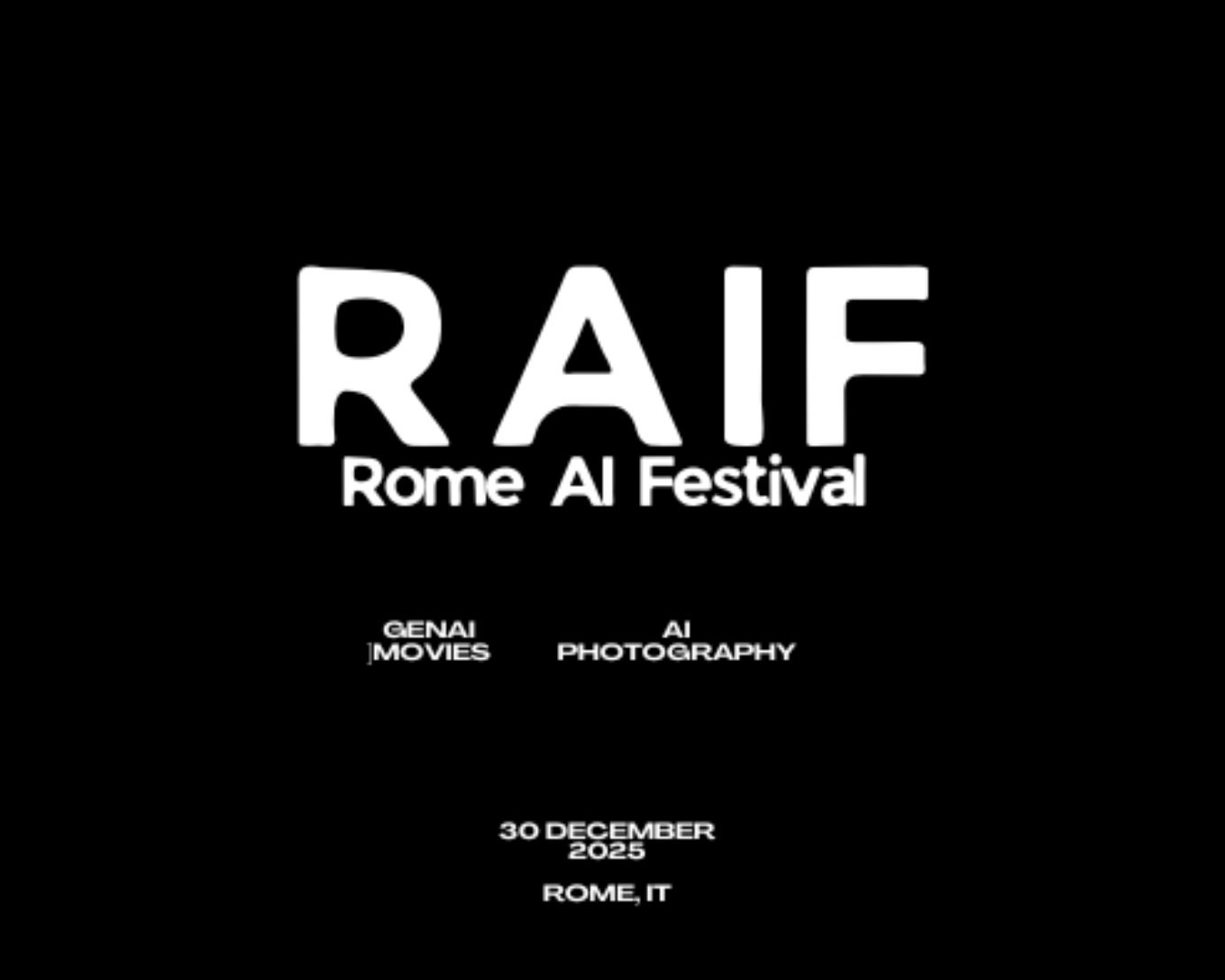
ROME — On December 30th, amidst the ancient travertine and winter chill of the Italian capital, a new kind of Renaissance is set to begin. The Rome AI Festival (RAIF), the city’s first-ever event dedicated exclusively to Creative Generative AI, will open its doors just steps from the Colosseum. The location is symbolic: a dialogue between the millennia old stones of the Empire and the futuristic algorithms of the 21st century.
This is not merely an exhibition; it is a manifesto. At the helm is Riccardo Vincenzi, a visionary who has successfully bridged the tactile world of cinematography with the boundless possibilities of AI media.
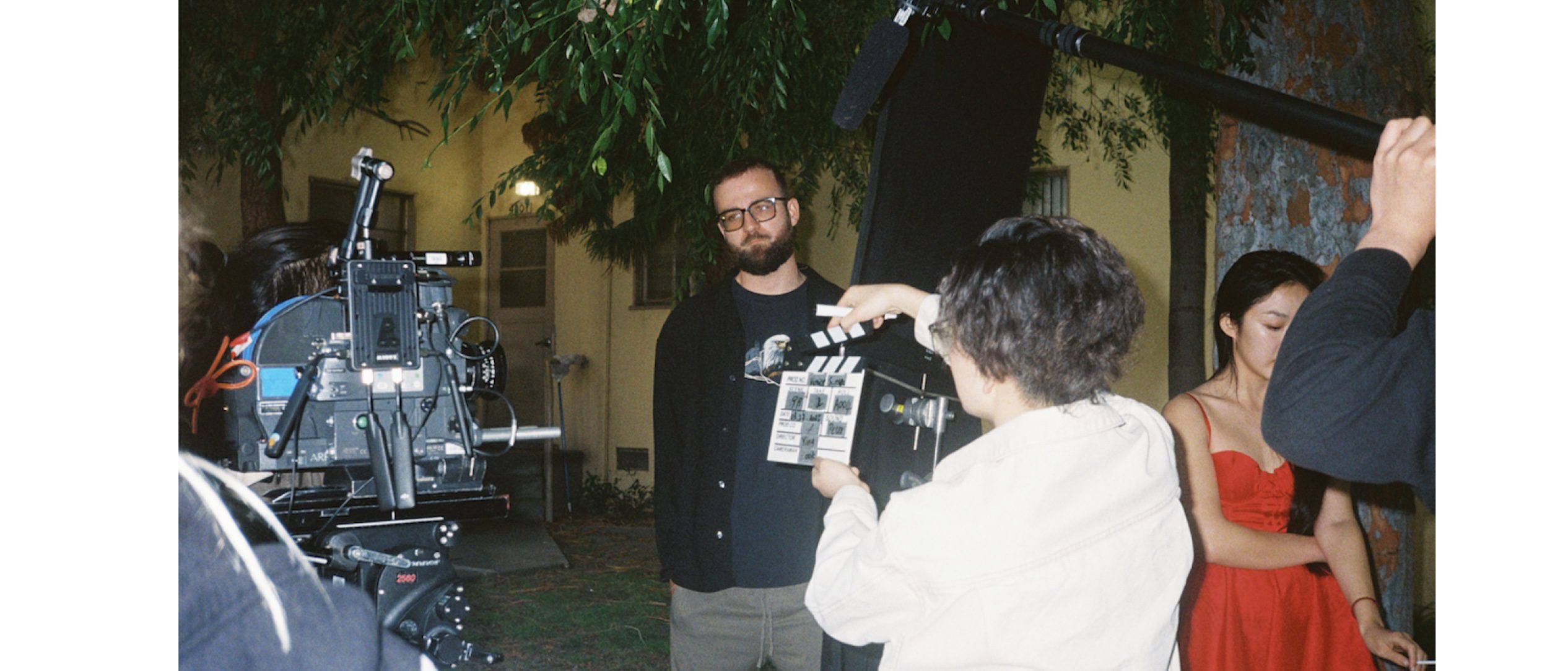
To understand the curatorial precision of the Rome AI Festival, one must understand its founder. Vincenzi is not a typical tech evangelist; he is a seasoned Director of Photography. His career has been defined by the mastery of light, composition, and visual storytelling on physical film sets, dealing with the stubborn realities of lenses and shadows.
In recent years, Vincenzi has translated that high level visual literacy into the realm of Generative AI. While many approach AI as a technical curiosity or a slot machine for random images, Vincenzi treats it as a sophisticated cinematic tool that requires the same discipline as a physical camera.
“The principles of great image-making do not change just because the camera has become virtual,” Vincenzi notes. “My background as a DP dictates how I judge AI art. I look for intention, lighting continuity, and emotional depth. The Rome AI Festival is about celebrating artists who control the chaotic nature of AI with the discipline of a cinematographer.”
This unique cinematographer’s eye is what sets the Rome AI Festival apart from other tech conferences. Vincenzi has curated an event that prioritizes artistic merit over raw computing power, filtering over 500 international entries down to a selection of elite finalists.
Perhaps the most poignant narrative of the festival is the radical shift it represents in the public perception of Generative AI. Only a few years ago, the emergence of these technologies was met with hostility and existential dread by the creative community. The early discourse was dominated by fear: fear of job replacement, fear of copyright theft, and a pervasive belief that AI art was inherently soul less a hollow mimicry of human emotion. Critics pointed to the uncanny valley and the glossy, plastic aesthetic of early models as proof that machines could never truly create.
However, the works selected for RAIF demonstrate that we have moved past this initial era of rejection. The narrative has shifted from replacement to empowerment.
“We spent years worrying that AI would kill the artist,” says one of the festival’s featured judges, “Instead, we found that it resurrected the dreamer.”
The festival highlights how AI has become the great equalizer for independent creatives. In the past, a writer with a vision for a sci-fi epic was silenced by the lack of a multimillion dollar budget. They needed visual effects teams, set builders, and lighting crews to realize their vision. Today, that same writer can use GenAI to render their world with photorealistic fidelity. The technology has not removed the human element; it has removed the barrier to entry. It allows creators to bypass the logistical gatekeepers of the industry and speak directly to the audience.
At RAIF, the soul of the art is undeniably human; the AI is simply the brush.
The festival has struck a nerve in the global artistic community, drawing submissions from more than 30 countries. Sponsored by Spunto AI, the event features two distinct tracks: Fully AI-Generated (works created entirely from text-to-video or text-to-image prompts) and Hybrid (projects that blend AI generation with traditional filming techniques).
From the neon-soaked aesthetics of Tokyo to the avant garde narratives of New York, the world’s digital creators are converging on Rome, answering a call that Vincenzi uniquely understood how to make. He has not only organized an event; he has galvanized a global community, positioning himself as a central node in the international network of AI creatives.
For Riccardo Vincenzi, this is the natural evolution of his artistic journey: from shaping light on a movie set to shaping the future of digital expression on a global stage. The Rome AI Festival is not just an event; it is evidence of a new artistic language, one where the ghost in the machine is finally learning to sing..